
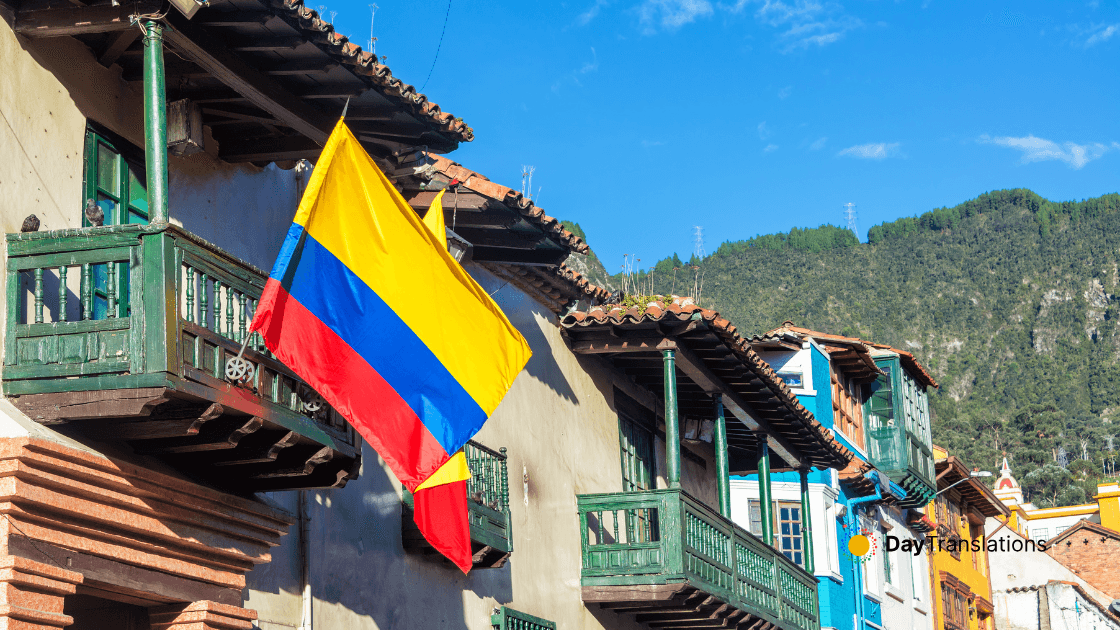
Colombia is a large and diverse country with a wide array of terrains, cultures, languages. The diverse land of Colombia consists of beaches, the Andes Mountains, deserts to the east, many waterfalls, and of course, the Amazon jungle. As diverse as the terrain is, the culture is also with many languages, and a deep history.
:: Background of Colombia ::
Colombia was one of the three countries that emerged from the collapse of Gran Colombia in 1830 (the others are Ecuador and Venezuela). A 40-year conflict between government forces and anti-government insurgent groups and illegal paramilitary groups – both heavily funded by the drug trade – escalated during the 1990s. The insurgents lack the military or popular support necessary to overthrow the government, and violence has been decreasing since about 2002, but insurgents continue attacks against civilians and large swaths of the countryside are under guerrilla influence. More than 32,000 former paramilitaries had demobilized by the end of 2006 and the United Self Defense Forces of Colombia (AUC) as a formal organization had ceased to function. Still, some renegades continued to engage in criminal activities. The Colombian Government has stepped up efforts to reassert government control throughout the country, and now has a presence in every one of its administrative departments.
In this Country Profile
:: Geography of Colombia ::
Location: Northern South America, bordering the Caribbean Sea, between Panama and Venezuela, and bordering the North Pacific Ocean, between Ecuador and Panama
Geographic coordinates:4 00 N, 72 00 W
Area:
total: 1,138,910 sq km
land: 1,038,700 sq km
water: 100,210 sq km note: includes Isla de Malpelo, Roncador Cay, Serrana Bank, and Serranilla
Area – comparative: slightly less than three times the size of Montana
Land boundaries: total: 6,004 km border countries: Brazil 1,643 km, Ecuador 590 km, Panama 225 km, Peru 1,496 km (est.), Venezuela 2,050 km
Coastline: 3,208 km (Caribbean Sea 1,760 km, North Pacific Ocean 1,448 km)
Maritime claims: territorial sea: 12 nm exclusive economic zone: 200 nm continental shelf: 200-m depth or to the depth of exploitation
Climate: tropical along coast and eastern plains; cooler in highlands
Terrain: flat coastal lowlands, central highlands, high Andes Mountains, eastern lowland plains
Elevation extremes:
lowest point: Pacific Ocean 0 m
highest point: Pico Cristobal Colon 5,775 m note: nearby Pico Simon Bolivar also has the same elevation
Natural resources: petroleum, natural gas, coal, iron ore, nickel, gold, copper, emeralds, hydropower
Land use: arable land: 2.42% permanent crops: 1.67% other: 95.91% (2001) Irrigated land:8,500 sq km (1998 est.)
Natural hazards: highlands subject to volcanic eruptions; occasional earthquakes; periodic droughts
Environment – current issues: deforestation; soil and water quality damage from overuse of pesticides; air pollution, especially in Bogota, from vehicle emissions
Environment – international agreements: party to: Antarctic Treaty, Biodiversity, Climate Change, Climate Change-Kyoto Protocol, Desertification, Endangered Species.
:: People of Colombia ::
Population: 42,954,279 (July 2005 est.)
Age structure:
0-14 years: 30.7% (male 6,670,950/female 6,516,371)
15-64 years: 64.2% (male 13,424,433/female 14,142,825)
65 years and over 5%
Median age:
total: 26.04 years
male: 25.14 years
female: 26.93 years (2005 est.)
Population growth rate:1.49% (2005 est.)
Birth rate: 20.82 births/1,000 population (2005 est.)
Death rate: 5.59 deaths/1,000 population (2005 est.)
Net migration rate: -0.31 migrant(s)/1,000 population (2005 est.)
Sex ratio:
at birth: 1.03 male(s)/female
under 15 years: 1.02 male(s)/female
15-64 years: 0.95 male(s)/female 65 years and over: 0.79 male(s)/female
total population: 0.96 male(s)/female (2005 est.)
Infant mortality rate: total: 20.97 deaths/1,000 live births male: 24.92 deaths/1,000 live births female: 16.89 deaths/1,000 live births (2005 est.)
Life expectancy at birth:total population: 71.72 years male: 67.88 years female: 75.7 years (2005 est.)
Total fertility rate: 2.56 children born/woman (2005 est.)
HIV/AIDS – adult prevalence rate: 0.7% (2003 est.)
HIV/AIDS – people living with HIV/AIDS: 190,000 (2003 est.)
HIV/AIDS – deaths: 3,600 (2003 est.)
Nationality: noun: Colombian(s) adjective: Colombian
Ethnic groups: mestizo 58%, white 20%, mulatto 14%, black 4%, mixed black-Amerindian 3%, Amerindian 1%
Religions: Roman Catholic 90%, other 10%
Languages: Spanish
Literacy:
definition: age 15 and over can read and write
total population: 92.5%
male: 92.4% female: 92.6% (2003 est.)
Geography of Colombia: Important Geographical Information about Colombia
In this Country Profile
One of only two South American countries which border both the Pacific and Atlantic Oceans, it is the 4th largest country in South America and the 26th largest nation in the world. Colombia is located on the northwestern region of South America and its geography is characterized by five main natural regions each with its own unique features.
Andean Region
The Andes mountain range is shared with Venezuela and Ecuador. Near the Ecuadorian border the Andes divide in three distinct chains called “Cordilleras” extending almost to the Caribbean Sea. The plateaus of these ranges provide pleasant weather conditions allowing farmers to harvest twice a year which probably explains why most of the country’s population lives in the Andean highlands.
Caribbean Region
This coastal region shared with Venezuela and Panama is where most of the country’s commerce moves through; the ports of Cartagena, Santa Marta and Barranquilla among others are located on this important coast. The Caribbean lowlands show extreme weather conditions bearing little resemblance to each other such as the semiarid Guajira Peninsula and the Sierra Nevada de Santa Marta, an isolated mountain system with peaks over 5,700 meters high.
Pacific Region
Bordering with Ecuador and Panama, the geographically complex coastal region provides ample areas of jungle and swamps with considerable but little-exploited resources. An isolated mountain chain called Serrania del Baudo rises to the west of the Atrato river, sand of which are known to be auriferous because of its confluents lined with Gold and Platinum mines.
Orinoquia Region
Shared with Venezuela, this region commonly known as “Los Llanos” (The Plains), covers three fifths of the country and yet it is the lowest populated area of the nation. The almost unbroken plains find an end with the Serranía de la Macarena, an outlier of the Andes with unique vegetation and wildlife.
Amazon Region
The southern region known mostly by the Amazon Rainforest is shared with Venezuela, Brazil, Ecuador and Peru and it is marked by its unique jungles and bathed by large navigational rivers. The totality of this moist broadleaf forest represents over half the planet’s remaining rainforest in the world.
Professional Translation Organizations & Associations in Colombia
In this Country Profile
Below is a list of the major translation organizations and associations of Colombia.
:: List of Organizations ::
Asociación Colombiana de Traductores e Intérpretes
Corporación Universitaria de Colombia Ideas
Politécnico Colombo Andino, Facultad de Lenguas Modernas
Universidad Autónoma de Manizales, Departamento de Lenguas Extranjeras
Universidad de Antioquia, Escuela de Idiomas
Universidad de Colombia, Facultad de Ciencias Humanas, Departamento de Lingüística
Universidad de los Andes, Facultad de Ciencias Sociales, Departamento de Lenguas Modernas
Universidad de Nariño,Faculty of Education,Graduate Programs
Universidad del Rosario
Universidad Santiago de Cali
Information about the Colombian Flag: Colors and Meaning of the Flag of Colombia
In this Country Profile
:: Meaning of the Colombian Flag ::
The Colombian flag is a symbol of national pride for the people of this great nation. The Colombian flag consists of three horizontal stripes – the top stripe is yellow; the middle stripe is blue; and the bottom stripe is red. The yellow stripe is larger and is half of the width (height) of the flag. The blue and red stripes are each one quarter of the flag’s width.
There is no official meaning of the Colombian flag; however there are two popular theories on the meaning behind Colombia’s flag’s colors. One states that the yellow symbolizes sovereignty and justice; the blue stands for nobility, loyalty and vigilance; while the red represents valor, honor, generosity and victory through bloodshed. The second interpretation states the yellow stands for universal liberty; the blue for the equality of all races and social classes before God and the law; and red means fraternity.
There is also a popular Colombian children’s song which resonates – “yellow is our gold, blue is our vast seas and red is the blood that gave us our freedom”.
Extensive List of Languages of Colombia: Spoken and Extinct Languages
In this Country Profile
:: List of Languages ::
Achagua
[aca] 400 (1994 SIL). Rio Meta near Puerto Gaitan. Not in Venezuela. Alternate names: Ajagua, Xagua. Dialects: Close to Piapoco. Classification: Arawakan, Maipuran, Northern Maipuran, Inland
Andoque
[ano] 619 (2000 WCD). 50 monolinguals. Extinct in Peru (1992 SIL). There were 10,000 in 1908 (Landaburu 1979). Aduche River (tributary of Caquetá) 15 km downriver from Araracuara, Amazonas. Alternate names: Andoke. Dialects: Mason (1950:246 with disclaimer), Tax (1960:433), and Kaufman (1990:43 tentatively) say this is Witotoan. Tovar (1961:150), Witte (1981:1), and Aschmann (1993:2) say it is an isolate. Classification: Language Isolate
Arhuaco
[arh] 14,301 (1998 Arango and Sánchez). 90% are monolingual. Ethnic population: 14,301. Southern slopes of Sierra Nevada de Santa Marta. Alternate names: Aruaco, Bintuk, Bíntukua, Bintucua, Ica, Ijca, Ijka, Ika, Ike. Classification: Chibchan, Aruak
Awa-Cuaiquer
[kwi] 20,000 in Colombia (1986 SIL). Population total all countries: 21,000. Pacific slopes of the Andes, Nariño, from Ecuador border north, near Barbacoas. Also spoken in Ecuador. Alternate names: Coaiquer, Quaiquer, Kwaiker, Awa, Awa Pit, Cuaiquer. Dialects: More distantly related to Chachi and Colorado. Classification: Barbacoan, Pasto
Barasana
[bsn] 350 (1990 SIL). Pira-Paraná River and tributaries, southern Vaupés Region. Jepa Matsi in Brazil may be a dialect. Alternate names: Southern Barasano, Paneroa, Eduria, Edulia. Dialects: Taiwano (Taibano, Taiwaeno), Janera, Comematsa. Classification: Tucanoan, Eastern Tucanoan, Central, Southern
Barí
[mot] 850 in Colombia (2000 WCD). Population total all countries: 1,700. Oro River and Catatumbo River Region. Also spoken in Venezuela. Alternate names: Motilone, Motilón. Dialects: M. Durbin questions its classification as Chibchan; Voegelin and Voegelin (1977) classify it as Arawakan. Classification: Chibchan, Motilon
Bora
[boa] 500 in Colombia. Population includes 100 or more Miraña and 400 other Bora. Bora are in Providencia on the Igaraparana (tributary of the Putumayo). Miraña are on the lower Caquetá River, near the mouth of the Cabinari River, Amazonas. Alternate names: Boro. Dialects: Miraña (Miranha), Bora. Classification: Witotoan, Boran
Cabiyarí
[cbb] 50 (1976 Bourgue). Cananarí River (tributary of the Apaporis and Vaupés). Alternate names: Cabiuarí, Cauyarí, Kauyarí, Cuyare, Kawillary. Classification: Arawakan, Maipuran, Northern Maipuran, Inland Nearly extinct.
Cacua
[cbv] 150 (1982 SIL). Many are monolingual, especially children. Wacará, 30 kilometers east of Mitú, Lower Vaupés Region. Alternate names: Macu de Cubeo, Macu de Guanano, Macu de Desano, Báda, Kákwa. Dialects: Vaupés Cacua, Macú-Paraná Cacua. Related to Jupda and Nukak. Classification: Maku
Camsá
[kbh] 4,022 (1998 Arango and Sánchez). Ethnic population: 4,020. Sibundoy Valley, Putumayo Region. Alternate names: Kamsa, Coche, Sibundoy, Kamemtxa, Kamse, Camëntsëá. Classification: Language Isolate
Carabayo
[cby] 150. Amazonas Department, halfway between the San Bernardo and Pure rivers. 3 long houses, at least. Alternate names: “Amazonas Macusa”. Classification: Unclassified
Carapana
[cbc] 600 in Colombia (1990 SIL). Population total all countries: 650. Caño Tí (tributary of the middle Vaupés River) and upper Papurí and Pirá-Paraná rivers, Vaupés Region. Also spoken in Brazil. Alternate names: Mochda, Moxdoa, Karapaná, Karapano, Carapana-Tapuya, Mextã. Classification: Tucanoan, Eastern Tucanoan, Central, Tatuyo
Carijona
[cbd] 140 (1993 SIL). Upper Vaupés, Yarí, and lower Caquetá rivers, 1 hour by motorized canoe; 2 to 3 hours by canoe south of Miraflores, around Puerto Nare. Alternate names: Karijona, Carihona, Omagua, Umawa, Hianacoto-Umaua. Dialects: M. Durbin says there are possibly two separate languages, Hianacoto-Umaua and Carijona. The two groups have not had contact for many years. Classification: Carib, Southern, Southeastern Colombia
Chimila
[cbg] 2,000 (1993 census). Lowlands south and west of Fundación, and scattered in the central part of Magdalena Department. Alternate names: Caca Weranos, San Jorge, Shimizya. Classification: Chibchan, Unclassified
Cocama-Cocamilla
[cod] Ethnic population: 20 in Colombia. Lower Putumayo. Alternate names: Cocama, Kokama. Classification: Tupi, Tupi-Guarani, Subgroup III
Cofán
[con] 600 in Colombia (2000 SIL). Many monolinguals. Ethnic population: 600 to 700 in Colombia (2000 Borman). Colombia-Ecuador border area, Putumayo Province. Alternate names: Kofan, Kofane, A’i. Dialects: Aguarico, Santa Rosa. Classification: Chibchan, Cofan
Cogui
[kog] 9,770 (2000 SIL). Nearly all are monolingual. Ethnic population: 11,000 (1998 census). Northern, eastern, and western slopes of Sierra Nevada de Santa Marta. Alternate names: Kogui, Coghui, Kogi, Kagaba, Kaggaba. Classification: Chibchan, Aruak
Colombian Sign Language
[csn] 50,000 deaf in Bogotá in 1992. Dialects: Some signs are similar to those in sign languages of El Salvador, Spain, and the USA. Classification: Deaf sign language
Cubeo
[cub] 6,000 in Colombia (1994 SIL). 10% monolinguals. Population total all countries: 6,150. Vaupés, Cuduyari, Querarí rivers and tributaries, Vaupés Region. Also spoken in Brazil, Venezuela. Alternate names: Cuveo, Kobeua, Kubwa, Kobewa, Pamiwa, Hehenawa. Classification: Tucanoan, Central Tucanoan
Cuiba
[cui] 2,343 in Colombia (1993 census). 50% monolingual. Population total all countries: 2,993. Meta Casanare and Capanapara rivers and tributaries. Also spoken in Venezuela. Alternate names: Cuiva, Cuiba-Wámonae. Dialects: Chiricoa, Masiware (Masiguare), Chiripo (Wupiwi, Siripu), Yarahuuraxi-Capanapara, Mayayero, Mochuelo-Casanare-Cuiba, Tampiwi (Mariposas), Amaruwa (Amorua). 8 dialects; 2 in Venezuela, 7 in Colombia. Classification: Guahiban
Curripaco
[kpc] 2,699 in Colombia (2000 WCD). 6,943 in Colombia including Baniwa. Population total all countries: 3,719. Guainia, Isana, and Inirida rivers. Also spoken in Brazil, Venezuela. Alternate names: Curipaco, Kuripaco, Kurripaco, Koripako. Dialects: Close to Baniwa and Carutana. Classification: Arawakan, Maipuran, Northern Maipuran, Inland
Desano
[des] 800 in Colombia (1995 SIL). Papurí and Abiyu rivers (tributary of the Vaupés), Pacá River (tributary of the Papurí), and Macú Parana River (tributary of the Papurí), plus other tributaries of the Papurí. Alternate names: Desána, Dessana, Wina, Boleka, Oregu, Kusibi. Classification: Tucanoan, Eastern Tucanoan, Central, Desano
Emberá, Northern
[emp] 13,000 in Colombia (1988 Aguirre and Pardo-Rojas). Atrato River basin in Chocó Department, Pacific coastal rivers from Cabo Corrientes, to Antioquia (Rio Verde) Department. Alternate names: Emperã, Eberã Bed’ea, Eperã Pedea, Atrato, Darién, Dariena, Panama Embera, Eberã, Cholo. Classification: Choco, Embera, Northern
Emberá-Baudó
[bdc] 5,000 (1995 SIL). Ethnic population: Total Embera in Colombia: 71,000 (1998 Arango and Sánchez). Baudó River basin and Pacific (north) coastal rivers between cabo corrientes and the south of the San Juan River, near Northern Emberá. Alternate names: Baudó, Catrú. Dialects: Somewhat intelligible with Northern Embera and Epena. Classification: Choco, Embera, Southern
Emberá-Catío
[cto] 15,000 in Colombia (1992 SIL). 90% to 95% are monolingual. Population total all countries: 15,040. Upper Sinu, San Jorge, San Pedro, Murri rivers. Also spoken in Panama. Alternate names: Catio, Katio, Embena, Eyabida. Classification: Choco, Embera, Northern
Emberá-Chamí
[cmi] 11,000 (1995 SIL). Departments of Risaralda, Caldas, Antioquía, Valle, including the Municipio of Caramanta. Alternate names: Chami. Classification: Choco, Embera, Southern
Emberá-Tadó
[tdc] 1,000 (1991 SIL). Upper San Juan River Region, Andes, Risaralda Region, near the Chamí. Alternate names: Embená Tadó. Classification: Choco, Embera, Southern
Epena
[sja] 8,000 in Colombia (2000 SIL). Population total all countries: 8,050. Southern Pacific coast, Caucá, Nariño, Chocó departments. Also spoken in Ecuador, Panama. Alternate names: Emberá-Saija, Saija, Epená Saija, Epéna Pedée, Southern Embera, Southern Empera, Cholo. Dialects: Basurudó. Classification: Choco, Embera, Southern
Guahibo
[guh] 18,772 in Colombia (1993 census). 40% monolingual. Population total all countries: 23,772. Ethnic population: 21,425 in Colombia (1998 Arango and Sánchez). Casanare, eastern Meta, Vichada, Guaviare, Guainia states, plains regions. Also spoken in Venezuela. Alternate names: Guajibo, Goahibo, Guaigua, Guayba, Wahibo, Goahiva, “Sicuani”, “Sikuani”. Dialects: Guahibo (Sikuani), Amorua (Rio Tomo Guahibo), Tigrero. The Guahiban languages may not be within Arawakan. Classification: Guahiban
Guambiano
[gum] 15,596 (2000 WCD). Less than 10% monolinguals. Ethnic population: 12,000 to 15,000 (2000). Central Andes Range near Popayán, Cauca, in concentrated areas. Alternate names: Guambia, Moguex, Namdrik. Classification: Barbacoan, Coconucan
Guanano
[gvc] 450 in Colombia (1983 SIL). Lower Vaupés River region. Alternate names: Wanana, Uanano, Kotiria, Anana, Kótedia. Classification: Tucanoan, Eastern Tucanoan, Northern
Guayabero
[guo] 1,237 (1993 census). Ethnic population: 1,237 (1993). Upper Guaviaré River, Metá and Guaviaré states. Alternate names: Jiw, Cunimía, Mítus, Mítua. Classification: Guahiban
Huitoto, Minica
[hto] 1,700 in Colombia (1995 SIL). Population total all countries: 1,705. Upper Igara-Parana. Caquetá River at Isla de los Monos, Caguan River near Sanvicente del Caguan. Also spoken in Peru. Alternate names: Minica, Meneca. Classification: Witotoan, Witoto, Witoto Proper, Minica-Murui
Huitoto, Murui
[huu] 1,900 in Colombia (1995 SIL). Caraparana, Putumayo, and Leticia rivers. None left in Brazil. Alternate names: Bue, Witoto. Classification: Witotoan, Witoto, Witoto Proper, Minica-Murui
Hupdë
[jup] 150 in Colombia (1991 SIL). Papurí and Tiquié river systems. Alternate names: Ubdé, “Hupdá Makú”, “Jupdá Macú”, “Macú de Tucano”, “Makú-Hupdá”. Classification: Maku
Inga
[inb] 12,000 in Colombia (2000 SIL). Population total all countries: 16,000. Ethnic population: 17,860. Sibundoy Valley, in and around Santiago, San Andrés, and Colón; Aponte, Department of Nariño. 1,000 in Bogotá, small numbers in regional capitals. None in Ecuador. Also spoken in Venezuela. Alternate names: Highland Inga. Dialects: Santiago Inga, San Andrés Inga, Aponte Inga. Partially intelligible with Imbabura Quichua of Ecuador. Aponte Inga may need separate literature. Classification: Quechuan, Quechua II, B
Inga, Jungle
[inj] 9,141 (2000 WCD). Upper Caquetá and Putumayo rivers. Alternate names: Lowland Inga, Mocoa, Ingano. Dialects: Yunguillo-Condagua, Guayuyaco. Closest to Highland Inga. Distinct from Napo Quechua. Classification: Quechuan, Quechua II, B
Islander Creole English
[icr] 12,000 to 18,000 (1981 SIL). San Andrés and Providencia Islands. Alternate names: San Andrés Creole, Bende. Dialects: There is reported to be a ‘deep Creole’. Very close to Belize Creole English. Classification: Creole, English based, Atlantic, Western
Koreguaje
[coe] 2,000 (1995 SIL). Orteguaza and Caquetá rivers and tributaries, Caquetá Region. Alternate names: Coreguaje, Correguaje, Ko’reuaju, Caquetá, Chaocha Pai. Classification: Tucanoan, Western Tucanoan, Northern, Coreguaje
Kuna, Border
[kvn] 876 in Colombia (2000 WCD). Population total all countries: 1,576. North coastal region near the Panama isthmus. Also spoken in Panama. Alternate names: Colombia Cuna, Caiman Nuevo, Cuna, Paya-Pucuro. Dialects: Classification of Kuna is uncertain; it may be an isolate with certain Chibchan features. Classification: Chibchan, Kuna
Macaguán
[mbn] 405 (1993 census). Most are monolingual. Ethnic population: 542 (1998 Arango and Sánchez). Arauca, Agualinda, and San José de Lipa between the Lipa, Ele, and Cuiloto rivers and Caño Colorado, and other scattered locations. Alternate names: Macaguane, Agualinda Guahibo, Hitnü. Dialects: Unintelligible to speakers of other Guahibo varieties. Classification: Guahiban
Macuna
[myy] 450 in Colombia (1991 SIL). Population total all countries: 550. Lower Pira-Parana, Vaupés Region; Apaporis tributaries and Miriti-Parana. Also spoken in Brazil. Alternate names: Makuna, Buhagana, Roea, Emoa, Ide, Yeba, Suroa, Tabotiro Jejea, Umua, Wuhána, Paneroa, Jepa-Matsi, Yepá-Mahsá. Classification: Tucanoan, Eastern Tucanoan, Central, Southern
Malayo
[mbp] 3,225 (1993 Organizacósn Gonawindu Tayrona). Southern and eastern slopes of Sierra Nevada de Santa Marta. Alternate names: Marocasero, Maracasero, Sanja, Sanka, Sancá, Arosario, Arsario, Guamaka, Guamaca, Wiwa. Classification: Chibchan, Aruak
Muinane
[bmr] 150 (1982 SIL). Upper Cahuinarí, (tributary Caquetá) Amazonas. Alternate names: Muinana, Muinani, Muename. Classification: Witotoan, Boran
Nhengatu
[yrl] 3,000 in Colombia. Vaupés. Alternate names: Yeral, Geral, Nheengatu, Nyengato, Waengatu, Modern Tupi. Classification: Tupi, Tupi-Guarani, Subgroup III
Nukak Makú
[mbr] 300. Jungle region between Guaviare and Inirida rivers, up to Maparipan. Near Charco Caimán. Alternate names: Maczsa, Guaviare. Classification: Maku
Ocaina
[oca] 12 in Colombia (1982 SIL). Upper Igara-Paraná and tributaries, Amazonas Region. Alternate names: Okaina. Dialects: Dukaiya, Ibo’tsa. Classification: Witotoan, Witoto, Ocaina
Páez
[pbb] 71,400 to 83,300 (2000 SIL). 35,700 to 41,650 monolinguals. Ethnic population: 122,638 (2000 WCD). Central Andes Range near Popayán, Cauca. Alternate names: Nasa Yuwe. Dialects: Pitayo, Paniquita (Panikita). Classification: Language Isolate
Palenquero
[pln] 500 (1989 J. Holm). Ethnic population: 2,500 (1989 J. Holm). Village of San Basilio de Palenque southeast of Cartagena, and 2 neighborhoods in Barranquilla. Alternate names: Palenque, Lengua. Dialects: Entirely unintelligible to Spanish speakers. Linguistic influences from Kongo in Democratic Republic of the Congo (I. Hancock 1987). Classification: Creole, Spanish based
Piapoco
[pio] 4,542 in Colombia (1993 census). Population total all countries: 4,641. Tributaries and lower Vichada River region, and Meta and Guaviare rivers. Also spoken in Venezuela. Classification: Arawakan, Maipuran, Northern Maipuran, Inland
Piaroa
[pid] 80 in Colombia (1991 Adelaar). Near the Sáliba. Alternate names: Kuakua, Guagua, Quaqua. Classification: Salivan
Piratapuyo
[pir] 450 in Colombia. Papurí River and lower Vaupés, Amazonas. Most near RC mission at Teresita. Others in small groups. Alternate names: Waikino, Urubu-Tapuya, Uaikena. Classification: Tucanoan, Eastern Tucanoan, Northern
Playero
[gob] 244 (2000 WCD). Arauca River, Venezuela border, Arauca Division, on the banks of the Arauca River from Gaviotas Island to Arauca. Alternate names: Rio Arauca Guahibo. Dialects: Low intelligibility of other Guahibo. Classification: Guahiban
Providencia Sign Language
[prz] Known by most people on the Island including 19 born deaf out of 2,500 to 3,000 population (1986 W. Washabaugh). Providencia Island off the coast of Nicaragua. Dialects: They have not been exposed to other sign languages. East differs from west with some variation between villages. Classification: Deaf sign language
Puinave
[pui] 2,000 in Colombia (1977 NTM). Population total all countries: 2,240. Inírida River and tributaries, Territory of Guainia. Also spoken in Venezuela. Alternate names: Puinabe. Dialects: Ruhlen and others classify it as related to Macú. Classification: Language Isolate
Quichua, Napo Lowland
[qvo] Undetermined number in Colombia. Putumayo River. Alternate names: Lowland Napo Quechua. Classification: Quechuan, Quechua II, B
Romani, Vlax
[rmy] 79,000 Gypsies in Colombia (2001 Johnstone and Mandryk). Several hundred thousand in Latin America (1984 Ian Hancock). Classification: Indo-European, Indo-Iranian, Indo-Aryan, Central zone, Romani, Vlax
Sáliba
[slc] 1,305 in Colombia (1993 census). Population total all countries: 1,555. Meta and Casanare rivers. Also spoken in Venezuela. Alternate names: Sáliva. Classification: Salivan
Siona
[snn] 300 in Colombia (1982 SIL). Population total all countries: 550. Live on both sides of the Putumayo River. Also spoken in Ecuador. Alternate names: Sioni, Pioje, Pioche-Sioni. Classification: Tucanoan, Western Tucanoan, Northern, Siona-Secoya
Siriano
[sri] 337 in Colombia (2001 WCD). Population total all countries: 347. Paca and Vina rivers, Vaupés Region. Also spoken in Brazil. Dialects: Different from Desano. Classification: Tucanoan, Eastern Tucanoan, Central, Desano
Spanish
[spa] 34,000,000 in Colombia (1995). Classification: Indo-European, Italic, Romance, Italo-Western, Western, Gallo-Iberian, Ibero-Romance, West Iberian, Castilian
Tanimuca-Retuarã
[tnc] 300 (1976 SIL). Population includes 180 Tanimuca. Guacayá, Oiyaka rivers (tributaries of the Mirití-Parana), Mirití-Parana, Apaporis, and Popeyaka rivers near the mouth of the Pira River below Popeyaca, Amazonas Region. Alternate names: Retuama, Retuarã, Letuama, Letuhama, Ufaina, Uairã. Dialects: Tanimuca, Retuarã. The Tanimuca and Retuarã are two ethnic groups living close together who speak the same language. Possibly Eastern Tucanoan. Classification: Tucanoan, Western Tucanoan, Tanimuca
Tariano
[tae] Ethnic population: 332 in Colombia (1998 Arango and Sánchez). Lower Papurí, Vaupés Region. Alternate names: Tariána. Classification: Arawakan, Maipuran, Northern Maipuran, Inland Nearly extinct.
Tatuyo
[tav] 350 (1983 SIL). Pira-Paraná headwaters and Upper Papurí, Vaupés Region. Alternate names: Pamoa, Oa, Tatutapuyo, Juna. Classification: Tucanoan, Eastern Tucanoan, Central, Tatuyo
Ticuna
[tca] 8,000 in Colombia (2000 SIL). Amazon River. Alternate names: Tikuna, Tukúna, Tucuna. Classification: Language Isolate
Tinigua
[tit] 2 (2000). Ethnic population: 2. Sierra de la Macarena, Metá Department. Formerly they were in the Llanos de Yarí, Caquetá Department. Alternate names: Tiniguas. Classification: Language Isolate Nearly extinct.
Totoro
[ttk] 4 (1998 Arango and Sánchez). Ethnic population: 3,650 (1998 Arango and Sánchez). 17 km west of Silvia, Cauca, in town of Totoro. Classification: Barbacoan, Coconucan Nearly extinct.
Tucano
[tuo] 2,000 in Colombia. Upper Papurí River and tributaries. Alternate names: Daxsea, Dachsea, Dasea, Betoya, Betaya, Tukana. Classification: Tucanoan, Eastern Tucanoan, Northern
Tunebo, Angosturas
[tnd] 50. Dialects: 71% intelligibility between Eastern and Angosturas Tunebo. Classification: Chibchan, Chibchan Proper, Tunebo Nearly extinct.
Tunebo, Barro Negro
[tbn] 300 (1981 SIL). Isolated, on the edge of the eastern plains in the Andes foothills above Paz de Ariporo, in Barro Negro, San Lope (Casanare), and Tabías (Casanare), south of Tame Arauca. Alternate names: Eastern Tunebo. Dialects: 62% intelligibility of Cobaría Tunebo. Classification: Chibchan, Chibchan Proper, Tunebo
Tunebo, Central
[tuf] 2,500 in Colombia (2000 SIL). North slopes of Sierra Nevada de Cocuy, Boyaca and Arauca regions; Satocá, Calafita, Tegría (Boyaca), Cobaría (Boyacá). Also spoken in Venezuela. Alternate names: Cobaría Tunebo, U’wa. Classification: Chibchan, Chibchan Proper, Tunebo
Tunebo, Western
[tnb] 700 (1998). Santander del Sur. Alternate names: Aguas Blancas, U’wa. Dialects: The most divergent of the Tunebo languages. Classification: Chibchan, Chibchan Proper, Tunebo
Tuyuca
[tue] 350 in Colombia (1995 SIL). Population total all countries: 815. Inambu, Tiquie, and Papurí rivers. Also spoken in Brazil. Alternate names: Dochkafuara, Tejuca, Tuyuka. Classification: Tucanoan, Eastern Tucanoan, Central, Bara
Waimaha
[bao] 600 in Colombia (1995 SIL). Almost no monolinguals. Population total all countries: 700. Tributaries of mid and upper Pira-Paraná, upper Papurí and Tiquié, in and around the capital of the Vaupés, Mitú, southeastern Vaupés region. Also spoken in Brazil. Alternate names: Waimaja, “Bará”, Northern Barasano, Barasano. Dialects: Eastern Waimaha, Pamoa Bara. Classification: Tucanoan, Eastern Tucanoan, Central, Bara
Wayuu
[guc] 135,000 in Colombia (1995 SIL). Population total all countries: 305,000. Guajira Peninsula on the Caribbean coast. Also spoken in Venezuela. Alternate names: Guajiro, Goajiro, Guajira. Classification: Arawakan, Maipuran, Northern Maipuran, Caribbean
Woun Meu
[noa] 3,000 in Colombia. San Juan River basin. Alternate names: Waun Meo, Waumeo. Classification: Choco
Yarí
[yri] 758 (2000 WCD). Yarí River, Caquetá Region, above El Capitán waterfalls near the Yarí River. About 50 years ago 140 of them migrated to the Apaporis River, and settled on the upper Vaupés River near Puerto Nare. Dialects: Possibly a dialect of Carijona (Carib), a Western Tucanoan language, or Huitoto. Classification: Unclassified
Yucna
[ycn] 1,800 (2001 SIL). 10 to 20 monolinguals. Ethnic population: 1,800. Miriti-Parana (tributary Caquetá), Amazonas Region. Some have moved to La Pedrera on the lower Caquetá, Ararcuara, some to Leticia. Alternate names: Matapi, Yukuna. Dialects: In some traditional ceremonies they use a ritual language which is mostly unintelligible even to those who have learned it. Classification: Arawakan, Maipuran, Northern Maipuran, Inland
Yukpa
[yup] 2,500 in Colombia (1976 SIL). Population total all countries: 3,000. Ethnic population: 3,530 (1998 Arango and Sánchez). Serranía de Perijá, Cesar Department, Municipio of Augustín Codazzi and neighboring municipios north and south, Colombia-Venezuela border. Río Cascará dialect is in the Municipio of Agustín Codassi along the Casacará River and the Caño Iroka. Caqo Padilla-La Laguna is small and farther north. Río Maracas is to the south in the Municipio of Becerril. Also spoken in Venezuela. Alternate names: Yuko, Yuco, Yupa, Yucpa, Northern Motilón, Carib Motilón. Dialects: Río Casacará (Iroka), Río Maracas, Caño Padilla-La Laguna, Coyaima. At least five extant dialects including two in Venezuela. Ruhlen says Coyaima was a dialect. Río Cascará and Río Maracas dialects are probably the largest ones, and different enough to probably be separate languages. Venezuela dialects seem more similar to Río Maracas. Relations between speakers of different dialects have sometimes been hostile in the past. Presently they have little contact with each other. Unrelated to Bari. Low lexical similarity with Japreira of Venezuela (Luis Oquendo, U. of Zulia-Venezuela). Classification: Carib, Northern, Coastal
Yurutí
[yui] 300 in Colombia (1991 SIL). Population total all countries: 350. Ethnic population: 300. Upper Pacá River (tributary of Papurí) and Caño Yi River, Vaupés. Also spoken in Brazil. Alternate names: Juruti, Yuruti-Tapuya, Luruty-Tapuya, Yuriti, Juriti, Juriti-Tapuia, Wayhara, Patsoka, Wajiaraye. Classification: Tucanoan, Eastern Tucanoan, Central, Bara
:: Extinct Languages ::
Andaqui
[ana] Extinct. Southern highlands. Alternate names: Andaki. Classification: Barbacoan, Andaqui
Anserma
[ans] Extinct. Alternate names: Anserna. Dialects: Related to Cauca, Arma (both extinct), and Caramanta. Classification: Choco
Arma
[aoh] Extinct. Classification: Choco
Barbacoas
[bpb] Extinct. Near the coastal town of Barbacoas, Nariño. Classification: Barbacoan, Pasto
Cagua
[cbh] Extinct. Classification: Unclassified
Caramanta
[crf] Extinct. Near city of Andes, Christiania, Municipio de Jardín, Antioquía region. Classification: Choco
Cauca
[cca] Extinct. Dialects: Related to Anserma. Classification: Choco
Chibcha
[chb] Extinct. Central highlands. Alternate names: Muisca, Mosca. Classification: Chibchan, Chibchan Proper
Chipiajes
[cbe] Extinct. Classification: Unclassified
Coxima
[kox] Extinct. Alternate names: Koxima. Classification: Unclassified
Coyaima
[coy] Extinct. Tolima Region. Dialects: Ruhlen says it was a Yukpa variety. Classification: Carib, Northern, Coastal
Cumeral
[cum] Extinct. Classification: Arawakan, Unclassified
Macaguaje
[mcl] Extinct. Ethnic population: 50 (1998 Arango and Sánchez). Lower Putumayo, tributaries of Caquetá River. Classification: Tucanoan, Western Tucanoan, Northern, Siona-Secoya
Natagaimas
[nts] Extinct. Tolima Region. Classification: Unclassified
Omejes
[ome] Extinct. Classification: Arawakan, Unclassified
Pijao
[pij] Extinct. Tolima Region. Alternate names: Piajao. Dialects: M. Durbin said there is not enough data to classify it linguistically. Classification: Unclassified
Ponares
[pod] Extinct. Classification: Arawakan, Unclassified
Runa
[rna] Extinct. Classification: Choco
Tama
[ten] Extinct. Vicente, Orteguaza River, Caquetá Region. Dialects: Ruhlen says it is a Koreguaje dialect. Classification: Tucanoan, Western Tucanoan, Northern, Tama
Tomedes
[toe] Extinct. Alternate names: Tamudes. Classification: Arawakan, Unclassified
Yahuna
[ynu] Extinct. Ethnic population: Fewer than 23 in ethnic group, fewer than 20 on Umana River, 3 on Apaporis River (1988). Umuqa River, a tributary of the Piraparana River. Alternate names: Yaúna, Yayuna. Dialects: Opaina, Datuana. Classification: Tucanoan, Eastern Tucanoan, Unclassified
:: Reference ::
Gordon, Raymond G., Jr. (ed.), 2005. Ethnologue: Languages of the World, Fifteenth edition. Dallas, Tex.: SIL International. Online version: http://www.ethnologue.com/
Famous Colombian People: Colombian Artists, Scientists, Leaders, Musicians, Politicians and Athletes
In this Country Profile
As a passionate and progressive country, Colombia is famous not only for its rich volcanic soils that produce the finest coffee in the world, enormous variety of flowers, emeralds and gold, but also for the outstanding literary figures, dynamic leaders, great sportsmen, very talented musicians and many other.
:: List of Famous People from Colombia ::
Fernando Botero
Born in Medellin, this world renowned artist has been painting since the late 1940’s but it wasn’t until almost 20 years later when his trademark style of round and inflated figures appeared. Later on, during the early 70’s Botero began creating sculptures without leaving his beloved paintings aside. The works of this Colombian artist, who once dreamed of becoming a bullfighter, now grace museums and cities all around the world.
Carlos Vives
This multifaceted artist originally from Santa Marta moved to Bogota at an early age where he soon pursued an acting career while singing in bars and cafes around the city. It wasn’t long before this vibrant young man achieved national fame as a singer. His crossover success however, was only achieved when Vives turned to his ethnic roots and started recording classic Vallenato songs infused with his own style. These tunes of his land earned him multiple awards including Grammy and Latin Grammy awards; and have showed the world true Colombian music under a new light.
Shakira
Born in Barranquilla of Lebanese and European descent, she wrote her first poem at the tender age of 4, not much later the poems became songs and the young girl started singing and belly dancing her way into world fame. Winner of numerous awards worldwide and recognized as one of the most successful artists of the last decade, Shakira is also the founder of the Pies Descalzos (Bare Feet) Foundation and continuously performs at benefits. Because of her compassion and involvement in global issues, she was named Goodwill Ambassador by UNICEF.
Juanes
The singer, originally from Carolina del Principe grew up in Medellin where he sang lead in a rock group which after 10 years disbanded allowing him to pursue a solo career.
Granted several Latin Grammy Awards for his singing and songwriting skills Juanes started his Mi Sangre Foundation to help the victims of anti-personal land mines; his social activism has earned him multiple international honors, including the highest cultural honor given by France L’Ordre des Arts et des Lettres, declaring him “Knight in the order of Arts and Letters”
Gabriel Garcia Marquez
Winner of the Nobel Prize in Literature, “Gabo” as he is commonly called, was born in the small town of Aracataca where he spent his early years with his grandparents hearing stories of ghosts and war which helped shape his literary style of “Magical Realism” clearly seen on his novels. His visual way of writing easily translated onto the screen and many of his works have been produced as films where international stars have portrayed his complex characters for audiences around the world.
Juan Pablo Montoya
A Bogota native, Juan Pablo was taught his early racing technique by his father on the Kart track which unbeknownst to him would turn into a career on the fast lane. Mostly known by his open-wheel racing, he has achieved the rare feat of becoming a crossover race winner on Formula One, ChampCar, IndiCar, GrandAm and Nascar.Along with his wife Connie a fellow Colombian, He started the Formula Smiles foundation to help improve sports facilities and infrastructures in Colombia’s poor neighborhoods.
Edgar Renteria
The first Colombian to play in the World Series, this Major League Shortstop was born in Barranquilla.Starting his career with the Florida Marlins in the mid 90’s, He has been recognized multiple times with awards such as the Silver Slugger, the All-Star, and Gold Glove Award. Aside from the awards, some of the highlights of his career include being one of the three players to be last hitter at two World Series (1997, 2004) and having the rare opportunity to be last and first at bat of two seasons.
Camilo Villegas
This professional golfer was born in Medellin and soon took to the game; his obvious ability earned him a scholarship for the University of Florida where he was acknowledged with various awards for his skill.
Winning the Colombian Open as an Amateur was a stepping stone for his subsequent wins as Golf Pro and his participation at various tournaments around the world.
Orlando Cabrera
Now a Major League Shortstop, Cabrera was born in the city of Cartagena, one of Colombia’s most famous coastal cities where Soccer sometimes takes a backseat to Baseball.
He has one of the top five streaks of all time which he accomplished by reaching base at 63 consecutive games in 2006. Cabrera has been awarded the Gold Glove and on his first at time at bat with the Red Sox he hit a home run, a feat only accomplished by seven other players in the history of Baseball until then.
Carlos Valderrama
“El Pibe” (The Kid) as he is known by Soccer fans everywhere, was born in Santa Marta and began his career in the Colombian First Division. Before retiring as a player in 2004, his blond tight-curled mane astounded whole stadiums worldwide. He also appeared on the cover of soccer video games where he is the only player whose real name is not used but is only known as “El Pibe”.
Juan Pablo Angel
Major League Soccer player, born in Medellin, got his start in professional soccer with Atletico Nacional, one of the city’s soccer teams.
After playing for River Plate in Argentina and Aston Villa in England where he was reportedly the team’s highest earner, he went on to play as a Striker for the New York Red Bulls where he became the first player to score in six straight games.
Mauricio Serna
Also born in Medellin, “El Chicho Serna” as he came to be known, started playing with Deportivo Pereira but after only a year moved on to Atletico Nacional where he won the Colombian League.
He played for teams in Argentina and Mexico winning several international titles as well as participating in the 1994 and 1998 FIFA World Cups. After that, he went back to Medellin to play with Atletico National where he ended his career.
John Leguizamo
“I see the new Latin artist as a pioneer, opening up doors for others to follow. And when they don’t open, we crowbar our way in.”
Born in Bogota, Colombia, in 1964, Johnathan Alberto Leguizamo is a Colombian American actor, comedian, film producer and voice actor who has produced more than ten films, starred or co-starred in over seventy five films and been part of numerous television shows and Broadway productions. He was raised in New York, where he studied theatre and then started his acting career. He made his television debut in “Miami vice” in 1984 and then, in the same year, his debut on the big screen in “Mixed blood”, by Paul Morrisey. He’s acted next to important actors such as Al Pacino, Arnold Schwarzenegger and Robert De Niro. He’s fluent in both English and Spanish. He’s been part of two films that were filmed in Colombia. He voiced “Sid the Sloth” for the three “Ice age” films: “Ice age”, “Ice age: The meltdown” and “Ice age: Dawn of the dinosaurs”. He’s been part of numerous Off-Boradway productions and has won several awards for them. Leguizamo was chosen as one of the twelve “Promising New Actors of 1991? in the “John Willis’ Screen Worlds Vol. 43”. In 1996, he was nominated for the first time to the Golden Globe Awards as the Best Supporting Actor for his role in “To Wong Foo, thanks for everything!”. Later, in 1998, he won an Emmy Award and the Drama Desk Award for Outstanding One-Person Show for his role in “Freak”. In 2009, he received the honorary title of “Colombian Ambassador” as part of the country’s campaign “Descubre Colombia a través de su corazón” (Discover Colombia through its heart). He published his memoir “Pimps, Hos, Playa Hatas and All the Rest of My Hollywood Friends: My Life” in 2006.
Grupo Niche
Founded in Bogota, Colombia, in 1978 by songwriter and Singer Jairo Varela and Alexis Lozano, the Grupo Niche is a Colombian salsa group that has been very successful, to the point that it is currently considered a legend: one of the best salsa groups of Colombia and a very popular one throughout Latin America. Although born in Bogota, it was then relocated to Cali, “the world salsa capital”, where it is currently based. The year 1984 was of great importance for the group since it was the year of the release of their signature song “Cali pachanguero”, which was a hit single that gave the Grupo Niche a huge boost to reach the top salsa groups in Colombia. Jairo Varela is currently the group’s director, producer, vocalist, songwriter and guiro player. Alexis Lozano was the trombone player but left the group to create a new salsa band called “Orquesta Guayacán”. There are currently four vocalists integrating the group: Elvis Magno, Mauricio Castillo, Eddie Saa and Jey Cadenas. The group is known for producing great dancing music, but also beautiful salsa ballads and romantic songs, as well as a little bit of Colombian folk music. Many singers and musicians have been part of the group throughout its musical history, including two Puerto Rican members. Some of the group’s most famous and successful songs are: “Una aventura”, “La magia de tus besos”, “Gotas de lluvia”, “Del puente pa’ allá”, “Hagamos lo que diga el corazón”, “Duele más”, “Nuestro sueño”, “Cali ají”, “Etnia”, “Sin sentimientos”, “Cali pachanguero”, “Mi pueblo natal”, “Canoa rancha” and more.
Sofía Vergara
Most commonly known as “La Toti Vergara”, she was born as Sofía Margarita Vergara in Barranquilla, Colombia, in 1972. She’s a very popular Colombian model, actress and entrepreneur whose carrier has been very successful both in Colombia and the United States. She’s fluent both in English and Spanish; her first important professional interpretation in English was her role in the movie “Chasing papi”. She’s been part of numerous commercials and advertising campaigns for important companies such as Pepsi, McDonald’s, Colgate and Miller Light, and of various television series such the ABC drama “Dirty, sexy money”; the ABC situation comedies “Hot properties” and “The knights of prosperity”; and the Colombian version of “Desperate housewives”, which is called “Amas de casa desesperadas”. She has her own fashion brand called “Vergara by Sofía”. She currently interprets Gloria Delgado-Pritchett on the ABC situation comedy “Modern Family”. She’s also worked in theatre: she made her debut on Broadway in the musical “Chicago” in 2009. One year before that, in 2008, she had been chosen for the 62nd position on the “Hot 100” list of Maxim magazine.
Manolo Cardona
He was born as Manuel Julián Cardona Molano in the city of Popayán, Colombia, in 1977. He’s a popular Colombian television and film actor. He started as a model working for television commercials and different advertising campaigns. At the age of eighteen, he debuted as an actor on a Colombian television series called “Padres e hijos”, in which he worked for three years. Then he continued acting in different series and soap operas –his role in the Colombian soap opera “¿Por qué diablos?” was very successful and very important for his career- and, in 2005, debuted on the big screen in the movie “Rosario Tijeras”, based on the novel by Colombian writer Jorge Franco. “Rosario Tijeras” premiere in North America was at the American Film Institute Festival in Hollywood; the movie was nominated to a Goya Award for Best Foreign Film. In 2007, he starred on the episode “La entrega” of the FOX television series “Tiempo final”. In 2008, Cardona acted in the Disney film “Beverly Hills Chihuahua”, for which he won the Best Supporting Actor award from the Image Foundation Awards. He has received various awards such as the “Best Actor of Colombia” by TV y Novelas in 2000; “The Best Colombian Leading Actor of the Year” as a tribute of the Hispanic community in the United States in 2001; and the “Latin Pride Award” by the Latin Pride Magazine in 2007. He’s been part of very popular Colombian television series such as “El cartel” and “Sin tetas no hay paraíso”. He’s currently working on a documentary about the life of the now dead Colombian drug dealer Pablo Escobar and he recently appeared in a film called “Contracorriente” (Undertow), which was filmed in Peru.
Margarita Rosa de Francisco
She was born as Margarita Rosa de Francisco Baquero in the city of Cali, Colombia, in 1965. Also known as “La Mencha”, she’s a very popular Colombian actress, singer, composer, beauty queen and television presenter who is best known for her role as “Gaviota” in one of Colombia’s most successful and publicly acclaimed soap operas, which was called “Café con aroma de mujer” (1994-1995) and directed by Colombian director Fernando Gaitán. She was once married to the popular Colombia singer Carlos Vives. She’s also been a model and a beauty queen: in 1984, she represented the department of Valle del Cauca in the Miss Colombia beauty pageant and obtained the second place; in 1985, she participated in Miss World but didn’t get to the final positions. The role that made her famous in Colombia was “la niña Mencha” in the soap opera “Gallito Ramírez”, by Colombian director Julio César Luna, from which she got her nickname of “La Mencha” and for which she won the Simón Bolívar Award for Best New Actress. In 1996, she starred on the movie “Ilona llega con la lluvia”, based on the novel with the same name. She was the host of several seasons of the reality show “El desafío”, which was the Colombian version of “Survivor”. She was named a United Nation’s Goodwill Ambassador in the year 2000.
Rodrigo García Barcha
Born in Bogota, Colombia, in 1959, he’s a Colombian film and television director, and the oldest son of the Nobel Prize winner Gabriel García Márquez. He’s directed several independent films; his first experience as a director was in the movie “Cosas que diría con solo mirarla” in the year 2000. Then, in 2005, he directed “Nine lives”, starred by Glenn Close, Holly Hunter, Sissy Spacek and Elpidia Carillo, which won the “Golden Leopard” in the 58th Locarno International Film Festival and was nominated for the William Shatner Golden Groundhog Award for Best Underground Movie. He’s directed some episodes for different American television series such as “Six feet under”, “Los soprano”, “Big love” and “Carnivàle”. He’s been the camera operator and the director of photography in various films such as the very popular “Great expectations”, and others like “Gia” and “The birdcage”.
Santiago Gamboa
Santiago Gamboa was born in Bogota, Colombia, in 1965. He’s a Colombian writer and journalist who emerged as a different and innovative voice in the Colombian contemporary literature, and whose works have been acclaimed not only in Colombia, but also in Latin America, Spain and other countries. He used to work as a journalist; he was once correspondent of El Tiempo newspaper in Paris and also a contributor to the Latin American Service of Radio France International in Paris. He’s been columnist and collaborated with several magazines such as SoHo, Cromos, Gatopardo, Internazionale, Planeta Humano, Perfiles and GQ. His first novel was “Páginas de vuelta”, published in 1995. His novel “Perder es cuestión de método” was published in 1997, translated into fifteen languages and then, in 2005, adapted to the big screen by Colombian film director Sergio Cabrera. His novel “Los impostores” was published in 2003 and translated into sixteen languages. He’s received several recognitions such as the La Otra Orilla Award for his novel “Necrópolis” in 2009; he was also a finalist to the Prix Médicis with his novel “El syndrome de Ulises” in 2007. He was a diplomat at the Colombian Delegation to the UNESCO and also at the Colombian Embassy in India.
Héctor Abad Faciolince
He was born in Medellin, Colombia, in 1958. He’s an important Colombian journalist, editor, writer, essayist and translator who is considered one of the most relevant post-boom writers in Latin American literature. His works have been highly acclaimed for their historical value, since they recreate the Colombian contemporary society through literature. He’s been a columnist and a collaborator for different Colombian and Latin American magazines and news papers such as El Espectador, El Colombiano, Revista Semana, Revista Cambio, El Malpensante, Revista Cromos, El Nacional de Caracas (new paper from Venezuela), and others. He lived in Italy for several years and he translated different literary works from Italian to Spanish such as “The siren and selected writings” by Giuseppe Tomasi di Lampedusa; “Qui pro quo” by Gesualdo Bufalino; “Annotations to the Name of the Rose” by Umberto Eco; and several works from other authors such as Italo Calvino, Primo Levi, Leonardo Sciascia and Natalia Ginzburg. He’s published academic essays in prestigious magazines from different countries such as Mexico, Colombia, Spain, Italy and the United Kingdom. He’s been invited as a lecturer to several important universities in different countries throughout the world such as France, Spain, Austria, Hungary, Venezuela, Peru, Ecuador, United States, Costa Rica, Argentina among others. He’s also been a jury in several literary contests. His first book was “Malos pensamientos”, published in 1991. Two of his bestselling novels are “Angosta”, for which he won the Best Spanish Language Book of the Year in China in 2004, and “El olvido que seremos”, which tells the story of his father Héctor Abad Gómez (who was murdered by the paramilitary) and for which he won the National Book Award by the Libros & Letras Latin American and Colombian Cultural Magazine. He’s also received numerous honors and awards such as the Colombian National Short Story Prize for “Piedras de silencio” in 1980; National Creative Writing Scholarship by the Colombian Ministry of Culture for “Fragmentos de amor furtivo” in 1996; the Simón Bolívar National Prize in Journalism in 1998; the 1st Casa de America Award for Innovative American Narrative for “Basura” in 2000; the German Academic Exchange Service (DAAD) fellowship in 2006 (he lived in Germany between 2006 and 2007); and the Simón Bolívar National Prize in Journalism in 2007. Some of his works have been translated into various languages and there are wide reviews about his books in languages such as Spanish, Italian, English, German and Portuguese.
Fernando Gaitán
Born in Bogota, Colombia, in 1960, Fernando Gaitán Salom is a very popular Colombian screenwriter and television producer whose television series and soap operas are known to be some of the most successful and popular in Colombia and internationally. He’s best known for his very famous soap opera “Yo soy Betty, la fea” (Ugly Betty), which is considered by the Guinness World Records book as the most successful soap opera in history for having been broadcasted in more than a hundred countries, dubbed into fifteen different languages and adapted into twenty two different versions worldwide, including a cartoon series called “Betty toons” and other adaptations for specific countries like Germany, Mexico, The Netherlands, Israel, Russia, India, Turkey, Greece, Spain, Brazil, United States and more. In 2002, “Yo soy Betty, la fea” won the TP de Oro award for “Best Soap Opera”, which is considered the most important Spanish award for television. Another one of his greatest and best known works –the one that made him famous in the beginning- is “Café con aroma de mujer” (Coffee with the scent of a woman) (1994), featuring Margarita Rosa de Francisco, which is considered and remembered as one of the best –if not the best- Colombian soap operas of all times, and which was broadcasted in all Latin America and adapted into two different versions in Mexico. Fernando Gaitán is, since 2009, the Product Vice President of the television network “RCN Televisión”, which, with his guidance, has become the leading network of the prime time in Colombia. He’s currently working on a new soap opera called “Profesión: bruja” (Profession: witch). He has received numerous honors and awards in Colombia and internationally such as the India Catalina Award in 1993, 1994, 2000 and 2001; the Simón Bolívar Award in 1994; the El Tiempo Award in 1999 and 2000; the Association Cronistas del Espectáculo in the United States award in 2005; the Radio Caracas Televisión Award; the GES award; the INTE Award in 2002; and more.
Julio Mario Santo Domingo
Born in Panama in 1924, Julio Mario Santo Domingo Pumarejo is a Colombian industrialist and businessman who, as the patriarch and leader of the wealthy Santo Doming family (originally from the city of Barranquilla in Colombia), is one of Colombia’s richest persons (currently the second one, but has been the first one in the past) and, as stated by Forbes magazine, one of the richest men in the world, with a fortune of six billion US dollars. He’s the largest shareholder of the prestigious Santo Domingo Group, which means he controls more than a hundred companies that are part of the group throughout the world, including Caracol Televisión (one of the two private television networks in Colombia), Cromos magazine and El Espectador newspaper (the second national newspaper in Colombia). One of the most symbolic organizations of the Santo Doming Group was the beverage company Bavaria S.A., which, in 2005, merged with the South African firm SAB Miller, leaving the Santo Domingo Group with 15.1% of SAB Miller, which means the Group is currently the second largest shareholder of the second largest beverage company in the world after Ambev. The Santo Domingo Group was also the owner of the famous Colombian airline Avianca, but, as it’s happened with several other companies of the group, it was sold to an international buyer, in this case the Brazilian entrepreneur German Efromovich of the Synergy Group. Julio Mario Santo Domingo lives in New York and has a house in Paris and a private island in the heavenly waters of Barú, Colombia. His grand-daughter, Tatiana Santo Domingo, is the girlfriend of Prince Andrea Casiraghi of Monaco. Santo Domingo founded a philanthropic foundation that works for Colombia’s social development.
Santiago Giraldo
He was born in the city of Pereira, Colombia, in 1987. He’s a Colombian male professional tennis player who’s considered the second best tennis player in the country after Alejandro Falla. He reached his best ATP tour ranking (#88) in March 2010 and he represents Colombia in the Davis Cup competition since Alejandro Falla suffered an injury and can’t play in the tournament. In January 2010, he eliminated number 16 Tommy Robredo in the first round of the Australian Open.
Alejandro Falla
Born in Cali, Colombia, in 1983, he’s a Colombian male professional tennis player who is number seventy on the ATP tour ranking, which makes him the current number one Colombian tennis player. The left-handed tennis player is currently part of the Colsanitas team. He was the junior’s champion at the Roland Garros, defeating Andre Namaikeivko. He was the first Colombian tennis player to be part of the top 100 of the ATP rankings since Mauricio Hadad in 1996. He was also the first Colombian tennis player ever to defeat a top 10 player (he has beaten number nine Nikolay Davydenko at the Wimbledon tournament in 2006; 9th seed Tommy Haas at the Sony Ericsson Open in 2007; and 5th seed Ivan Ljubicic at the Grand Prix de Tennis de Lyon in 2007). His idols are Pete Sampras and Boris Becker. His trainer is Ricardo Sánchez. His most memorable experience was playing against Roger Federer at the Wimbledon tournament in 2004.
Sergio Cabrera
He was born in Medellin, Colombia, in 1950. He’s a famous Colombian filmmaker and television and film director and producer who’s gained international recognition, and who’s directed six feature films, twelve short films and numerous documentaries and television series, as well as some soap operas in Colombia and Spain. He has also been an actor, director of photography, editor and co-screenwriter. When he was ten years old his family moved to China, where he was influenced by the Chinese Cultural Revolution. Some of his most famous and successful works have been the films “La estrategia del caracol” (The strategy of the snail), which was the first of his films to be exhibited commercially at an international level (the premiere was at the Venice Film Festival), in 1993; “Ilona llega con la lluvia” in 1996; and the soap opera “Escalona” in 1990. He directed a movie called “Perder es cuestión de método”, based on the novel with the same name by Colombian writer Santiago Gamboa. He has received several national and international honors and awards.
Julio Sánchez Cristo
Born in Bogota, Colombia, in 1959, he’s a very famous Colombian journalist and radio presenter and personality who is considered one of the most important journalists in Colombia, and who directs and hosts the news radio show “La W” (for W Radio by Caracol Radio), which is one of the most important and listened radio shows by Colombians in Colombia and other countries like the United States, Spain, Venezuela, Panama and Ecuador. The “La W” radio show is also very popular among many other Spanish speakers throughout the world, who can listen to it through the Internet. Julio Sánchez Cristo works with another two important and famous media personalities: Alberto Casas Santa María and Félix de Bedout, which are his sidekick hosts in “La W”. He’s also worked in television and print media, but he’s currently dedicated to radio and is a very influential media figure in Colombia and among the Colombian community that lives abroad. His show is known for uncovering and reporting many important situations, especially political ones, and for presenting controversial interviews with relevant personalities of different areas of society. He’s the son of the Colombian television entrepreneur Julio Sánchez Vanegas. He has received several journalism awards in Colombia, as well as the King of Spain Award for the Best Radio in Latin America in 1998.
Yamid Amat
José Yamid Amat Ruiz was born in Bogota, Colombia, in 1941. He’s a famous Colombian journalist, columnist and a very respected television and radio personality in the country. He’s considered one of the most important journalists in the history of Colombia. He was the professional mentor of the influential Colombian journalist and radio personality Julio Sánchez Cristo. He founded the Colombian newscast “CM&” along with Colombian journalist Juan Gossaín in 1991. He’s been director of the “CM&” and the “Caracol Noticias” newscasts; of the television show “Contrapunto TV”; and of the radio station “Radionet”. He’s currently the director of the “CM&” newscast and writes a column for El Tiempo newspaper. He has received several journalism honors and awards such as the Premio Nacional de Periodismo Simón Bolívar in nine occasions; the Journalism Award by the CPB (Círculo de Periodistas de Bogotá) in four occasions; the Order from the Colombian Congress in the grade of Knight’s Cross; and a UNICEF award for his contributions to the Vaccination campaigns in Colombia.
Andrés Cabas
Born as Andrés Mauricio Cabas Rosales, but most commonly known as “Cabas”, he was born in Barranquilla, Colombia, in 1977. He’s a famous Colombian musician, singer and designer whose songs are known to have a Caribbean-like rhythm, and are considered to be a fusion of Colombian music with Latin pop and rock. He plays the piano and is a percussionist too. His songs have been on different Colombian and Latin American charts. He has received several music awards such as a Latin Grammy for Best New Artist; two MTV Latin Awards; and a Gold Disc and a double platinum disc for his first single “Mi bombón”. Some of his most famous songs are “Bonita”, “Tu boca”, “Mi bombón” and “Ana María”. He has performed with important artists such as Shakira, Miguel Bosé and Lenny Kravitz. He participated in a tribute concert to the famous musician Carlos Santana. Cabas composed the music for the adaptation of Mario Vargas Llosa’s “Pantaleón y las visitadoras” by the important Colombian film and television director Jorge Alí Triana.
Charlie Zaa
He was born as Carlos Alberto Sánchez Ramírez in Girardot, Colombia, in 1974. Best known as Charlie Zaa, he’s a popular Colombian singer known in Colombia, Latin America and among the Hispanic community of the United States for his great interpretations of famous boleros by other important artists and musicians such as Julio Jaramillo, Olimpo Cárdenas and Oswaldo Morales. He’s the son of singer Luis Humberto Sánchez. He began his musical career singing with two famous Colombian salsa groups: Grupo Niche and Guayacán Orquesta, but then he began to sing as a solo artist and abandoned salsa to sing boleros. His album “Ciego de amor” (2000) was produced by the prestigious musicians Emilio Estefan Jr. and Jon Secada. He was one of the various artists that recorded the song “El ultimo adiós”, which was dedicated to the victims of the terrorist attacks of September 11 2001. His latest recordings have shown a different style in his music, having turned his boleros into Latin music and pop. He has recorded about ten albums as a solo artist. He’s received several music awards such as The Artist of the Year at the Billboard Latin Music Awards in 1998 for two of his albums: “Sentimientos” and “Un segundo sentimiento”. His album “De un solo sentimiento” was nominated for a Latin Grammy Award in the year 2002.
Ryan Cabrera
Ryan Frank Cabrera was born in Dallas, Texas, in 1982. He’s a Colombian American pop rock singer, actor and television personality whose been musically trained by American pianist and musician Randy Newman. Cabrera is the host of the MTV reality show “Score!”. His first album “Take it all away” (2004) was number eight on the Billboard 200 album chart and the first single “On the way down” was a great start for his musical career, since it became number eight on the Billboard Hot 100 singles chart and number one on the Billboard Top 40 Mainstream (it has sold over two million copies). After that, he’s had several famous singles like “True” and “40 kinds of sadness”. He’s dated some public personalities like the American singer Ashlee Simpson, the member of The Veronicas Lisa Origliasso, the model Riley Keough, who’s Elvis Presley’s granddaughter, and the American actress of “The Hills” Audrina Patridge, who’s his current partner. In 2008, he received the honor of “Bands (Artists) You Should Know to Sound Cool” by Avril Lavigne of “The Kidd Kraddick Morning Show”. His latest album is called “The moon under water” and was released in 2008.
Jorge Celedón
Jorge Celedón, also known as “Jorgito Celedón”, was born in Villanueva, La Guajira, Colombia, in 1968. He’s a popular Colombian vallenato singer and musician who became famous in Colombia after the death of the Colombian vallenato legend, Rafael Orozco Maestre, as part of the popular vallenato music group “El binomio de oro de América”, in which he sang with the Colombian vallenato singer and musician Jean Carlo Centeno. He retired from “El binomio de oro de América” in 1998 and started his musical career as a solo artist with the accordionist Jimmy Zambrano, who used to be part of another popular vallenato group called “Los diablitos”. Jorge Celedón has built a successful career as a solo artist with music hit like “Ay hombe”, which was at the top of Latin American charts for some time; “Tengo corazón”; “No te olvidaré”, “La invitación”, “Todo por nada”, “Tocarte el alma” and “Todo no puede llamarse amor”, featuring Puerto Rican salsa singer Víctor Manuelle; among others. In 2007, Jorge Celedón and his accordionist received a Latin Grammy Award in the category Cumbia/Vallenato for their album “Son…Para el mundo”. Celedón was part of the celebration of the Colombian Independence Day in 2008, performing in the White House in front of former American President George W. Bush.
Rafael Escalona
Rafael Calixto Escalona Martínez was born in Patillal, Cesar, Colombia, in 1927 and died in Bogota, Colombia, in 2009. He was a very famous and loved Colombian vallenato composer and troubadour who is considered a legend of this popular Colombian music genre. Also known as “The Master Escalona”, he was the co-founder, along with Consuelo Araújo and former Colombian President Alfonso López Michelsen, of the very famous and popular “Festival de la Leyenda Vallenata” (Vallenato Legend Festival), which is one of the most important music festivals in Colombia and is held annually in the city of Valledupar in the Colombian department of Cesar, gathering people from all around the country to celebrate the music and party for several days singing and dancing with the rhythm of different Colombian vallenato groups. He composed more than a hundred songs; the first one was in 1943, when he was just fifteen years old. His compositions were built from the history and stories of the former Colombian department of Magdalena, which is currently divided into three different departments: Magdalena, Cesar and La Guajira. Escalona was a good friend of the famous Colombian Nobel Gabriel García Márquez and they have a beautiful anecdote together, which is remembered today as the best tribute that the writer ever paid to the composer: García Márquez once said that his masterpiece “Cien años de soledad” (A hundred years of solitude) was just a 350-page vallenato. Another tribute that García Márquez paid to the master Escalona was that he immortalized the composer in two of his most famous novels: “Cien años de soledad” (A hundred years of solitude) and “El coronel no tiene quién le escriba” (No one writes to the colonel). The Master Escalona received many honors and awards, including a tribute to his musical career held at the Rockefeller Center in New York by the board of directors of the Latin Grammy Awards in 2005. The life of the legendary Rafael Escalona was also taken to the small screen in 1991 in a television series called “Escalona”, which was based on the book by the Colombian journalist Daniel Samper Pizano, produced by Caracol TV, directed by the Colombian filmmaker Sergio Cabrera, written by the Colombian screenwriter Bernardo Romero Pereiro and starred by the famous Colombian singer and actor Carlos Vives. Some time before his death, he received a visit of the Colombian President Álvaro Uribe Vélez. Some of his most famous compositions were “La casa en el aire”, “Elegía a Jaime Molina” and “El testmento”, among many others.
William Ospina
Born in Padua, Colombia, in 1954, he’s a Colombian writer, essayist, novelist, journalist, thinker and poet who is considered one of the most prominent and influential essayists and poets of the last generations. He’s also a political activist in Colombia who has supported the political party Polo Democrático Alternativo. His works combine idealist declarations about history and modern life with his literary passions. He was the cofounder, along with another ten professionals of different areas, of the prestigious cultural magazine “Revista Número”. He published his first collection of poems “Hilo de arena” in 1986. In 1982, he won the National Essay Award of the University of Nariño (in the city of Pasto, Colombia) with his essay “Aurelio Arturo, la palabra del hombre”, and, in 1992, he was awarded the first National Poetry Prize of the Colombian Institute of Culture. His first novel, “Ursúa”, was published in 2005 and was about the Spanish colonization. He wrote essays about many important authors such as Edgar Allan Poe, Leo Tolstoy, Lord Byron, Charles Dickens, Emily Dickinson, and about Arab literature and texts like “One thousand and one nights” and the witches of Macbeth. One of his most famous and successful essays is “¿Dónde está la franja amarilla” (The yellow stripe) (1996). He received the Ezequiel Martínez Estrada Essay Award by Casa de las Américas in 2003 as well as the Rómulo Gallegos International Novel Prize of the Venezuelan government in 2009 for his novel “El país de la canela” (The country of the cinnamon). He currently writes a column for the second largest national newspaper in Colombia “El Espectador”.
Carlos “El Pibe” Valderrama
Born as Carlos Alberto Valderrama Palacio in the city of Santa Marta, Colombia, in 1961, he’s best known as “El Pibe Valderrama” and is a Colombian former professional football player who is considered to have been one of the most famous football players in the history of Colombia. He is, together with Willington Ortiz, the most important representative of the history of Colombian football. He’s also known for his blond curly hair. He participated in three FIFA World Cups as the captain of the Colombia national football team: Italy 1990, United States 1994 and France 1998. Pele chose him as a member of the FIFA 100. He held the 39th position on the “Best South American Player of the 21st Century” ranking, published by the International Federation of Football History and Statistics (IFFHS) in 2004. He’s the top figure of a generation of Colombian footballers that’s considered to have been the best in the history of Colombian football: René Higuita, Leonel Álvarez, Faustino Asprilla, Freddy Rincón and Arnoldo Iguarán. In 2004, “El Pibe” became the only Colombian football player that was included in the FIFA’s Top Living Football Players list.
Ciro Guerra
Ciro Alfonso Guerra was born in Río de Oro, in the Colombian department of Cesar, in 1981. He’s a young male Colombian filmmaker and screenwriter who’s considered to be part of a group of new and young Colombian filmmakers that are presenting a new style and a new way of making Colombian movies. At his 29 years old, he’s directed four short films and documentaries (“Silencio” in 1998; “Documental siniestro: Jairo Pinilla, cineasta colombiano” in 1999; “Alma” in 2000; and “Intento”, which was an animation trailer) and two feature films (“La sombra del caminante” in 2004 and “Los viajes del viento” in 2009). He’s been invited to more than sixty international film festivals around the world like the Cannes International Film Festival, the Tribeca Film Festival, the Seattle International Film Festival, the Rio International Film Festival, the Guadalajara International Film Festival, the Seoul International Film Festival and more. He’s received more than fifteen film awards and honors in different international festivals like the San Sebastian International Film Festival, the Toulouse Latin America Film Festival, the Mar del Plata International Film Festival, the Santiago de Chile International Film Festival, the Cartagena de Indias International Film Festival, the Havana Film Festival and others. He wrote “La sombra del caminante” when he was only 21 years old. His film “Los viajes del viento” (The wind journeys), which tells a story about a Colombian vallenato musician and the Vallenato Legend Festival in Valledupar, was chosen as part of the Official Selection of the 2009 Cannes Film Festival to participate in the “Un certain regard” section, and received several different awards.
Germán Espinosa:
“Perhaps the legends that arose in my city (Cartagena) were the product of the inactivity of the people, since, for so long, almost the entire 19th century…there was nothing much to do other than invent, speak, read and remember.”
Germán Espinosa was born in Cartagena, Colombia, in 1938 and died in Bogota, Colombia, in 2007. He was a very important and influential Colombian novelist, essayist, poet and short story teller who wrote more than forty books of poetry, short stories, essays, novels and biographies, and whose works are considered a milestone for Colombian and Latin American literature. He’s probably best known for his novel “La tejedora de coronas” (The weaver crowns), which was published in 1982. His city, Cartagena, was one of his most important sources of inspiration. His first poem collection was “Letanías del crepúsculo”, published in 1954, and his first novel was “La lluvia en el rastrojo”, written in 1966 but published in 1994. Several representative Latin American writers and authors like the Peruvian Mario Vargas Llosa publicly acclaimed some of Germán Espinosa’s works like his second novel “Los cortejos del diablo”, published in 1970. He was often described as “Gabo sin Nobel” (Gabriel García Márquez without the Novel Prize for Literature), meaning that he was as good as the only Colombian writer that has ever received the Novel Prize for Literature. These are some other works of Germán Espinosa: “La balada del pajarillo” (The ballad of the little bird), “Cuando besan las sombras” (When shadows kiss), “El signo del pez” (The sign of the fish) and “Aitana”, which was dedicated to his deceased wife.
Angela Becerra
Born in Cali, Colombia, in 1957, she’s a Colombian writer and poet whose works have been very popular and successful among the Spanish speaking community of Latin America and Spain. She currently lives in Barcelona, Spain, and writes a column for the Colombian daily newspaper “ADN”. Her first publication was a collection of poems called “Alma abierta” (2001). She’s published four novels: “De los amores negados” in 2004, “El penúltimo sueño” in 2005, “Lo que le falta al tiempo” in 2007 and “Ella, que todo lo tuvo” in 2009. She has received several national and international awards such as the “Latin Literary Award” of the prestigious Chicago Book Fair for her novel “De los amores negados” in 2004 and again for “El penúltimo sueño” in 2006; the “Azorín Prize for Best Novel” and the “Best Colombian Fiction Book Prize” for her novel “El penúltimo sueño” in 2005; and the “Planeta – Casa de América Prize for Ibero-American Narrative” for her novel “Ella, que todo lo tuvo” in 2009.
Faustino “El Tino” Asprilla
Faustino Hernán Asprilla Hinestroza was born in Tuluá, in the department of Valle del Cauca, Colombia, in 1969. Best known as the “Tino Asprilla”, he’s a former Colombian professional football player who was voted one of the best five footballers in the history of the División Mayor del Fútbol Profesional Colombiano (DIMAYOR) (Major Division of Colombian Professional Football). He’s also considered to be part of the best generation of Colombian footballers ever (the generation of the late eighties and early nineties), along with other players like Carlos “El Pibe” Valderrama, René Higuita, Leonel Álvarez, Freddy Rincón, Adolfo “El Tren” Valencia and Arnoldo Iguarán, among others. His flexibility and fluid style gained him the nickname of “the octopus” among his supporters in Colombia. He participated for his country in two FIFA World Cups: United States 1994 and France 1998. He also played with the Colombian National Football Team in the 1992 Summer Olympic Games in Barcelona, Spain. In 1992, the Italian football club Parma signed him for 10.9 million dollars; “El Tino” Asprilla scored some important goals playing for Parma and won five titles with the team in Europe, including three UEFA Cups in 1992/93, 1994/95 and 1998/99, and one European Super Cup in 1993. He also played for Newcastle United, which signed him for 6.7 million pounds in 1995, and for various football clubs from Mexico, Brazil, Chile and Colombia. “El Tino” Asprilla retired from international football in Colombia in 2001, when he was 32 years old, and then, in 2009, officially retired from football and established himself in his hometown in Colombia, where he is dedicated to coach young players in his own football academy. He has appeared in two Colombian reality shows: “Desafío 2004” (the Colombian version of “Survivor”) of Caracol Television and “Nómadas”. In 2007, Asprilla caused a lot of controversy after appearing naked on the cover of the September edition of SoHo Magazine. Some analysts and experts think “El Tino” Asprilla could have been one of the best players –if not the best- in the world if it hadn’t been for his eccentric life, his constant scandals and the problems in his personal life.
Antanas Mockus
He was born as Aurelijus Rutenis Antanas Mockus Sivickas in Bogota, Colombia, in 1952, but his parents are from Lithuania, which explains the origin of his name. He’s a Colombian politician, philosopher and mathematician who was two times mayor of the Colombian capital, Bogota, and who’s currently running for the presidency of the country for the period 2010-2014 as the candidate of the Partido Verde (the Colombian Green Party). He’s a brilliant mathematician and a professor who’s known for his pedagogical strategies, sometimes a little bit eccentric, when fostering civic culture among citizens. He’s also known for his respect for the Constitution and the law, and for his fight against corruption and illegality. For several years he was the dean of one of the most prestigious educational institutions in the country, the National University of Colombia in Bogota. He’s remembered as one of the best mayors in the history of Bogota due to the transformation that the city suffered during his government. He’s famous for having taken his trousers down in response to the student’s noise in the auditorium of the National University of Colombia and to ask for silence. He contributed to the formulation of the Colombian Constitution of 1991. His candidat for Vice Presidency is former mayor of Medellin, Sergio Fajardo, who has played an essential role in the Green Party’s rise on polls. According to the election polls in Colombia, candidates Antanas Mockus from the Colombian Green Party and Juan Manuel Santos from the “Partido de La U” (U Party) are the most likely to get to the run-off. He’s been diagnosed with Parkinson’s disease, but physicians have stated that it’s just an initial stage and that he will be in perfect conditions for at least twelve more years.
René Higuita
He was born as José René Higuita Zapata in Medellin, Colombia, in 1966. He’s a former Colombian professional football player (goalkeeper) who played an essential role in the international performance of Colombian football and who became an idol in his country during the eighties and nineties. In 2004, he was chosen by the International Federation of Football History and Statistics (IFFHS) as the ninth best South American goalkeeper of the 20th Century. Best known as “Higuita”, he played most of his football career as part of the Colombian football team Corporación Deportiva Atlético Nacional, and he played numerous international matches (around 68) for the Colombian National Football Team. He’s known for his particular style in which he wasn’t just the goalkeeper, but also a player that could do something for the team on the field. He had a great performance in the 1990 FIFA World Cup in Italy where he showed spectacular and risky moves outside his area, which was determinant for the following change in football rules towards letting and encouraging the goalkeeper to use more his feet. He’s remembered as part of the best generation of Colombian footballers ever (the generation of the late eighties and early nineties), along with other players like Carlos “El Pibe” Valderrama, Faustino “El Tino” Asprilla, Leonel Álvarez, Freddy Rincón, Adolfo “El Tren” Valencia and Arnoldo Iguarán, and others. Higuita was a friend of the famous Argentinean footballer Diego Maradona. His career was very affected –and finally ended- due to his personal problems with drugs and other illegal actios. He was imprisoned in 1993 for his involvement in a kidnapping. In 2005, he participated in the Colombian reality show “La isla de los famosos: una aventura pirata” (The island of the famous: A pirate adventure), which was the Colombian version of the reality show “Survivor”.
Edgar Rentería
Edgar Enrique Rentería Herazo was born in Barranquilla, Colombia, in 1975. Commonly known as “El niño” (the child), he’s a famous Colombian professional baseball player who’s currently a shortstop and right-handed batter for the Major League Baseball (MLB) team San Francisco Giants and who’s the first Colombian baseball player to play in the World Series. His first game in the Major League Baseball (MLB) was in 1996 as part of the Florida Marlins team. He’s played for different teams American League as well as of the National League: the Florida Marlins; the Saint Louis Cardinals; the Boston Red Sox, team with which he signed a forty million dollar deal; the Atlanta Braves, team in which he still holds the record of consecutive games batting at least one hit; the Detroit Tigers and the San Francisco Giants, team with which he signed a two-year contract for 18.5 million dollars. He received the “Rawlings Gold Glove Award” in 2002 and 2003; and the “Silver Slugger Award” for shortstop in 2000, 2002 and 2003. He participated on the Major League Baseball All-Star Game, the “Midsummer Classic”, in the years 1998, 2000, 2003, 2004 and 2006. In 2003, Edgar Rentería and his brother Edinson Rentería created the Colombian Professional Baseball League and, in 2009, they signed a two-year agreement with the Golden Baseball League’s Yuma Scorpions for them to provide development for Rentería’s country’s league.
Orlando Cabrera
Orlando Luis Cabrera was born in Cartagena, Colombia, in 1974. Commonly known as “O-Cab” and “The OC”, he’s a famous Colombian professional baseball player who’s currently a shortstop and a right-handed batter for the Major League Baseball (MLB) team, the Cincinnati Reds. His Major League debut was in 1997 as part of the Montreal Expos team. In 2004, he helped the Boston Red Sox to win the World Series for the first time in 86 years. He’s played for several teams of the National League and of the American League: the Montreal Expos, the Boston Red Sox, the Los Angeles Angels of Anaheim, the Chicago White Socks, the Oakland Athletics and the Minnesota Twins. He’s received the “Rawlings Gold Glove Award” twice: as part of the National League with the Montreal Expos in 2001 and of the American League with the Los Angeles Angels of Anaheim in 2007. Before playing in the Major Leagues Baseball (MLB), Cabrera played with different teams from his native city, Cartagena, and won the title of South American Champion with the team of the University of Cartagena. Cabrera’s older brother, Jolbert Cabrera, recently signed a contract with the St. Louis Cardinals. He has a one-year contract with the Cincinnati Reds that ends on February 2011.
Juan Pablo Ángel
“It’s very American, in every sport the playoff system … I think there should be more credit to the guys who do well in the regular season. It’s interesting. It’s a little bit unfair. I’m trying to understand it. I might answer you in a different way in a couple of weeks.”
Juan Pablo Ángel Arango was born in Medellin, Colombia, in 1975. He’s a famous Colombian professional football player who currently plays in a forward position for the Major League Soccer team, the New York Red Bulls. Before starting his career on the Major League Soccer, Juan Pablo Ángel played –and debuted- for the Colombian football team Corporación Deportiva Club Atlético Nacional. He’s played for the Colombian National Football Team (he played in the team in the FIFA World Cup heat rounds of Korea-Japan 2002 and Germany 2006) and for River Plate from Argentina, the Aston Villa from the English (Barclays) Premier League, “The Premiership”, and the New York Red Bulls. Juan Pablo angel was the first footballer in the New York Red Bulls to score in six straight games. On May 2007, he was voted MLS player of the month. He helped the New York Red Bulls to get to their first MLS Cup Final ever.
Fernando González
Talking about the assassinated Colombian politician Jorge Eliécer Gaitán, Fernando González wrote in his book “Los negroides”:
“Today I met Jorge Eliecer Gaitán. He is a lively little mestizo, reader. He speaks and you put attention. How is he a man of action? I have known in my life three Don Juans: they never spoke about love. I have known two actives: they were silent. (…) How come to be that he made a political Party? In order to be listened. He is the will to talk made man; the instinct to talk made his face and all his body. He is the body of the man who talks.”
Fernando González Ochoa was born in Envigado, in the Antioquia department of Colombia, in 1895 and died in the same place in 1964. He was a very influential and prominent Colombian existentialist philosopher, writer, politician and lawyer who is considered the most original Colombian thinker of the 20th Century and the most read dead Colombian author in the present, especially among the new generations. He was influenced by very important authors like the Colombian Tomás Carrasquilla, Jean Paul Sartre and Arthur Schopenhauer, among others, and he had a close friendship with various famous writers and thinkers of that period, with whom he had a permanent correspondence (some of the letters are kept today as an invaluable cultural treasure). Commonly known as “El Filósofo de Otraparte” (The philosopher of Otraparte), he wrote numerous treatises about different subjects such as history, art, sociology, economy, moral, epistemology and theology. He was called the “Philosopher of authenticity” because he wrote about his experiences as a man, and he used to call himself the “Philosopher of the personality of South America”. His works were essential for the creation of the Colombian literary movement of “Nadaísmo” (Nadaism), which was founded by one of Gozález’s disciples, the Colombian philosopher and poet Gonzalo Arango, in the city of Medellin in 1958. The “Nadaism” had its foundations in Nihilism and consisted of a protest against the traditional social and cultural institutions. He was also part of the Colombian literary movement “Los Panidas”, which gathered thirteen young intellectuals, like León de Greiff and Ricardo Rendón, that didn’t agree with the literary, artistic and philosophical ideas of the time. During his years of study he was characterized for his skepticism and his controversial ideas that were always questioning his teachers and the society in general. González expressed very controversial ideas that have influenced the Colombian society since his time until the present. All the political, social and cultural changes of the time are reflected in his works. His first book was “Pensamientos de un viejo” (Thoughts of an old man), published in 1916. One of his most popular books were “Viaje a pie”, published in 1929 (it was forbidden by the Church in Medellin), and “Los negroides”, published in 1936. Jean Paul Sartre and Thornton Wilder nominated him for the Novel Prize in Literature in 1955, but the Colombian Spanish Academy used its influences to avoid the his election. He was admired by writers like Gabriela Mistral, Jacinto Benavente and Miguel de Unamuno. The house where Fernando González used to live in Envigado became the “Casa Museo Otraparte” (the Otraparte Villa), which is a corporation dedicated to preserve his memory and his works. The “Casa Museo Otraparte” was declared a National Patrimony of Colombia in 2005.
Fernando Vallejo
“…I didn’t invent this reality, it is this reality the one that’s inventing me…”
Fernando Vallejo Rendón was born in Medellin, Colombia, in 1942. He’s a very controversial Colombian writer, essayist, filmmaker and biologist (he has lived in Mexico City for many years –since 1971- and he obtained the Mexican nationality in 2007 and then gave up to the Colombian nationality) who’s known for his harsh and controversial critiques to the Catholic Church, the false moral, the formalisms and physics. He has a very harsh way of expressing his ideas and is known for his severe critiques to his own country, especially to the politicians. He has received numerous honors and awards including the Rómulo Gallegos International Novel Prize for his book “El desbarrancadero” in 2003. He has published nine novels, of which five were part of an autobiographical series; three essay books; two biographies of Colombian poets (José Asunción Silva and Porfirio Barba-Jacob); and a grammar book of literary language. Also, before his literary activity, he directed three movies: “Crónica roja” in 1977, “En la tormenta” in 1980 and “Barrio de campeones” in 1981; and he also wrote the script of the Colombian film “La virgen de los sicarios” (Our lady of the assassins) in 2000, which was based on his novel by the same name. His latest book is called “La puta de Babilonia” (2007) and is a historical and academic essay that criticizes Christianity and Catholic Church. Some of his most recurrent subjects are philosophy, violence, the Catholic Church, drugs, biology, philosophy, physics, pederasty, adolescence and death. He loves animals and writes about their rights (he wants to donate his wealth to the street dogs of Colombia once he dies). In 2003, the Colombian filmmaker Luis Ospina made a feature-length documentary about Fernando Vallejo’s life: “La desazón suprema: relato incesante de Fernando Vallejo” (The supreme uneasiness: Incessant portrait of Fernando Vallejo).
Tomás Carrasquilla
Tomás Carrasquilla Naranjo was born in the Santo Domingo municipality of Colombia in 1858 and died in Medellin, Colombia, in 1940. He was a very prominent Colombian writer who won the “National Prize for Literature and Sciences José María Vergara y Vergara” and who had a great influence in the young generations of his time and in the generations that followed them. He is considered one of the most original authors of the Colombian literature. He was known as “Maestro Tomás Carrasquilla” (Master Tomás Carrasquilla) among the literary gatherings that he used to frequent. He wasn’t very well-known during the first years of his literary career; it was only after he won the National Prize for Literature and Sciences in 1936, when he was 68 years old, that his name began to gain fame across the country. He was very admired by the Colombian philosopher and author Fernando González, whose works were very influence by Carrasquilla. His first novel was “Frutos de mi tierra”, published in 1896. His most famous work is “La marquesa de Yolombó”, which was published in 1928 and is considered one of the best novels of the Colombian literature. There was a television series based on “La marquesa de Yolombó”.
Jorge Enrique Abello
Born in Bogota, Colombia, in 1968, he’s a popular Colombian television actor who’s best known for his leading role as “Don Armando” in one of the most successful Colombian soap operas of all times, “Yo soy Betty, la fea”, which has been adapted into many different versions and translated into many languages such as the American version in English “Ugly Betty”. He has been part of numerous Colombian soap operas such as “La viuda de blanco”, “La mujer en el espejo”, “Perro amor”, “La costeña y el cachaco”, “Anita, no te rajes” and “En los tacones de Eva”. He has received various Colombian televisión awards. He was named Ambassador of UNICEF Colombia in 2004.
Consuelo Hernández
Consuelo Hernández is a poet, a writer and scholar with PhD from New York University, and a professor of Arts and Sciences, teaching “20th century Latin American Literature, Poetry, Central America, Colombia and Afro-Latin America” courses at American University in Washington, D.C. She has published numerous articles for academic journals, and collection of poems that are recognized internationally.