
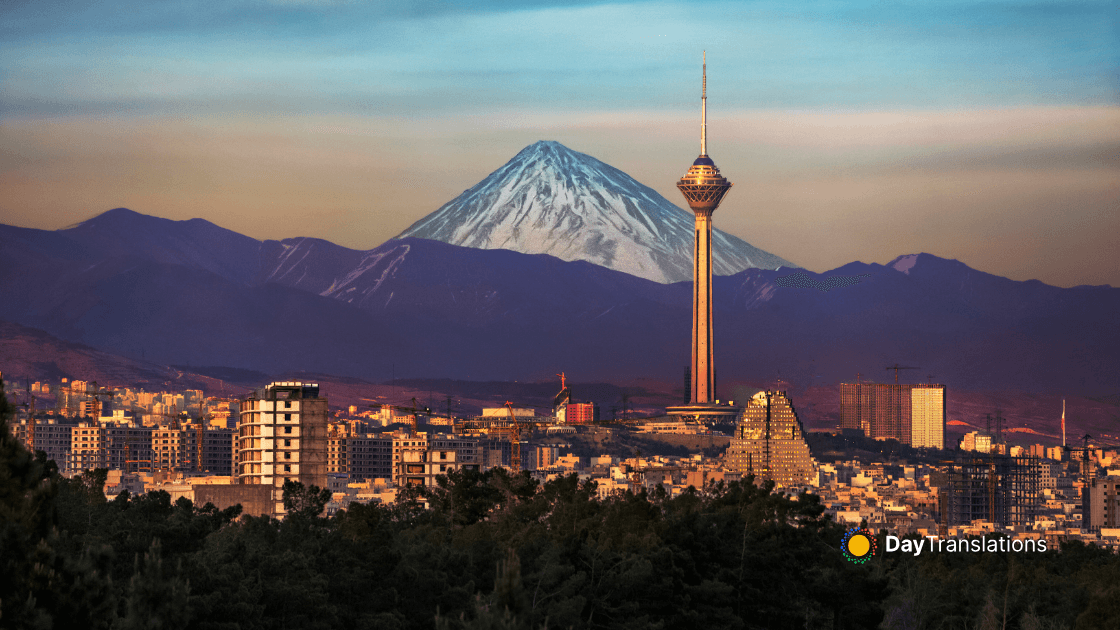
Situated in the Middle East, Iran is bordered on the north by Armenia, Azerbaijan and Turkmenistan, on the east by Afghanistan and Pakistan, on the south by the Persian Gulf and the Gulf of Oman, and on the west by Turkey and Iraq. The Islamic Republic of Iran, formerly known internationally as Persia until 1935, is the 18th largest country in the world in terms of area at 1,648,195 km², and has a population of over seventy million people. It is a country of special geostrategic significance due to its central location in Eurasia. Iran ranks second in the world in natural gas reserves and also second in oil reserves.
:: Background of Iran ::
Known as Persia until 1935, Iran became an Islamic republic in 1979 after the ruling monarchy was overthrown and the shah was forced into exile. Conservative clerical forces established a theocratic system of government with ultimate political authority vested in a learned religious scholar referred to commonly as the Supreme Leader who, according to the constitution, is accountable only to the Assembly of Experts. US-Iranian relations have been strained since a group of Iranian students seized the US Embassy in Tehran on 4 November 1979 and held it until 20 January 1981. During 1980-88, Iran fought a bloody, indecisive war with Iraq that eventually expanded into the Persian Gulf and led to clashes between US Navy and Iranian military forces between 1987 and 1988. Iran has been designated a state sponsor of terrorism for its activities in Lebanon and elsewhere in the world and remains subject to US and UN economic sanctions and export controls because of its continued involvement in terrorism and conventional weapons proliferation. Following the election of reformer Hojjat ol-Eslam Mohammad KHATAMI as president in 1997 and similarly a reformer Majles (parliament) in 2000, a campaign to foster political reform in response to popular dissatisfaction was initiated. The movement floundered as conservative politicians, through the control of unelected institutions, prevented reform measures from being enacted and increased repressive measures. Starting with nationwide municipal elections in 2003 and continuing through Majles elections in 2004, conservatives reestablished control over Iran’s elected government institutions, which culminated with the August 2005 inauguration of hardliner Mahmud AHMADI-NEJAD as president. In December 2006 and March 2007, the international community passed resolutions 1737 and 1747 respectively after Iran failed to comply with UN demands to halt the enrichment of uranium or to agree to full IAEA oversight of its nuclear program. In October 2007, Iranian entities were also subject to US sanctions under EO 13382 designations for proliferation activities and EO 13224 designations for providing material support to the Taliban and other terrorist organizations..
In this Country Profile
:: Geography of Iran ::
Location: Middle East, bordering the Gulf of Oman, the Persian Gulf, and the Caspian Sea, between Iraq and Pakistan.
Geographic coordinates: 32 00 N, 53 00 E
Area:
total: 1.648 million sq km
land: 1.636 million sq km
water: 12,000 sq km
Area – comparative: slightly larger than Alaska
Land boundaries:
total: 5,440 km
border countries: Afghanistan 936 km, Armenia 35 km, Azerbaijan-proper 432 km, Azerbaijan-Naxcivan exclave 179 km, Iraq 1,458 km, Pakistan 909 km, Turkey 499 km, Turkmenistan 992 km
Maritime claims:
territorial sea: 12 nm
contiguous zone: 24 nm
exclusive economic zone: bilateral agreements or median lines in the Persian Gulf
continental shelf: natural prolonga
Climate: mostly arid or semiarid, subtropical along Caspian coast
Terrain: rugged, mountainous rim; high, central basin with deserts, mountains; small, discontinuous plains along both coasts.
Elevation extremes:
lowest point: Caspian Sea -28 m
highest point: Kuh-e Damavand 5,671 m
Natural resources:
petroleum, natural gas, coal, chromium, copper, iron ore, lead, manganese, zinc, sulfur.
Land use:
arable land: 9.78%
permanent crops: 1.29%
other: 88.93% (2005)
Natural hazards: periodic droughts, floods; dust storms, sandstorms; earthquakes.
Environment – current issues: air pollution, especially in urban areas, from vehicle emissions, refinery operations, and industrial effluents; deforestation; overgrazing; desertification; oil pollution in the Persian Gulf; wetland losses from drought; soil degradation (salination); inadequate supplies of potable water; water pollution from raw sewage and industrial waste; urbanization.
Environment – international agreements: party to: Biodiversity, Climate Change, Climate Change-Kyoto Protocol, Desertification, Endangered Species, Hazardous Wastes, Marine Dumping, Ozone Layer Protection, Ship Pollution, Wetlands. Signed, but not ratified: Environmental Modification, Law of the Sea, Marine Life Conservation.
:: People of Iran ::
Population: 65,875,224 (July 2008 est.)
Age structure:
0-14 years: 22.3% (male 7,548,116/female 7,164,921)
15-64 years: 72.3% (male 24,090,976/female 23,522,861)
65 years and over: 5.4% (male 1,713,533/female 1,834,816) (2008 est.)
Median age:
total: 26.4 years
male: 26.2 years
female: 26.7 years (2008 est.)
Population growth rate: 0.792% (2008 est.)
Birth rate: 16.89 births/1,000 population (2008 est.)
Death rate: 5.69 deaths/1,000 population (2008 est.)
Net migration rate: -3.28 migrant(s)/1,000 population (2008 est.)
Sex ratio:
at birth: 1.05 male(s)/female
under 15 years: 1.05 male(s)/female
15-64 years: 1.02 male(s)/female
65 years and over: 0.93 male(s)/female
total population: 1.03 male(s)/female (2008 est.)
Infant mortality rate:
total: 36.93 deaths/1,000 live births
male: 37.12 deaths/1,000 live births
female: 36.73 deaths/1,000 live births (2008 est.)
Life expectancy at birth:
total population: 70.86 years
male: 69.39 years
female: 72.4 years (2008 est.)
Total fertility rate: 1.71 children born/woman (2008 est.)
HIV/AIDS – adult prévalence rate: 0.2% (2005 est.)
HIV/AIDS – people living with HIV/AIDS: 66,000 (2005 est.)
HIV/AIDS – deaths: 1,600 (2005 est.)
Nationality: noun: Iranian(s) adjective: Iranian
Ethnic groups: Persian 51%, Azeri 24%, Gilaki and Mazandarani 8%, Kurd 7%, Arab 3%, Lur 2%, Baloch 2%, Turkmen 2%, other 1%
Religions: Muslim 98% (Shia 89%, Sunni 9%), other (includes Zoroastrian, Jewish, Christian, and Baha’i) 2%
Languages: Persian, Persian dialects 58%, Turkic and Turkic dialects 26%, Kurdish 9%, Luri 2%, Balochi 1%, Arabic 1%, Turkish 1%, other 2%
Literacy:
definition: age 15 and over can read and write
total population: 77%
male: 83.5%
female: 70.4% (2002 est.)
Geography of Iran: Important Geographical Information about Iran
In this Country Profile
The mountains of Iran have shaped both the political and the economic history of the country for several centuries. One of the world’s most mountainous countries, Iran consists mainly of mountain ranges encircling a high central plateau. The main mountain chain is the Zagros Mountains. Many peaks in the Zagros exceed 3,000 meters above sea level. The narrow but high Alborz Mountains represent another important Iranian mountain range. Volcanic Mount Damavand (5 671 m), located in the center of the Alborz, is the country’s highest peak.
Iran consists mainly of mountain ranges encircling a high central plateau: Plateau of Iran. The average elevation of this plateau is about 900 meters. The eastern part of the plateau is covered by two salt deserts, the Dasht-e Kavir (Great Salt Desert) and the Dasht-e Lut which occupy most of the region northeast and east of the barren central plain. Iran has only two expanses of lowlands: the Khuzestan Plain (much covered with marshes) in the southwest and the Caspian Sea coastal plain (longer and narrower) in the north.
There are no major rivers in the country. Most rivers originate from the mountains and drain into the interior basins. Lake Urmia, which is salty and shallow, is the country’s largest lake.
Information about the Iranian Flag: Colors and Meaning of the Flag of Iran
In this Country Profile
The flag of Iran was adopted on July 29, 1980. The flag of Iran consists of three equal horizontal bands of green (top), white, and red; the national emblem (a stylized representation of the word Allah in the shape of a tulip, centered in the white band. ALLAH AKBAR (God is Great) in white Arabic script is repeated 11 times along the bottom edge of the green band and 11 times along the top edge of the red band.
The three horizontal bands of green above white above red, symbolize vigour, peace, and courage. The emblem (Coat of Arms) is a highly stylized composite of various elements representing different facets of Islamic life: Allah, the Book, the Sword, the five principles of Islam, balance, unity, neutrality, and the universal government of the downtrodden. Along the edges of the green and red stripes appears a stylized version of the Kufic script used for the Qur’an. The phrase Allahu Akbar (“God is Great”) is repeated 22 times. This is the date in the Islamic calendar on which Islamic Revolution triumphed over Pahlavi dynasty in 1979.
Extensive List of Languages of Iran: Spoken and Extinct Languages
In this Country Profile
:: List of Languages ::
Aimaq
[aiq] 170,000 in Iran (1993 Johnstone). Mazanderan Province. Dialects: Teimuri (Teimurtash). Classification: Indo-European, Indo-Iranian, Iranian, Western, Southwestern, Persian
Alviri-Vidari
[avd] Near Saveh, Markazi Province. Dialects: Alvir (Alviri), Vidar (Vidari). Related to Gozarkhâni and Vafsi. Classification: Indo-European, Indo-Iranian, Iranian, Western, Northwestern, Talysh
Arabic, Gulf Spoken
[afb] 200,000 in Iran (1993). Southern coast; Khamseh nomads live in eastern Fars Province; other Arab nomadic groups in several southcentral provinces of Iran. Alternate names: Khaliji, Gulf Arabic. Dialects: Al-Hasâ, Khamseh. Classification: Afro-Asiatic, Semitic, Central, South, Arabic
Arabic, Mesopotamian Spoken
[acm] 1,200,000 in Iran. Khuzestan Province, southwest side of Zagros Mountains, along the bank of the Shatt al Arab. Alternate names: Mesopotamian Gelet Arabic, `Arabi, Arabi. Classification: Afro-Asiatic, Semitic, Central, South, Arabic
Armenian
[hye] 170,800 in Iran (1993). Northern Iran, Azerbaijan Provinces around Khoi, Shahpur, Ahar, Tabriz, Tehran, Esfahan, Shiraz. Alternate names: Haieren, Somekhuri, Ermenice, Armjanski, Armani, Erâmani. Dialects: Eastern Armenian, Agulis, Astrakhân, Jolfâ (Dzhulfa), Karabagh Shamakhi, Khoi-Salmst (Khvoy), Urmia-Maragheh. Classification: Indo-European, Armenian
Ashtiani
[atn] 21,099 (2000 WCD). Ashtiyan and Tafresh, Markazi Province. Alternate names: Astiani, Ashtiyani. Dialects: Ashtiani, Tafresh. Transitional between central Iranian dialects and Talysh. Dialects may be separate languages. Very close to Vafsi. Classification: Indo-European, Indo-Iranian, Iranian, Western, Northwestern, Central Iran
Assyrian Neo-Aramaic
[aii] 10,000 to 20,000 in Iran (1994). Ethnic population: 80,000 (1994). Reza’iyeh (Rizaiye, Urmia, Urmi). Most in TehranTehran. Dialects: Iranian Koine (General Urmi). Classification: Afro-Asiatic, Semitic, Central, Aramaic, Eastern, Central, Northeastern
Azerbaijani, South
[azb] 23,500,000 in Iran (1997). Population includes 290,000 Afshar, 5,000 Aynallu, 7,500 Baharlu, 1,000 Moqaddam, 3,500 Nafar 1,000 Pishagchi, 3,000 Qajar, 2,000 Qaragozlu, 130,000 Shahsavani (1993). Population total all countries: 24,364,000. East and West Azerbaijan, Ardebil, Zanjan, and part of Markazi provinces. Many in a few districts of TehranTehran. Some Azerbaijani-speaking groups are in Fars Province and other parts of Iran. Also spoken in Afghanistan, Azerbaijan, Iraq, Jordan, Syria, Turkey (Asia), USA. Alternate names: Azeri, Torki. Dialects: Aynallu (Inallu, Inanlu), Karapapakh, Tabriz, Afshari (Afshar, Afsar), Shahsavani (Shahseven), Moqaddam, Baharlu (Kamesh), Nafar, Qaragozlu, Pishagchi, Bayat, Qajar. Distinctive linguistic differences between the Azerbaijani of the former USSR (North) and Iranian Azerbaijani (South) in phonology, lexicon, morphology, syntax, and loanwords. Teimurtash (7,000 in Mazanderan; possibly the same as Teimuri, Timuri, Taimouri) and Salchug (in Kerman Province) may be dialects. Qashqa’i may be a dialect. Part of the Qizilbash merchant group speak the Afshari dialect, which is strongly influenced by Persian. The dialect spoken in Syria is different from Kirkuk of Iraq, and may be closer to Turkish (Osmanli) than to Azerbaijani. There is a gradual transition of dialects from Turkish to Azerbaijani from central to western Turkey. Classification: Altaic, Turkic, Southern, Azerbaijani
Bakhtiari
[bqi] 1,000,000 (2001). 350,000 monolinguals. Ethnic population: 1,000,000 (2001). Southwestern Iran: western Chahar-Mahal va Bakhtiari, eastern Khuzestan, eastern Lorestan, and western Esfahan. Masjed-e Soleiman, Shahr-e Kord, Dorud. Alternate names: Lori-ye Khaveri, Luri, Lori. Dialects: Haft-Lang, Charlang, Chelgerd, Kuhrang (Kohrang). Bakhtiari is on a dialect continuum between Northern Luri and Southern Luri. Farsi dialects in Chaharmahal va Bakhtiari Province are mutually intelligible with Bakhtiari. Close to Kumzari. Lexical similarity 75% with Southern Luri (Mamasani), 86% with Southern Luri (Boyerahmadi), 73% with Northern Luri (rural), 78% with Northern Luri (Khorramabadi), 76% with Western Farsi. Classification: Indo-European, Indo-Iranian, Iranian, Western, Southwestern, Luri
Balochi, Southern
[bcc] 405,000 in Iran. Southern Sistan va Baluchistan Province. Alternate names: Baluchi, Baluci, Baloci. Dialects: Makrani (Lotuni). Classification: Indo-European, Indo-Iranian, Iranian, Western, Northwestern, Balochi
Balochi, Western
[bgn] 451,000 in Iran (1986). Northern Sistan va Baluchistan Province. Half are settled in cities and villages, half are nomadic. Alternate names: Baluchi, Baluci, Baloci. Dialects: Rakhshani (Raxshani), Sarawani. Classification: Indo-European, Indo-Iranian, Iranian, Western, Northwestern, Balochi
Bashkardi
[bsg] 7,033 (2000 WCD). Eastern Hormozgan, Southern Kerman, and possibly southwestern Sistan va Baluchistan provinces. Alternate names: Bashaka. Dialects: Northern Bashaka, Southern Bashaka. Classification: Indo-European, Indo-Iranian, Iranian, Western, Northwestern, Balochi
Brahui
[brh] 10,000 in Iran (1983). Central Sistan and Baluchistan provinces, including Zahedan. Alternate names: Brahudi, Birahui, Kur Galli. Dialects: Jharawan, Kalat, Sarawan. Classification: Dravidian, Northern
Dari, Zoroastrian
[gbz] 8,000 to 15,000 (1999). Yezd and Kerman areas. Alternate names: Dari, “Gabri”, “Gabar”, “Yazdi”. Dialects: Related to Parsi-Dari and Nâyini. Classification: Indo-European, Indo-Iranian, Iranian, Western, Northwestern, Central Iran
Dezfuli
[def] Dezful, northern Khuzestan Province. Alternate names: Dezhfili, Dizfuli. Classification: Indo-European, Indo-Iranian, Iranian, Western, Northwestern, Unclassified
Domari
[rmt] 1,338,271 in Iran (2000 WCD). Population total all countries: 1,876,116. Kurbat and Luli are in western Iran. Mehtar is in Fars and Kohgiluyeh va Boyerahmad Province. Karachi is in northern Iran. Also spoken in Afghanistan, Egypt, India, Iraq, Israel, Jordan, Libya, Palestinian West Bank and Gaza, Russia (Europe), Sudan, Syria, Turkey (Europe), Uzbekistan. Alternate names: Middle Eastern Romani, Tsigene, Gypsy, Luti, Mehtar. Dialects: Kurbati (Ghorbati), Qinati, Yürük, Koli, Karachi, Luli, Maznoug, Nawar. A number of the dialects in Iran may be highly divergent from one another. Not intelligible to Romani speakers. Classification: Indo-European, Indo-Iranian, Indo-Aryan, Central zone, Dom
Dzhidi
[jpr] Alternate names: Judeo-Persian, Djudi, Judi. Classification: Indo-European, Indo-Iranian, Iranian, Western, Southwestern, Persian
Eshtehardi
[esh] Eshtehard and environs, Karaj District, Markazi Province. Dialects: Close to Takestani. Eshtehardi may be the same language as some other dialects spoken to the southwest of Qazvin. Classification: Indo-European, Indo-Iranian, Iranian, Western, Northwestern, Talysh
Fars, Northwestern
[faz] Scattered in isolated pockets of Fars Province. Dialects: Close to Sivandi. Classification: Indo-European, Indo-Iranian, Iranian, Western, Northwestern, Central Iran
Fars, Southwestern
[fay] Central Fars Province: Somghun, Papun, Masarm, Buringun, Kondazi, Davâni, others. Alternate names: “Tajik”. Dialects: Related to Lari. Classification: Indo-European, Indo-Iranian, Iranian, Western, Southwestern, Fars
Farsi, Western
[pes] 22,000,000 in Iran (1997). Population includes 800,000 Eastern Farsi in Khorasan, Gilan, Tat, Bakhtiari, Lur. Population total all countries: 24,316,121. Throughout Iran. Most heavily concentrated in central, south central, and northeastern Iran. Also spoken in Australia, Austria, Azerbaijan, Bahrain, Canada, Denmark, France, Germany, Greece, India, Iraq, Israel, Netherlands, Oman, Qatar, Saudi Arabia, Spain, Sweden, Tajikistan, Turkey (Asia), Turkmenistan, United Arab Emirates, United Kingdom, USA, Uzbekistan. Alternate names: Persian, New Persian, Parsi, Irani. Dialects: Ketabi, Tehrani, Shirazi, Old Shirazi, Qazvini, Mahalhamadani, Kashani, Esfahani, Sedehi, Kermani, Araki, Shirazjahromi, Shahrudi Kazeruni, Mashadi (Meshed), Basseri, Yazdi, Bandari. The literary language is virtually identical in Iran and Afghanistan, with very minor lexical differences. Zargari may be a dialect used by goldsmiths (also see Balkan Romani in Iran). Dialect shading into Dari in Afghanistan and Tajiki in Tajikistan. Many of the dialects may be separate languages. Classification: Indo-European, Indo-Iranian, Iranian, Western, Southwestern, Persian
Gazi
[gzi] 7,033 (2000). Gaz. Classification: Indo-European, Indo-Iranian, Iranian, Western, Northwestern, Central Iran
Georgian
[kat] 50,000 in Iran. Fereydan and Fereydunshahr provinces, Esfahan, Najaf Abad, Shahin Shahr, Yazdanshahr. Alternate names: Kartuli, Gruzin. Dialects: Fereydan (Ferejdan). Classification: Kartvelian, Georgian
Gilaki
[glk] 3,265,000 (1993). Population includes 2,000 Galeshi. Gilan Region, coastal plain, south of Talish. Galeshi is a mountain dialect. Alternate names: Gelaki, Gilani, Guilaki, Guilani. Dialects: Galeshi, Rashti. Close to Mâzanderâni. Classification: Indo-European, Indo-Iranian, Iranian, Western, Northwestern, Caspian
Gozarkhani
[goz] Gozarkhan (northwest of Qazvin); Tajrish, north of Tehran; Alamut area. Dialects: Close to Maraghei, as well as Semnani languages. Classification: Indo-European, Indo-Iranian, Iranian, Western, Northwestern, Talysh
Harzani
[hrz] 28,132 (2000 WCD). West Azerbaijan Province: Qalingie, between Marand and Jolfa, northwest of Tabriz; related varieties in Galin Qaya, Babra, and Dizmar. Dialects: Close to Karingani and Talysh. Classification: Indo-European, Indo-Iranian, Iranian, Western, Northwestern, Talysh
Hawrami
[hac] 22,948 in Iran (2000 WCD). For all speakers of Gurani group, several million; Hawrami dialect: 20,000 (Blau 1989). Western part of Kordestan province, near Iraqi border, in Hewraman, east of Sanandaj, also north of Kermanshah. Alternate names: Hewrami, Howrami, Hawramani, Awromani, Gurani, Gorani. Dialects: Kakai (Macho), Hawraman-I Luhon, Hawraman-I Taxt, Kandula, Gawhara, Gurani (Gorani). Classification: Indo-European, Indo-Iranian, Iranian, Western, Northwestern, Zaza-Gorani
Hazaragi
[haz] 283,000 in Iran (1993). Population has increased significantly due to the influx of Hazaragi-speaking refugees from Afghanistan. Throughout Iran, especially urban centers. Alternate names: Hazara, Hezareh, Hezare’i. Classification: Indo-European, Indo-Iranian, Iranian, Western, Southwestern, Persian
Jadgali
[jdg] Alternate names: Jatgali, Jatki, Jat. Classification: Indo-European, Indo-Iranian, Indo-Aryan, Northwestern zone, Sindhi
Kabatei
[xkp] Rudbar District, Gilan Province. Dialects: Kalas, Kabate. Close to Upper Taromi. Classification: Indo-European, Indo-Iranian, Iranian, Western, Northwestern, Talysh
Kajali
[xkj] Khalkhal District in Eastern Azerbaijan Province, Kaqazkonan District, Kajal. Dialects: Close to Shahrudi and Koresh-e Rostam. Classification: Indo-European, Indo-Iranian, Iranian, Western, Northwestern, Talysh
Karingani
[kgn] 17,583 (2000 WCD). East Azerbaijan Province, Dizmar District, Keringan village, and Hasanu District, northeast of Tabriz. Alternate names: Keringani. Dialects: Various dialects. Very close to Harzani. Classification: Indo-European, Indo-Iranian, Iranian, Western, Northwestern, Talysh
Kazakh
[kaz] 3,000 in Iran (1982). Gorgan City, Mazanderan Province. Alternate names: Kazak, Kazakhi, Gazaqi. Classification: Altaic, Turkic, Western, Aralo-Caspian
Khalaj
[kjf] 42,107 in Iran (2000 WCD). Also spoken in Azerbaijan. Dialects: Related to Kurdish and Talysh. Classification: Indo-European, Indo-Iranian, Iranian, Western, Northwestern
Khalaj, Turkic
[klj] 42,107 (2000 WCD). Northeast of Arak in Central Province. Alternate names: Khalaj. Dialects: Not a dialect of Azerbaijani, as previously supposed. An independent language distinct from other extant Turkish languages (Doerfer 1971). Classification: Altaic, Turkic, Southern, Azerbaijani
Kho’ini
[xkc] Kho’in District, Zanjan Province. Dialects: Various dialects. Related to Kabatei and Takestani. Closely related varieties spoken in the nearby villages of Balbavin, Sefidkamar, Halab, Sa`dabad, and other villages. Classification: Indo-European, Indo-Iranian, Iranian, Western, Northwestern, Talysh
Khorasani Turkish
[kmz] 400,000 (1977 Doerfer). Northeast Iran, in the northern part of Khorasan Province, especially northwest of Mashhad. West dialect in Bojnurd Region; north dialect in Quchan Region (probably the largest), south dialect around Soltanabad near Sabzevar. Alternate names: Quchani. Dialects: West Quchani (Northwest Quchani), North Quchani (Northeast Quchani), South Quchani. Midway linguistically between Azerbaijani and Turkmen, but not a dialect of either. Oghuz-Uzbek in Uzbekistan is reported to be a dialect. Classification: Altaic, Turkic, Southern, Turkish
Khunsari
[kfm] 21,099 (2000 WCD). Esfahan Province, Kashan and Esfahan areas. Dialects: Khunsari may be only one of a large complex of dialects in Esfahan Province. Other Northwestern dialects that have been described in the same area and which may be very closely related include those of Vonishun, Qohrud, Keshe, Zefre, Sedeh, Gaz, Kafran, Mahallat, So, Mejme, and Djaushaqan. Classification: Indo-European, Indo-Iranian, Iranian, Western, Northwestern, Central Iran
Koresh-e Rostam
[okh] Eastern Azerbaijan Province, Koresh-e Rostam District. Dialects: Related to Shahrudi and Kajali. Classification: Indo-European, Indo-Iranian, Iranian, Western, Northwestern, Talysh
Koroshi
[ktl] 160 to 200 (1992 Mohamedi). 40 to 50 families. Fars Province. Classification: Indo-European, Indo-Iranian, Iranian, Western, Northwestern, Balochi
Kurdish, Central
[ckb] 3,250,000 in Iran. Northwest Iran, primarily Kordestan, West Azerbaijan provinces, areas north of Kermanshah. Mukri is spoken around Mahabad, and Sineyi (Sine’i) is spoken around Sanandaj (Sine). Alternate names: Kordi, Korkora, Kurdi, Kurdy, Sorani, Mukri, Mokri, Sine’i, Wawa. Dialects: Mukri, Sanandaji (Sine’i, Sina’i, Sineyi), Southern Jafi, Pijdari. Classification: Indo-European, Indo-Iranian, Iranian, Western, Northwestern, Kurdish
Kurdish, Northern
[kmr] 350,000 in Iran (1988 Stanzer). North and west of Lake Urmia, extending to border with Azerbaijan. Some small communities live in the Caspian region (Mazandaran, Kalardasht [Fattah 2000]). Khorasani Kurmanji speakers live east of the Caspian Sea, in northern Khorasan Province, bordering Turkmenistan. Centers include Quchan and Bojnurd. Alternate names: Kurmanji, Kurmancî, Eastern Kurmanji, Kordi, Kurdi. Dialects: Khorasani Kurmanji. Classification: Indo-European, Indo-Iranian, Iranian, Western, Northwestern, Kurdish
Kurdish, Southern
[sdh] 3,000,000 in Iran (2000 Fattah). Western Iran, Kermanshah, Ilam provinces; Eastern Iraq bordering these provinces including Xanaqin. Also spoken in Iraq. Dialects: Kolyai, Kermanshahi (Kermanshani), Kalhori, Garrusi (Bijari) Sanjabi, Malekshahi (Maleksh ay), Bayray, Kordali, Feyli, Luri. Classification: Indo-European, Indo-Iranian, Iranian, Western, Northwestern, Kurdish
Laki
[lki] 1,000,000 (2002 Fattah). 150,000 monolinguals. Population includes 10,000 Nahavand Lurs. Western Iran, Ilam, Lorestan provinces, cities of Aleshtar, Kuhdesht, Nurabad-e Dolfan, Khorramabad. Alternate names: Leki, Alaki. Dialects: Lexical similarity 70% with Western Farsi, 78% with Luristani (Khorramabadi), 69% with Northern Luri (central rural dialects). Classification: Indo-European, Indo-Iranian, Iranian, Western, Northwestern, Kurdish
Lari
[lrl] 80,000. Ethnic population: 100,000. Throughout Lar District, South Fars Province; Shiraz; United Arab Emirates. Alternate names: Larestani, Achomi. Dialects: Lari. Verbal system is quite distinct from Western Farsi. Classification: Indo-European, Indo-Iranian, Iranian, Western, Southwestern, Fars
Lasgerdi
[lsa] In Lasjerd, Semnan Province (40 km southwest of Semnan). Dialects: Related to Sorkhei. Classification: Indo-European, Indo-Iranian, Iranian, Western, Northwestern, Semnani
Luri, Northern
[lrc] 1,500,000 (2001). Ethnic population: 1,700,000 (2001). Western Iran: Central and Southern Lorestan, Northern Khuzestan, Southern Hamadan Province, the southern edge of Markazi Province, some regions of Ilam, and possibly a small population in eastern Iraq. Populations also in Khorramabad, Borujerd, Andimeshk. Alternate names: Lori, Luri. Dialects: Khorramabadi, Borujerdi, Nahavandi, Andimeshki, Bala-Gariva’i, Mahali (Rural), Cagani. The major Northern Luri dialects (Khorramabadi, Borujerdi, etc.) are found in Lorestan and Khuzestan. Some local regions in Ilam Province (Posht-e Kuh) are said to speak Northern Luri dialects. Mainly south Kurdish dialects are spoken in Ilam Province (Fattah 2000). Also, according to Fattah, there are a small number of villages in Iraq, where a dialect of Northern Luri may be spoken. Close to Kumzari. Lexical similarity of Mahali dialect 80% with Western Farsi, 69% with Laki, and 73% with Bakhtiari (Haflang); Khorramabadi dialect 85% with Western Farsi, 78% with Laki, and 75% with Bakhtiari (Haflang). Similarity to Western Farsi is due to language shift, but also to lexical borrowing. Classification: Indo-European, Indo-Iranian, Iranian, Western, Southwestern, Luri
Luri, Southern
[luz] 875,000 (1999). 300,000 monolinguals. Ethnic population: 900,000. Kohgiluyeh va Boyerahmad Province (Yasuj is center of Boyerahmadi, Dehdasht is center of Kohgiluyeh), eastern Khuzestan Province (Kohgiluyeh), Northwestern Fars Province (Nurabad is center of Mamasani, Shul is center of Shuli), Shiraz. Alternate names: Ruliy, Lori-ye Jonubi, Luri, Lur, Lor, Lori. Dialects: Boyerahmadi, Yasuji (Yasichi), Kohgiluyeh, Mamasani, Shuli. Southern Luri is on a continuum between Bakhtiari and Western Farsi “dialects” such as Bushehri and Fars Province varieties. There is a non-Lur tribe in Fars Province called Kurdshuli, which is reported to speak a Southern Luri dialect. Their winter quarters are at Qasr-e Dasht near Sivand, which is 70 km from Sharaz on the Shiraz-Esfahan road (Ivanow 1959, unpublished). Close to Kumzari. Lexical similarity 75% with Western Farsi, 80% with Bushehri dialect of Western Farsi; Mamasani dialect 75% with Bakhtiari, Boyerahmadi dialect 86% with Bakhtiari. Classification: Indo-European, Indo-Iranian, Iranian, Western, Southwestern, Luri
Mandaic
[mid] 500 (2001). Ethnic population: 23,000. Hoveiseh and other towns, Khuzestan. Alternate names: Mandaean, Neo-Mandaic, Modern Mandaic, Manda:yi, Mandi, Subbi, Sabean, Sabe’in. Dialects: Ahwaz (Ahvaz), Shushtar, Iraqi Neo-Mandaic. Little dialect variation. Classification: Afro-Asiatic, Semitic, Central, Aramaic, Eastern, Mandaic
Maraghei
[vmh] Upper Rudbar area (Rudbar-e Alamut). Dialects: Dikini. Various dialects. Close to Gozarkhani. Dialect in Kuhpayeh may be the same language. Classification: Indo-European, Indo-Iranian, Iranian, Western, Northwestern, Talysh
Mazanderani
[mzn] 3,265,000 (1993). Northern Iran near Caspian Sea, southern half of Mazanderan Province. Alternate names: Tabri, Mazandarani. Dialects: Mazanderani, Gorgani. Related to Gilaki. Qadikolahi (Ghadikolahi) and Palani may be dialects. Classification: Indo-European, Indo-Iranian, Iranian, Western, Northwestern, Caspian
Natanzi
[ntz] 7,033 (2000 WCD). Esfahan Province: Natanz, on the Esfahan-Kashan Road. Dialects: Natanzi may be part of a larger complex of Esfahan Province dialects including Yarani (Yarandi) and Farizandi. Classification: Indo-European, Indo-Iranian, Iranian, Western, Northwestern, Central Iran
Nayini
[nyq] 7,033 (2000 WCD). Esfahan Province: Nayin and Anarak, 100 km east of Esfahan; Khuri is spoken in Khur (Khvor) and Mehrjan, 250 km northeast of Esfahan. Alternate names: Biyabanak. Dialects: Nayini, Anarak, Khuri. Dialects listed may be separate languages. Khuri is distinct from other dialects. Related to Zoroastrian Dari. Classification: Indo-European, Indo-Iranian, Iranian, Western, Northwestern, Central Iran
Parsi-Dari
[prd] 350,000 in Iran. Population total all countries: 700,000. Also spoken in Afghanistan. Alternate names: Parsee-Dari. Dialects: Parsi-Dari is reported to not be inherently intelligible with Parsi of India, Pakistan, and other countries, but linguistically and ethnically related. They diverged 600 to 700 years ago or more. It is related to Dari. Classification: Indo-European, Indo-Iranian, Iranian, Western, Northwestern, Central Iran
Pashto, Southern
[pbt] 113,000 in Iran (1993). Population does not include refugees. Khorasan on Afghanistan border east of Qa’en. Alternate names: Pashtu, Paktu, “Afghani”. Classification: Indo-European, Indo-Iranian, Iranian, Eastern, Southeastern, Pashto
Persian Sign Language
[psc] Classification: Deaf sign language
Qashqa’i
[qxq] 1,500,000 (1997). Southwestern Iran, Fars Province and Southern Kohgiluyeh va Boyerahmad Province. Shiraz, Gachsaran, and Firuzabad are centers. Alternate names: Qashqay, Qashqai, Kashkai. Dialects: Very close to Azerbaijani. Classification: Altaic, Turkic, Southern, Azerbaijani
Razajerdi
[rat] Qazvin and Kuhpayeh area, Razajerd. Dialects: Various dialects. Related to Takestani. Classification: Indo-European, Indo-Iranian, Iranian, Western, Northwestern, Talysh.
Romani, Balkan
[rmn] Dialects: Zargari. Classification: Indo-European, Indo-Iranian, Indo-Aryan, Central zone, Romani,
Rudbari
[rdb] Sefid Rud Valley. Dialects: Various dialects. Transitional to Caspian languages and related to Vafsi. Classification: Indo-European, Indo-Iranian, Iranian, Western, Northwestern, Talysh
Salchuq
[slq] Dialects: Probably a dialect of Azerbaijani. Classification: Altaic, Turkic, Southern, Azerbaijani
Sangisari
[sgr] Semnân Province. Alternate names: Sangesari. Classification: Indo-European, Indo-Iranian, Iranian, Western, Northwestern, Semnani
Semnani
[smy] 21,099 (2000 WCD). Semnan Province. Classification: Indo-European, Indo-Iranian, Iranian, Western, Northwestern, Semnani
Senaya
[syn] 60 in Iran (1997 H. Mutzafi). Population total all countries: 460. Tehran and Qazvin. Originally in Sanandaj, Kordestan Province. Some in western Europe. Also spoken in Australia, USA. Alternate names: Sena:ya, Christian Neo-Aramaic, Shan Sray, Lshan Sray, Soray, Sray, Shan Gyanan. Dialects: The variety in Qazvin is slightly different from that spoken by Sanandaj-born people. Classification: Afro-Asiatic, Semitic, Central, Aramaic, Eastern, Central, Northeastern
Shahmirzadi
[srz] Shahmirzad, Semnan Province. Dialects: Close to Mazanderani and Gilaki. Classification: Indo-European, Indo-Iranian, Iranian, Western, Northwestern, Caspian
Shahrudi
[shm] Khalkhal District in Eastern Azerbaijan Province, Shahrud District, Shal, Kolur, Lerd. Dialects: Close to Kajali and Koresh-e Rostam. Different from Sharudi, a Western Farsi dialect. Classification: Indo-European, Indo-Iranian, Iranian, Western, Northwestern, Talysh
Sivandi
[siy] 7,033 (2000 WCD). Sivand, Fars Province (70 km northwest of Shiraz on the Shiraz-Esfahan Road). Dialects: Related to Northwestern Fars varieties. Classification: Indo-European, Indo-Iranian, Iranian, Western, Northwestern, Central Iran
Soi
[soj] 7,033 (2000 WCD). Classification: Indo-European, Indo-Iranian, Iranian, Western, Northwestern, Central Iran
Sorkhei
[sqo] Semnan Province: Sorkheh, 19 km southwest of Semnan. Dialects: Related to Lasgerdi. Classification: Indo-European, Indo-Iranian, Iranian, Western, Northwestern, Semnani
Takestani
[tks] 220,000. Zanjan, Qazvin and Markazi provinces: various towns and villages in the mainly Azerbaijani-speaking region from Khalkhal to Saveh, especially in Takestan and villages to the south and southeast. Alternate names: Takistani. Dialects: Khalkhal, Tarom, Zanjan, Kharaqan, Ramand (Takestan). Close to Talysh, especially Khalkhal dialect. Transitional between Talysh and Semnani languages. Close to Eshtehardi. Classification: Indo-European, Indo-Iranian, Iranian, Western, Northwestern, Talysh
Talysh
[tly] 112,000 in Iran (1993). Northwest Gilan Province along Caspian coastal plain and adjacent mountainous areas from Masuleh, Masal, and Kapur-Chal (Kepri-Chal) (each about 50 km east of Rasht) to the Azerbaijan border. Northern Talyshi is centered around Astara and the Caspian littoral in Azerbaijan; Central Talyshi is centered in the Asalem-Hashtpar area along the Caspian littoral in Gilan Province; Southern Talyshi is centered around Shandermen, Masal, Masuleh, and surrounding mountainous areas in Gilan Province. Alternate names: Talyshi, Talish, Talishi, Talesh, Taleshi. Dialects: Northern Talyshi, Central Talyshi, Southern Talyshi. Classification: Indo-European, Indo-Iranian, Iranian, Western, Northwestern, Talysh
Taromi, Upper
[tov] Upper Tarom of Zanjan Province, Hazarrud, Siavarud. Dialects: Various dialects. Close to Kabatei. Classification: Indo-European, Indo-Iranian, Iranian, Western, Northwestern, Talysh
Tat, Muslim
[ttt] 8,000 in Iran. Alternate names: Mussulman Tati. Classification: Indo-European, Indo-Iranian, Iranian, Western, Southwestern, Tat
Turkmen
[tuk] 2,000,000 in Iran (1997). Northeast, mainly in Mazanderan Province, along the Turkmenistan border; important centers are Gonbad-e Kavus and Pahlavi Dezh. Alternate names: Torkomani. Dialects: Anauli, Khasarli, Nerezim, Nokhurli (Nohur), Chavdur, Esari (Esary), Goklen (Goklan), Salyr, Saryq, Teke (Tekke), Yomud (Yomut), Trukmen. Classification: Altaic, Turkic, Southern, Turkmenian
Vafsi
[vaf] 18,000 (2003). Markazi Province, Arak District, Vafs, near Tafresh. Dialects: Various dialects. Transitional between central Iranian dialects and Talysh; very close to Ashtiani. Classification: Indo-European, Indo-Iranian, Iranian, Western, Northwestern, Central Iran .
:: Extinct Languages ::
Avestan
[ave] Extinct. Alternate names: Pazend, Avesta. Classification: Indo-European, Indo-Iranian, Iranian, Eastern, Northeastern
Mandaic, Classical
[myz] Extinct. Also used in Iraq (Basrah) and small communities in the USA (New York) and Australia (300 Mandaeans in Sydney in 1995). Alternate names: Classical Mandaean. Dialects: Appears to be the direct ancestor of Modern Mandaic. Classification: Afro-Asiatic, Semitic, Central, Aramaic, Eastern, Mandaic.
:: Reference ::
Gordon, Raymond G., Jr. (ed.), 2005. Ethnologue: Languages of the World, Fifteenth edition. Dallas, Tex.: SIL International. Online version: http://www.ethnologue.com/
Famous Iranian People: Iranian Artists, Scientists, Leaders, Musicians, Politicians and Athletes
In this Country Profile
There is a category of people who changed not only Iran, but the entire world by their thoughts and deeds, and left an eternal trace in the centuries. They are simply remarkable individuals who have one thing in common: are not easy to stereotype.
:: List of Famous People from Iran ::
Reza Abbasi
Reza Abbasi is considered to be one of the foremost Persian artists of all time, the most renowned Persian miniaturist, painter and calligrapher of the Isfahan School, which flourished during the Safavid period under the patronage of Shah Abbas I.
Leila Vaziri
Leila Vaziri is an outstanding Iranian American swimmer. She is the current world record holder of the 50 m women’s backstroke, set on March 28, 2007 in the 2007 World Aquatics Championships in Melbourne, with a time of 28.16 seconds.
Deep Dish
Deep Dish are two of the most well-known and respected artists/producers in electronic dance music today consisting of Iranian-American members Ali “Dubfire” Shirazinia and Sharam Tayebi. The Grammy award winning DJ duo collaborated with famous artist such as Timo Maas, Danny Howells, Richard Morel, Dido and many others. Deep Dish has appeared as the featured artist on the BBC Radio 1 Essential Mix on several occasions. Deep Dish are considered legends of house music across the world.
Ali Javan
Doctor Ali Javan is an Iranian Azari inventor and physicist at MIT who invented the first Gas Laser in 1960 with William R. Bennett. In 1975, Professor Ali Javan received the most prestigious honor of Optical Society of America, the Fredric Ives Medal, with a citation that praised him for “producing an optical device (the Gas Laser) of unparalleled applicability to scientific research.” In 1993, he received the Albert Einstein World Award of Science.
Jahangir Razmi
Is an outstanding Iranian photographer and the author of the entry that won the 1980 Pulitzer Prize for Spot News Photography. His photograph, Firing Squad in Iran, was taken on August 27, 1979 and published anonymously around the world. The photograph was the only anonymous winner of a Pulitzer Prize in the 90-year history of the award, as the identity of Razmi as the photographer was not revealed until 2006.
Arash Miresmaili
Is a retired Iranian judoka who currently is head coach of the Iran national judo team. He won the gold medal in two World Judo Championships, the first one in 2001 in Munich, Germany, and the second in 2003 in Osaka, Japan. He also won bronze medal in the 2005 World Judo Championships in Cairo, Egypt and 2007 World Judo Championships in Rio de Janeiro, Brazil.
Farrokhroo Parsa
Dr Farrokhroo Parsa was a notable Iranian physician, educator, parliamentarian who served as Minister of Education of Iran in the last preIslamic revolution government and was the first female cabinet minister of an Iranian government. Parsa was an outspoken supporter of women’s rights in Iran and was the first woman executed by the Islamic regime for her only crime of educating her compatriots and setting an example.
Lily Afshar
Afshar is an Iranian American classical guitarist who is regarded as one of the world’s best classical guitarists and is known around the world for her powerful and adventurous performances. Her awards are numerous and include: the Orville H. Gibson Award for Best Female Classical Guitarist (2000); the Tennessee Arts Commission Individual Artist Fellowship Award in music (1998); receiving the Tenth (1995), Eleventh (1996), and Twelfth (1997) Annual “Premier Guitarist” award from the Memphis Chapter of the National Academy of Recording Arts & Sciences, Inc and many others.
Siavash Alamouti
Is an Iranian engineer and an Intel fellow who is best known for the invention of the Alamouti space–time block code, filed in 1997, which is a 2 transmit antenna space-time block code and has been adopted in various global standards. He is recognized by the IEEE Communications Society as the author of one of the best 57 papers in the last 50 years of the Society’s history.
Mohammad-Taqi Bahar
Is considered Iran’s greatest 20th (ode) poet and scholar, a brilliant politician, journalist, historian and Professor of Literature. His poems were fairly traditional and strongly nationalistic in character. Bahar is considered by many scholars as the greatest Iranian poet in the past 200 years.