
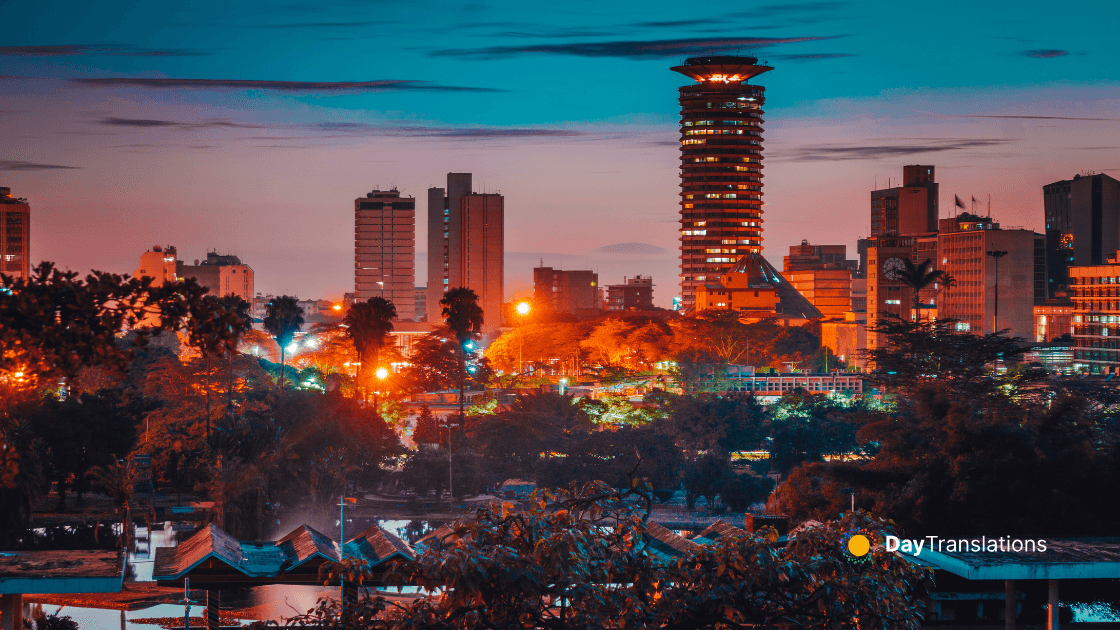
Kenya is one of the most well known countries in Africa and is often associated with going on safari, because it is here that the Big Five animals of Africa could be easily found. The Republic of Kenya is a country that is located in the eastern portion of the African continent.
Kenya boasts of being the most industrially developed nation in the East African region. The capital city of the country is Nairobi, which is also the most populated city in Kenya, having almost 3.4 million residents. The coastal city of Mombasa is another major city in terms of population with under a million residents, while the city of Kisumu has over 650,000, and Nakuru is home to 1.3 million people.
Kenya’s highlands have been developed into one of the most successful agricultural regions in the continent. The country’s plateaus are some of the most beautiful and biodiverse in the continent. At the same time, the sprawling lands of Kenya, especially in the Masai Mara are the backdrop for one of the most amazing natural phenomenon in the world, the great wildebeest migration. Between the months of June and September, about 11.5 million wildebeest make the migration from the Serengeti in Tanzania to Masai Mara, covering a distance of 1,800 miles.
From the interesting cuisine, rich culture, diverse people and amazing natural scenery, Kenya has it all.
In this Country Profile
:: Brief History ::
Kenya is one of the oldest countries in the world, with a long and rich history dating back to prehistoric times. Fossils of giant crocodiles found near Lake Turkana indicate activity in the area more than 200 million years ago. Paleontologists have also unearthed fossils of primates that date back over 20 million year ago, indicating some form of human life, proving that Kenya is one of the early cradles of civilization.
The first human inhabitants of Kenya were classified as hunter-gatherers, which later developed agricultural and herding techniques. In 500 BC, Turkana, Maasai, Samburu, and Luo tribes that practiced animal husbandry and raised livestock from Sudan migrated to Kenya. In the first millennium, Bantu farmers such as the Kikuyu, Kamba, Meru, Luhya, Mijikenda, Ambeere, Kisii and Aermbu groups from West Africa migrated to Kenya, bringing with them modern agricultural techniques as well as ironworking skills.
Between the 1st to the 15th centuries, Arab and Persian traders arrived at the Kenyan coast to establish trade and eventually settle in the area. The Arabs eventually established sultanates in the region and are responsible for the spread of Islam to the people. The Arabs are credited with developing Mombasa as an important trading port, while the Persians introduced the use of copper coins in the 8th century. This diversity in the region resulted in a thriving community based in a number of industries. Unfortunately, many of those living on the Kenyan coast were placed in the prosperous slave trade of the country. Ivory was another valuable commodity in the country during pre-colonial times.
The 19th century marked the beginning of the country’s colonial history. By 1890, the Imperial British East Africa Company arrived on the country’s shores. The British were responsible for building the Kenya-Uganda railway, bringing in numerous Indian immigrants to work. The use of English and the spread of Christianity are also credited to the Europeans.
In the 20th century, the Europeans led by the British, settled in the area making their wealth from coffee and tea plantations. By the 1930s, the whites had majority control of the country’s political power, land, wealth and important industries, while the over one million Kikuyu people remained as farm workers.
This social inequality resulted in the Mau Mau Rebellion in the 1950s, resulting in the loss of life of about 4,700 Mau Mau people. The people sought to gain independence from British rule. However, it was not until 1963 that Kenya would be declared an independent Republic from the United Kingdom.
The Republic of Kenya was declared on December 12, 1964, with Jomo Kenyatta as the first president of the country, which was quickly succeeded by the more than two-decade rule of Daniel arap Moi. Following Kenya’s post-colonial period, the country underwent much political and social turmoil.
Today, Kenya is recognized as a presidential representative democratic republic, with 47 semi-autonomous counties. Compared to its other African neighbors, Kenya has managed to maintain political stability despite many corruption problems.
It has the largest East African economy, with a GDP (purchasing power parity) of almost $70.1 billion in 2011. This is the 83rd biggest GDP in the world although about half of the population is still considered to be living below the poverty line.
Services, agriculture and industry make up the country’s GDP. Tea, coffee, sugarcane, wheat, corn, fruit and vegetables, as well as dairy products and various meats continue to be agricultural staples of the country, while small-scale consumer good production, oil refining, and various industries such as aluminum, lead, steel, and cement continue to thrive. Kenya also has a solid tourism industry as well as a strong commercial ship repair industry.
:: Geography of Kenya ::
Measuring over 580,000 square kilometers, Kenya is the 48th largest country in the world in terms of size. The majority of Kenya’s area is comprised of land, while only a small portion of the country is water.
Kenya’s typography is varied, ranging from the coast of the Indian Ocean, to low plains in the central highlands. The Kenyan Highlands are the highest point in the country and a fertile agricultural region of the country.
Location
Kenya is in the African continent close to the Equator belt. It faces the Indian Ocean and is located in Eastern Africa between the countries of Somalia and Tanzania. Its geographic coordinates are 1° 00’ North and 38° 00’ East.
Area
Kenya is a vast nation covering 580,000 square kilometers of land, or 224,080 square miles. The country’s size is slightly smaller than the U.S. state of Texas. Its enormous size places it as the 48th largest country in the world in terms of land area. Of its total area, just over two percent comprises water, giving the country only 11,227 square kilometers of water, or just 4,335 square miles.
Land Boundaries
Kenya lies on the earth’s equator and is bordered by several other African nations. To the south is the country of Tanzania, while its western neighbor is Uganda. To the northwest is the country of South Sudan, with Ethiopia sharing its northern border. Finally, on the northeast side is the neighboring country of Somalia.
The total land boundaries of Kenya measure 3,477 kilometers. Uganda is the largest land border at 933 kilometers, followed by Ethiopia at 861 kilometers. Tanzania’s land border measures 769 kilometers, while Somalia is at 682 kilometers. Finally, South Sudan shares a land border of 232 kilometers.
Maritime Claims
Kenya has a coastline that measures 536 kilometers and faces the Indian Ocean. Its territorial sea stretches out 12 nautical miles while the exclusive economic zone reaches up to 200 nautical miles. The continental shelf of Kenya is measured at a depth of 200 nautical miles or up to the depth of exploitation.
Climate
Most of Kenya enjoys a hot tropical climate, averaging about 30 °C or 86 °F during the day. Those who live on the coast enjoy a more temperate climate, while the temperatures tend to rise further inland. Those in the south, west and central regions enjoy a climate that is typical of other countries found close to the earth’s equator. In the country’s north and northeast side. The climate is more arid and semi-arid.
Sunshine is predominant throughout the year, although it is slightly cooler during the evening and early morning hours in the country. The months of March to June receive the most rains, called “long rains.” From October to December, the country experiences “short rains.” When rain occurs in the country, it is usually heavy and normally concentrated in the afternoon or evening hours. February and March are known as the hottest months in the country, while the coolest months are July and August.
Terrain
Kenya is spread on the low coastal plain facing the Indian Ocean and at the same time has several mountain ridges and fertile plateaus in the west. The Great Rift Valley bisects the central highlands of the country. The center of the country sits at 3,000 meters or 9,000 feet above sea level.
Elevation Extremes
Mount Kenya is the highest point in the country, with the peak measuring 5,199 meters or 17,057 feet. This is the second highest mountain in the African continent, after Mount Kilimanjaro, and is often covered by glaciers. It is also the 32nd tallest mountain in the world. Mount Kenya can be found in the Kenyan highlands, which are bisected by the Great Rift Valley. It is after this great mountain that the country of Kenya was named after.
Mount Kenya is only 150 kilometers or 93 miles away from the capital city of Nairobi. The highest peaks of Mount Kenya are Batian, which measures 5,199 meters, Nelion, which measures 5,188 meters, and Point Leana, which stands at 4,985 meters. Mount Kenya is regarded as an extinct stratovolcano dating back more than three million years. The center of the mountain has been categorized as a National Park that is visited by more than 16,000 visitors each year. This is also a UNESCO World Heritage Site.
The lowest point in Kenya is the Indian Ocean.
Natural Resources
Kenya is blessed with an abundance of natural resources. Limestone, soda ash, salt, fluorspar, zinc, diatomite, gypsum and various gemstones are some of the minerals and natural resources available in the country. The country is also rich in hydropower.
Wildlife is likewise abundant in the country, especially in the Masai Mara. In fact, Kenya is known for the great wildebeest migration, which happens every year. It is considered one of the Natural Wonders of the World. The Big Five animals of Africa are also abundant in Kenya. This is why the country has become known for travelers on safari seeking lions, leopards, buffalos, rhinoceros and elephants. Other wild animals are aplenty in Kenya, as well as various reptiles and various bird species.
Land Use
Only eight percent of the land is used as arable land. Less than a percent of the land is used for permanent crops, while other uses such as residential and industrial use account for 91% of land use. As of 2003, 1,030 square kilometers of the country’s land has been irrigated.
Natural Hazards
The lack of water is a major concern in Kenya. Recurring droughts are a problem especially during the dry season, while flooding is a major concern during the rainy season. Volcanic activity is a slight concern in the country since there is limited volcanic activity over the years. The only active volcano in the country is South Island, while the Barrier’s last known eruption was almost a century ago.
Current Environmental Issues
Kenya has serious water concerns. Not only does the country have little water supply, the existing waters are in danger of water pollution from urban and industrial wastes. The heavy use of pesticides in farming and other agricultural activities have also degraded the water quality in the country. In Lake Victoria, there is a water hyacinth infestation, indicating water pollution.
The country’s forests are also at risk for deforestation. This is a major concern since many of the country’s wildlife and big game reside and rely on the country’s forests. Soil erosion and desertification are other environmental concerns facing the country today.
Poaching is also a major problem in Africa. Many of the Big Five animals and other big game are being placed at risk for extinction due to indiscriminate illegal poaching. The continued population explosion, as well as cattle overgrazing and the worldwide climate changes are some of the reasons that are continuing to exacerbate the environmental problems of the country.
International Environmental Agreements
In response to the growing environmental concerns in the country, Kenya has entered into several international agreements. Kenya entered into agreements on biodiversity, as well as climate change. It has signed with the Climate Change-Kyoto Protocol. It has also entered agreements to address ozone layer protection, desertification, the endangered species and hazardous wastes. To protect its waters and marine life, Kenya has agreements regarding the Law of the Sea, Marine dumping and Marine Life Conservation, as well as ship pollution, wetlands protection and whaling. Kenya is yet to ratify any of these signed agreements.
:: People of Kenya ::
As of 2012, more than 43 million people call Kenya their home. The people of Kenya are referred to as Kenyans, encompassing 42 various peoples and cultures in the country. The three major African sociolinguistic groups in the country are Bantu at 67% of the total population, Nilotic, which accounts for 30% of the people, and Cushitic, that makes up 3% of the total demographic.
Population
The population in Kenya is at 43,013,341 as of 2012. This makes it the 31st most populated country in the world although the people of Kenya account for just 0.61% of the world’s total population. This is a tremendous leap from the 2009 census listing Kenya as having 38.6 million residents. In the last century, the country experienced a population explosion, growing from under three million residents at the start of the 20th century to over 40 million by the 21st century.
There are 67.2 people living per square kilometer in Kenya, or a population density of 174.1 individuals per square mile. The most populated city in the country is the capital city of Nairobi, which is home to more than 2.7 million residents. The coastal city of Mombasa has close to 800,000 residents, while Nakuru in the Rift Valley is home to about 260,000 people. The city of Eldoret also in the Rift Valley has 218,000 citizens while Kisumu in the Nyanza province has over 216,000 residents.
Age Structure
Kenya has a young population with a median age of only 18.9. Of the 43 million Kenyans that live in the country, the bulk of the population is between the ages of 15 to 64 years, accounting for over 55% of the total citizenry. Of this, 11.4 million are male, while 11.3 million are female. Over 42% of the population are minors aged between 0 to 14 years old. Of this group, there are once again slightly more males than females. Male minors are at 8.7 million, while female minors are at 8.6 million. Finally, senior citizens make up a minuscule portion of the population, accounting for only 2.7% of the total count. However, among seniors, women outnumber men. There are 605,031 females and 497,389 males in the senior age group.
About 73% of the country’s total population is under the age of thirty, giving the country of Kenya a very young population.
Median Age
In Kenya, the median age is at 18.9 years. The median age of an average Kenyan man is at 18.8 years while a Kenyan woman’s median age is 19.
Population Growth Rate
Kenya has a slightly higher population growth rate compared to other nations in the world. In 2011, the population growth rate of the country is at 2.44%. This places it as the 29th highest growth rate in the world. However, it is still lower compared to other African nations such as Zimbabwe, which has the highest population growth rate in the continent at 4.36%, Niger at 3.64%, Uganda, which is at 3.58% and Ethiopia at 3.18%. Kenya’s population growth rate is lower than Nigeria and Senegal, which are at 2.5%, but higher than The British Virgin Islands and Mozambique, which have a 2.44% growth rate.
In the last century, the country’s population ballooned from under three million people to more than 40 million Kenyans.
Birth and Death Rates
There are 31.93 births per 1,000 people in the country. This makes the birth rate in the country the 37th highest in the world. At the same time, there are 7.26 deaths per 1,000 people, which places it in the 122nd position compared to death rates worldwide.
The fertility rate in the country is quite high compared to the worldwide average. Each Kenyan woman will have about 4.49 children. At the same time, the mortality rate of women is quite high due to the practice of female genital mutilation. The practice has been banned in Kenya since 2011 and massive educational campaigns have helped modernize the country, so the practice has been on the decline.
The country’s maternal mortality rate is one of the highest in the world. At 530 deaths per 100,000 live births, Kenya’s maternal mortality rate ranks in the 26th place, just below the country of Rwanda and Lesotho, but slightly above Malawi, Zambia and Ethiopia.
Sex Ratio
Overall, there are about an equal number of males and females in the country. At birth, there are 1.02 males for every female. Between 0 to 14 years of age, there are 1.01 males for every female. At 15 to 64 years of age, the ratio evens out at one male for every female in the country. However, the ratio declines for males aged 65 years and older. At the senior level, there are only 0.79 males for every female.
Infant Mortality Rate
The country suffers from a high infant mortality rate, with about 44 deaths per 1,000 live births. Compared to the rest of the world, Kenya’s infant mortality rate is the 52nd highest in the world. For male children, there are 48 deaths per 1,000 live births, while for female babies, there are 39 deaths for every 1,000 live births.
Life Expectancy at Birth
In 2011, the life expectancy of the total population is at 63.07 years. This is an improvement from 2009 levels, wherein the life expectancy of an average Kenyan was only at 55 years. Compared to the rest of the world, the life expectancy at birth in the country is in the 176th place out of 221 countries listed. The Kenyan life expectancy is better than other African nations such as South Africa, which has a life expectancy of only 49.41 year. Its neighbor Tanzania has 53.14 years and Chad’s rate is at 48.69 years. Females outlive men, since males have an average life expectancy of 61.62 years, while females have an average life expectancy of 64.55 years.
There are various causes as to the low life expectancy rate in the country. Many preventable diseases such as malaria, HIV/AIDS, pneumonia, diarrhea and malnutrition cause the deaths of many children in the country. Poor government health policies and lack of adequate medical care are also factors for the country’s poor life expectancy rates.
HIV/AIDS
HIV/AIDS is a serious problem in Kenya, a health situation shared by many other African nations. HIV in the country affects approximately 6.3% of the adult population of Kenya. There are about 1.5 million Kenyans living with HIV or AIDS, placing it just behind South Africa (5.5 million), Nigeria (3.3 million) and India (2.3 million). This places the country of Kenya as having one of the highest incidents of HIV/AIDS in the world.
In 2009, it has the 11th highest incidence of HIV/AIDS, just below Mozambique, Malawi and Uganda and slightly above Tanzania, Cameroon and Gabon. Fortunately, the prevalence of HIV for those between the ages of 15 and 24 years of age as well as in pregnant women has been on the decline.
HIV/AIDS in the country caused the deaths of about 80,000 Kenyans in 2009. This makes Kenya one of the top ten countries in the world with HIV/AIDS listed as a cause of death. Kenya is the country with the sixth highest deaths caused by HIV/AIDS in the world and the fifth highest HIV/AIDS death rate in Africa. It is behind South Africa, Nigeria, India, Tanzania and Zimbabwe and ahead of Mozambique, Uganda, Malawi and Zambia.
Ethnic Groups
Various ethnic groups make up the ethnic profile in Kenya. The Kikuyu make up the majority of the population, accounting for 22% of the total demographic. The Luhya account for 14% while the Luo make up 13% of the total population. Kalenjins account for 12% and Kamba at 11% while Kisii and Meru each account for 6% of the total population. Other African tribes comprise the remaining 15%. Asians, Europeans, Arabs and all other non-African groups only make up about one percent of the total population in the country.
Religions
Christianity is a key religion in Kenya, with over 83% of the Kenyans believing in Christ. Of this, Protestants account for over 47% while Roman Catholics are at over 23% of the population. The Christians are mostly concentrated in the western areas of coastal province. About 11% of the people in Kenya believe in the Muslim faith. Most of the Muslims are concentrated in the coast province and about 10% are located in the upper portion of the Eastern Province. Those who believe in the Hindu religion number at around 50,000. Baha’is is another religion practiced in Kenya, with indigenous beliefs accounting for 1.7% of the total population.
Language
There are two official languages in Kenya. The first is English and the second is Kiswahili or Swahili. Aside from this, there are numerous indigenous languages spoken by various tribes in the country.
Literacy
The adult literacy rate in Kenya is quite low. Only 85.1% of those above the age of 15 are functionally literate, or have the ability to read and write. In Kenya, men have a higher literacy rate than women. Over 90% of the male adult population is literate, compared to only 79.7% of women. Education is free for the first eight years of schooling although the school life expectancy from primary to tertiary education lasts 11 years. Only 92% of children who are qualified attend the various schools in Kenya.
:: References ::
http://en.wikipedia.org/wiki/Kenya
https://www.cia.gov/library/publications/the-world-factbook/geos/ke.html
http://www.bbc.co.uk/news/world-africa-13681341
http://www.state.gov/r/pa/ei/bgn/2962.htm
Geography of Kenya: Important Geographical Information about Kenya
In this Country Profile
- Profile of Kenya
- Geography of Kenya
- Flag of Kenya
- Languages of Kenya
- Famous Kenyan People
Kenya is almost dissected by the equator vertically and horizontally, only missing it by 38 degrees, with its geographic coordinates being 1° 00’ north and 38° 00’ east. The country is located in East Africa, with land boundaries totaling 3,477 kilometers. The longest land border of Kenya is with Uganda, which is 933 kilometers long. Eight hundred and sixty one kilometers separate Kenya from Ethiopia, while its shared border with Tanzania is 769 kilometers in length. Somalia shares borders with the country for 682 kilometers and 232 kilometers with South Sudan. Kenya has a coastline along the coast of the Indian Ocean that runs for 536 kilometers.
It has a total area of 580,367 square kilometers, which is equivalent to 224,081 square miles. A large part of the country, or 569,140 square kilometers or about 219,750 square miles is land while the rest, a total of 11,227 square kilometers or 4,335 square miles are covered by water.
Diverse defines the geography of this East African country. Near its coastline are swamps filled with East African mangroves, ecoregions that are characteristic of those mangrove swamps along the coast of the Indian Ocean. Several hills and plains are seen in the inland areas of Kenya whereas the Kenyan Rift Valley, which is home to Mount Elgon and Mount Kenya characterize the Western and Central parts of Kenya. The Kakamega Forest found in the western section of the country is a remnant of an East African rainforest of long ago. Kenya also has one of East Africa’s largest forest complexes in Mau Forest. The Great Rift Valley bisects the country’s terrain that dips and rises. Its highest point is Mount Kenya that is 5,199 meters tall and is one of the highest mountains in Africa. Its lowest point is level with the Indian Ocean in the southeast.
The country’s geology in its western section is of rift tectonics and volcanism from the East African Rift, where some of the active and dormant volcanoes in Africa and neighboring countries are located. The northern part of Kenya is supplied by water from Mt. Kenya by the Ewaso Ng’iro River that rises on the western side of the mountain. Two other main rivers in Kenya are Tana and Galana.
Climate in Kenya
The country of Kenya experiences different climate variations due to its location, as well as your own location in the country at certain times. Along the coast, the climate is tropical with higher annual temperatures and regular rainfall. The further you go inside the country, the drier and hotter the climate turns. The temperature changes continuously depending on the time of day or night. Generally the daytime temperature in most places in the country is 12 °C or 53.6 °F.
The elevation of Kenya is a very important factor in the temperature changes and weather patterns in the country. In the higher areas, the temperature average is about 11 °C or 20 °F morning and evening while those areas that are about a mile high have temperature averages that range between 10 °C to 26 °C or 50 ° F to 79 °F. In Nairobi, the average temperature is between 9.4 °C to 26.7 °C, which is equivalent to 49 °F to 80 °F. Kitale, which is higher than Nairobi, usually experiences temperatures that range from 10.6 °C to 27.8 °C, or about 51 °F to 82 °F. Nighttime temperatures are very different, ranging between 10 °C to 12.2 °C or 50 °F to 54 °F, Thick clothes and blankets are needed if you want to feel snug and warm while you sleep.
In areas that are lower in altitude, the temperatures are higher during the daytime. The high temperatures of the highlands are duplicated in the lower plains when the sun sets. This type of temperature though is not applicable to Mombasa where the cooling breeze from the Indian Ocean keeps the prevailing temperature several degrees lower during the day.
Kenya, despite its nearness to the equator has seasons that are similar to the Southern Hemisphere. The warmest months during summer are February to March while July and August are the coolest winter months, although the dip is temperature reading is only slight.
Snow falls in Kenya, at least on the highest points of the country, that is. However, be on guard if you are going to visit Mount Elgon, Mount Kenya or even Mount Kilimanjaro as the weather on these parts is extremely cold almost year-round.
:: References ::
http://international.iupui.edu/kenya/resources/Geography-of-Kenya.pdf
http://en.wikipedia.org/wiki/Geography_of_Kenya
Information about the Kenyan Flag: Colors and Meaning of the Flag of Kenya
In this Country Profile
- Profile of Kenya
- Geography of Kenya
- Flag of Kenya
- Languages of Kenya
- Famous Kenyan People
The formal long name of Kenya is Republic of Kenya, while its local formal name is Jamhuri ya Kenya. The country is headed by a president. Kenya came under British rule in 1888 and experienced several upheavals before gaining its independence on December 12, 1963. It was declared a republic exactly a year after.
:: History of the Kenyan Flag ::
Kenya’s national flag was officially used at the time when it formally gained its independence from the United Kingdom in 1963. The flag uses the Pan-African colors red, green and black. It is based on the Kenya African National Union (KANU) flag. The KANU was instrumental in Kenya finally achieving its independence and the country, while still fighting for their liberty initially used a flag with equal horizontal colored stripes white black on top, red in the middle and green at the bottom.
Once Kenya gained full independence, the national flag was redesigned, with the same basic colors but the top and bottom of the red middle band became outlined with thin white strips. The traditional shield of the Maasai was included and placed in the middle of the flag. Two crossed spears in white were placed under the shield.
:: Meaning of the Kenyan Flag ::
Kenya’s national flag uses Pan-African colors black, green and red that were adopted by the U.S.-based UNIA or the Universal Negro Improvement Association and African Communities League. It has a ratio of 2:3. For the people of Kenya, the colors and symbols in their flag hold a deeper meaning. Black is meant to represent the indigenous people of the country. Like most citizens of the world who had to struggle to be free, red symbolizes the blood that had been shed to attain independence. The country of Kenya is blessed with abundant natural resources and fertile lands to sustain agricultural pursuits, which in the Kenyan flag are represented by the color green. White is the universal color for peace. To protect the hard-fought independence of the country and show the world of the readiness of the Kenyan people to defend their freedom, the spears and the warrior shield of the Maasai were added as symbolic representations.
:: References ::
http://www.fotw.net/flags/ke.html
http://www.mapsofworld.com/flags/kenya-flag.html
http://www.kenya-information-guide.com/kenya-flag.html
Extensive List of Languages of Kenya: Spoken and Extinct Languages
In this Country Profile
- Profile of Kenya
- Geography of Kenya
- Flag of Kenya
- Languages of Kenya
- Famous Kenyan People
:: List of Languages ::
Arabic, Omani Spoken
[acx] 15,000 in Kenya (1995), increasing. Coastal. Classification: Afro-Asiatic, Semitic, Central, South, Arabic
Aweer
[bob] 8,000 in Kenya. Less than 20% monolingual. Coast Province, behind Lamu, and Tana River districts in forests; North-Eastern Province, Garissa District. 11 villages or more. Also in Somalia. Alternate names: Aweera, Bon, “Boni” , Ogoda, Sanye, Waata, Wata, Wasanye, Waboni, Wata-Bala. Dialects: Similar to Garre [ggh] of Somalia, but not alike in culture or appearance. Classification: Afro-Asiatic, Cushitic, East, Rendille-Boni
Borana
[gax] 152,000 in Kenya (1994 I. Larsen), increasing. 96,000 Borana (1994), 43,000 Gabra (1994), 13,000 Sakuye (1994). Eastern Province, Marsabit, Isiolo and Moyale districts. Alternate names: Boran, Booran, Boraan, Southern Oromo, Oromo, “Galla”. Dialects: Boran, Gabbra (Gabra, Gebra), Sakuye (Saguye). Classification: Afro-Asiatic, Cushitic, East, Oromo
Burji
[bji] 10,400 in Kenya (2006). Moyale, Marsabit Township area. Alternate names: Bambala. Classification: Afro-Asiatic, Cushitic, East, Highland
Chichonyi-Chidzihana-Chikauma
[coh] 121,000 (1994 I. Larsen BTL), increasing. Coast Province, Kilifi District. Alternate names: Chichonyi, Chonyi-Dzihana-Kauma. Dialects: May understand Kigiryama [nyf]. Classification: Niger-Congo, Atlantic-Congo, Volta-Congo, Benue-Congo, Bantoid, Southern, Narrow Bantu, Central, E, Nyika (E.40), Mijikenda
Chidigo
[dig] 217,000 in Kenya (1994 I. Larsen BTL), increasing. Population total all countries: 305,000. Coast Province, Kwale District, south of Mombasa. Also in Tanzania. Alternate names: Digo, Kidigo. Dialects: Partially intelligible with Giryama [nyf] but most remote from Giryama of the Mijikenda subgroup. Lexical similarity: 74% with Duruma [dug], 72% with Chonyi [coh] and Kiswahili [swh], 71% with Swahili dialects Mrima and Mvita, 67% with Amu [swh], 62% with Bajun [swh], 58% with Upper Pokomo [pkb]. Classification: Niger-Congo, Atlantic-Congo, Volta-Congo, Benue-Congo, Bantoid, Southern, Narrow Bantu, Central, E, Nyika (E.40), Mijikenda
Chiduruma
[dug] 247,000 (1994 SIL), increasing. Coast Province, West Kwale District, south of Mombasa to Tanzania border. Alternate names: Duruma, “Wanyika”. Dialects: 9 ethnic groups form the Mijikenda community. Duruma is the second most remote from Giryama linguistically. Lexical similarity: 74% with Digo [dig], 66% with Kiswahili [swh]. Classification: Niger-Congo, Atlantic-Congo, Volta-Congo, Benue-Congo, Bantoid, Southern, Narrow Bantu, Central, E, Nyika (E.40), Mijikenda
Cutchi-Swahili
[ccl] 46,000 in Kenya (2000). Also in Tanzania. Alternate names: Asian Swahili. Dialects: May be intelligible with standard Kiswahili [swh]. Cutchi-Swahili and Asian Swahili may not be the same. Classification: Creole, Swahili based
Daasanach
[dsh] 8,000 in Kenya (1999 census), increasing. Over 50% monolingual. Population varies as people freely cross the border with Ethiopia. Eastern Province, Marsabit District, Lake Turkana northeast shore, Illeret area. Alternate names: Daasanech, Dama, Dasenech, Dathanaik, Geleb, Geleba, Gheleba, Marille, Reshiat, “Shangilla.” Classification: Afro-Asiatic, Cushitic, East, Western Omo-Tana
Dahalo
[dal] 400 (1992 M. Brenzinger). Ethnic population: 400. Coast Province, Lamu and Tana River districts, near Tana River mouth. Alternate names: Guo Garimani, Sanye. Classification: Afro-Asiatic, Cushitic, South
Dawida
[dav] 312,000 (2006), increasing. Coast Province, Taita District, Taita hills. Alternate names: Dabida, Davida, Kidabida, Kitaita, Teita. Dialects: Mbololo, Werugha, Mbale, Chawia, Bura, Mwanda. Lexical similarity: 62% with Sagalla [tga], 46% with Gweno [gwe], 41%–44% with Chaga languages. Classification: Niger-Congo, Atlantic-Congo, Volta-Congo, Benue-Congo, Bantoid, Southern, Narrow Bantu, Central, E, Nyika (E.40), Taita
Dholuo
[luo] 4,270,000 in Kenya, increasing. Population total all countries: 4,410,000. Nyanza Province. Also in Tanzania. Alternate names: Kavirondo Luo, Luo, Nilotic Kavirondo. Classification: Nilo-Saharan, Eastern Sudanic, Nilotic, Western, Luo, Southern, Luo-Acholi, Luo
Ekegusii
[guz] 2,120,000 in Kenya (2006), increasing. Population total all countries: 2,120,300. Nyanza Province, Kisii District, south of Kavirondo Gulf. Also in Tanzania. Alternate names: Gusii, Guzii, Kisii, Kosova. Classification: Niger-Congo, Atlantic-Congo, Volta-Congo, Benue-Congo, Bantoid, Southern, Narrow Bantu, Central, E, Kuria (E.10)
El Molo
[elo] 8 (1994 I. Larsen), decreasing. Ethnic population: 700 (2007 BTL). Eastern Province, Marsabit District, Lake Turkana southeast shore, Elmolo Bay. Alternate names: Dehes, Elmolo, Fura-Pawa, Ldes, “Ndorobo”. Dialects: The original language is similar to Daasanach [dsh]. Classification: Afro-Asiatic, Cushitic, East, Western Omo-Tana Nearly extinct.
English
[eng] 24,300 in Kenya (2006), increasing. More than 65% of total population of Kenya use English. Classification: Indo-European, Germanic, West, English
Gichuka
[cuh] 70,000 (1980 SIL), increasing. Eastern Province, South Meru District. Alternate names: Chuku, Suka. Dialects: Comprehension of northern Meru [mer] dialects is borderline. Similar to Kitharaka [thk]. Lexical similarity: 73% with Embu [ebu], 70% with Gikuyu [kik], 67% with Meru, 63% with Kamba [kam]. Classification: Niger-Congo, Atlantic-Congo, Volta-Congo, Benue-Congo, Bantoid, Southern, Narrow Bantu, Central, E, Kikuyu-Kamba (E.20), Meru
Gikuyu
[kik] 7,180,000, increasing. West central, Central Province, Kiambu, Murang’a, Nyeri, and Kirinyaga districts. Alternate names: Gekoyo, Gigikuyu, Kikuyu. Dialects: Southern Gikuyu (Kiambu, Southern Murang’a), Ndia (Southern Kirinyaga), Gichugu (Northern Kirinyaga), Mathira (Karatina), Northern Gikuyu (Northern Murang’a, Nyeri). Lexical similarity: 73% with Embu [ebu], 70% with Chuka [cuh], 67% with Kamba [kam], 63% with Meru [mer]. Classification: Niger-Congo, Atlantic-Congo, Volta-Congo, Benue-Congo, Bantoid, Southern, Narrow Bantu, Central, E, Kikuyu-Kamba (E.20)
Gujarati
[guj] 50,000 in Kenya (1995 SIL). Nairobi mostly. Classification: Indo-European, Indo-Iranian, Indo-Aryan, Central zone, Gujarati
Kachchi
[kfr] 10,000 in Kenya (1995 SIL). Nairobi, Mombasa, and main trade routes. Alternate names: Cutch, Cutchi, Kacchi, Katchi. Classification: Indo-European, Indo-Iranian, Indo-Aryan, Northwestern zone, Sindhi
Kalenjin
[kln] A macrolanguage. Population total all countries: 1,626,725.
Kamba
[kam] 3,960,000, increasing. South central, Eastern Province, Machakos and Kitui districts; Coast Province, Kwale District. Alternate names: Kekamba, Kikamba. Dialects: Masaku, South Kitui, North Kitui, Mumoni. Lexical similarity: 67% with Gikuyu [kik], 66% with Embu [ebu], 63% with Chuka [cuh], 57%–59% with Meru [mer]. Classification: Niger-Congo, Atlantic-Congo, Volta-Congo, Benue-Congo, Bantoid, Southern, Narrow Bantu, Central, E, Kikuyu-Kamba (E.20)
Keiyo
[eyo] 111,000 (2007), increasing. Rift Valley Province, Elgeyo Marakwet District. Alternate names: Elgeyo, Keyo. Classification: Nilo-Saharan, Eastern Sudanic, Nilotic, Southern, Kalenjin, Nandi-Markweta, Nandi
Kenyan Sign Language
[xki] 340,000, increasing. 32 primary schools for the deaf in Hola, Kapsabet, Karatina, Karen, Kerugoya, Kilifi, Kisumu, Kitui, Kwale, Meru, Mombasa, Mumias, Murang’a, Nairobi, Nakuru, North Kinangop, Ruiru, Sakwa. Schools under the Kenya Institute of Education (KIE) use Kenyan version of (American) Exact Signed English, including one at Machakos. KSL used at Nyangoma School at Bondo, a primary and boys’ technical school (Sakwa), and in one girl’s school. A school in Mombasa uses British Sign Language [bfi]. Alternate names: KSL. Dialects: Mainly unrelated to other sign languages. Standardized with slight variations since 1961, when primary schools for deaf children were begun. Deaf Kisumu (western Kenya) and deaf in Mombasa (eastern Kenya) can understand each other completely even with some dialect differences. The deaf in Uganda and Tanzania do not really understand KSL, though they have much in common. Classification: Deaf sign language
Kiembu
[ebu] 429,000 (1994 I. Larsen), increasing. 150,000 in Embu, 61,725 in Mbeere (Heine and Möhlig 1980). Eastern Province, Embu District. Alternate names: Embu. Dialects: Mbeere (Mbere, Kimbeere), Embu. The Mbeere dialect is reported to have intelligibility with Embu. Population estimate may include Chuka [cuh] and Mwimbi-Muthambi [mws]. Lexical similarity: 85% with the Mbeere dialect, 73% with Gikuyu [kik] and Chuka, 66% with Kamba [kam], 63%–65% with Meru [mer]. Classification: Niger-Congo, Atlantic-Congo, Volta-Congo, Benue-Congo, Bantoid, Southern, Narrow Bantu, Central, E, Kikuyu-Kamba (E.20)
Kigiryama
[nyf] 623,000 (1994 I. Larsen), increasing. 496,000 Giryama, 17,000 Kauma, 19,000 Jibana, 13,000 Kambe, 72,000 Rabai, 6,000 Ribe. Coast Province, Kilifi and Kwale districts, north of Mombasa. Alternate names: Agiryama, Giriama, Kigiriama, Kinyika, Nika, Nyika. Dialects: Kauma, Ribe (Rihe), Kambe, Giryama, Chwaka, Rabai. Digo [dig] and Duruma [dug] are the most distinct from Giryama. Dialect speakers may understand Chonyi [coh]. Lexical similarity: 72% with Digo, 63% with Mrima [swh], 62% with Mvita [swh], 61% with Amu [swh], 59% with Lower Pokomo [poj] and Bajun [swh]. Classification: Niger-Congo, Atlantic-Congo, Volta-Congo, Benue-Congo, Bantoid, Southern, Narrow Bantu, Central, E, Nyika (E.40), Mijikenda
Kimîîru
[mer] 1,740,000, increasing. Eastern Province, Meru District, northeast of Mt. Kenya. Alternate names: Kimeru, Meru. Dialects: Meru, Igembe, Tigania, Imenti, Miutini, Igoji. Lexical similarity: 85% between dialects Imenti and Tigania. 67% similarity with Chuka [cuh], 63% with Embu [ebu] and Gikuyu [kik], 57% with Kamba [kam]. Classification: Niger-Congo, Atlantic-Congo, Volta-Congo, Benue-Congo, Bantoid, Southern, Narrow Bantu, Central, E, Kikuyu-Kamba (E.20), Meru
Kipfokomo
[pkb] 63,000 (2007). Coast Province, Tana River District, Upper and Lower Tana River. Alternate names: Pokomo, Upper Pokomo, Lower Pokomo. Dialects: Malalulu, Zubaki, Ndura, Kinakomba, Gwano, Ndera, Mwina, Buu I, Buu II, Buu III, Kulesa, Ngatana, Dzunza, Kalindi. Lexical similarity: 63% with Mvita [swh], 61% with Amu [swh], 60% with Mrima [swh], 59% with Kigiryama [nyf], 58% with Chidigo [dig], 57% with Bajun [swh]. Classification: Niger-Congo, Atlantic-Congo, Volta-Congo, Benue-Congo, Bantoid, Southern, Narrow Bantu, Central, E, Nyika (E.40), Pokomo
Kipsigis
[sgc] 471,000 (2007), increasing. Rift Valley Province, Uasin Gishu District; Nandi District. Alternate names: Kipsiikis, Kipsikis, Kipsikiis. Dialects: Similar to Nandi [niq]. Classification: Nilo-Saharan, Eastern Sudanic, Nilotic, Southern, Kalenjin, Nandi-Markweta, Kipsigis
Kiswahili
[swh] 131,000 in Kenya, increasing. 66,000 Bajuni (1994 I. Larsen BTL), 6,000 Siyu, 3,000 Pate, 15,000 Amu, 25,000 to 30,000 Mvita, 13,900 Shirazi (1989 census), 2,000 Vumba (Heine and Möhlig 1980). Coast Province. Alternate names: Arab-Swahili, Kisuahili, Kiswaheli, Suahili. Dialects: Amu, Mvita (Kimvita, Mombasa), Bajuni (Bajun, T’ik’uu, Tikulu, Tukulu, Gunya, Mbalazi, Chimbalazi), Pate, Pemba (Phemba, Hadimu, Tambatu), Mrima, Fundi, Siu (Siyu), Shamba (Kishamba), Matondoni. Classification: Niger-Congo, Atlantic-Congo, Volta-Congo, Benue-Congo, Bantoid, Southern, Narrow Bantu, Central, G, Swahili (G.40)
Kitharaka
[thk] 139,000 (2006), increasing. Less than 35% monolinguals. Some Tharaka people live outside their homeland. Ethnic population: 150,000. Eastern Province, East Meru District, Embu District; some in Kitui District. Alternate names: Saraka, Sharoka, Tharaka. Dialects: Gatue (North Tharaka), Thagichu (Kitui), Ntugi (Central Tharaka), Tharaka (South Tharaka). Thagichu dialect has extensive Kamba [kam] borrowings. Gatue is influential. Difficult intelligibility with northern Meru [mer] dialects. Some Meru words have offensive meanings in Tharaka. Similar to Chuka [cuh]. Classification: Niger-Congo, Atlantic-Congo, Volta-Congo, Benue-Congo, Bantoid, Southern, Narrow Bantu, Central, E, Kikuyu-Kamba (E.20), Meru
Kiwilwana
[mlk] 8,000 (1994 I. Larsen), increasing. Coast Province, Tana River District, Tana River north of Pokomo, between Bura and Garissa. Alternate names: Ilwana, “Malakote”. Dialects: Not intelligible with Kipfokomo Pokomo [pkb] or Lower Pokomo [poj]. Lexical similarity: 57% with Lower Pokomo, 55% with Kipfokomo Pokomo. Classification: Niger-Congo, Atlantic-Congo, Volta-Congo, Benue-Congo, Bantoid, Southern, Narrow Bantu, Central, E, Nyika (E.40), Malakote
Konkani, Goan
[gom] 3,900 in Kenya (1987). Nairobi. Alternate names: Goan, “Goanese” , Gomataki, Konknni. Classification: Indo-European, Indo-Iranian, Indo-Aryan, Southern zone, Konkani
Kuria
[kuj] 174,000 in Kenya (2006), increasing. The first 4 dialects are in Nyanza Province, Kuria District. Last 3 dialects in Tanzania. Alternate names: Ekiguria, Igikuria, Kikuria, Kurya, Tende. Dialects: Nyabasi, Bugumbe, Bukira, Bwirege, Kiroba, Simbiti, Sweta. Classification: Niger-Congo, Atlantic-Congo, Volta-Congo, Benue-Congo, Bantoid, Southern, Narrow Bantu, Central, E, Kuria (E.10)
Lubukusu
[bxk] 565,000 (1987 BTL), increasing. 47,000 Tachon (Heine and Möhlig 1980). Current census data is unclear. Western Province, Bungoma District, Mt. Elgon. Alternate names: Bukusu. Dialects: Bukusu, Tachoni (Tachon). Classification: Niger-Congo, Atlantic-Congo, Volta-Congo, Benue-Congo, Bantoid, Southern, Narrow Bantu, Central, J, Masaba-Luyia (J.30), Luyia
Luidakho-Luisukha-Lutirichi
[ida] 306,000 (1987 BTL), increasing. Idakho 65,000, Isukha 90,000, Tiriki 100,000 (Heine and Möhlig 1980). Western Province, Kakamega District. Alternate names: Idakho-Isukha-Tiriki. Dialects: Idakho (Idaxo, Itakho), Isukha (Isuxa, Lwisukha), Tiriki. High comprehension of Logooli [rag], but resistance to each other’s pronunciation. Lexical similarity: 70% with Logooli, 52% with Masaba [myx] (Uganda) and Luyia [luy]. Classification: Niger-Congo, Atlantic-Congo, Volta-Congo, Benue-Congo, Bantoid, Southern, Narrow Bantu, Central, J, Masaba-Luyia (J.30), Luyia
Lukabaras
[lkb] Western Province, Lugari and Kakamega districts. Alternate names: Kabras. Dialects: Similar to Lutachoni [lts]. Classification: Niger-Congo, Atlantic-Congo, Volta-Congo, Benue-Congo, Bantoid, Southern, Narrow Bantu, Central, J, Masaba-Luyia (J.30)
Lulogooli
[rag] 197,000 in Kenya (1987 BTL), increasing. Population total all countries: 197,300. Western Province, Vihiga District. Also in Tanzania. Alternate names: Llogole, Llugule, Logooli, Lugooli, Luragoli, Maragoli, Maragooli, Ragoli, Uluragooli. Dialects: Lexical similarity: 70%–80% with Idakho-Isukha-Tiriki [ida]. Classification: Niger-Congo, Atlantic-Congo, Volta-Congo, Benue-Congo, Bantoid, Southern, Narrow Bantu, Central, J, Masaba-Luyia (J.30), Luyia
Lutachoni
[lts] Western Province, Lugari and Bungoma districts. Alternate names: Tachoni, Tatsoni. Dialects: Similar to Lukabras [lkb]. Classification: Niger-Congo, Atlantic-Congo, Volta-Congo, Benue-Congo, Bantoid, Southern, Narrow Bantu, Central, J, Masaba-Luyia (J.30)
Maasai
[mas] 590,000 in Kenya, increasing. Population total all countries: 1,045,000. Rift Valley Province, Kajiado and Narok districts. Also in Tanzania. Alternate names: Masai. Dialects: Kaputiei, Keekonyokie, Matapo, Laitokitok, Iloodokilani, Damat, Purko, Loitai, Siria, Moitanik (Wuasinkishu), Kore, Arusa (Arusha), Parakuyo (Baraguyu, Kwavi), Kisonko. Arusha is distinct from the Bantu Chaga-related variety. Reportedly Arusha, who are pastoralists, dress like Maasai and speak a Maasai-related variety; whereas, agriculturalists intermarry with the Chaga. Other sources say the Arusha originally spoke a Bantu language. Lexical similarity: 82%–86% between Kenya and Tanzania dialects. Purko has 91%–96% lexical similarity with other Kenya dialects, 82% with Baraguyu, 86% with Arusa, 77%–89% with Samburu [saq], 82%–89% with Chamus [saq], 60% with Ngasa [nsg] (Ongamo). Classification: Nilo-Saharan, Eastern Sudanic, Nilotic, Eastern, Lotuxo-Teso, Lotuxo-Maa, Ongamo-Maa
Markweeta
[enb] 161,000 (1997 census). Rift Valley Province, Elgeyo Marakwet District. Alternate names: Endo, Endo-Marakwet, Marakuet. Dialects: Endo (Northern), Sambirir (Southern). Low intelligibility of major Kalenjin dialects. Classification: Nilo-Saharan, Eastern Sudanic, Nilotic, Southern, Kalenjin, Nandi-Markweta, Markweta
Mwimbi-Muthambi
[mws] 70,000 (1980 SIL). Eastern Province, Central Meru District. Dialects: Mwimbi (Kimwimbi), Muthambi. People may be able to use Meru [mer] literature. Classification: Niger-Congo, Atlantic-Congo, Volta-Congo, Benue-Congo, Bantoid, Southern, Narrow Bantu, Central, E, Kikuyu-Kamba (E.20), Meru
Nandi
[niq] Rift Valley Province, Uasin Gishu District, Nandi District. Alternate names: Naandi, Cemual. Classification: Nilo-Saharan, Eastern Sudanic, Nilotic, Southern, Kalenjin, Nandi-Markweta, Nandi
Nubi
[kcn] 10,000 in Kenya. 3,000 to 6,000 in Kibera. Kibera, outside Nairobi. Alternate names: Ki-Nubi, Kinubi. Classification: Creole, Arabic based
Nyala
[nle] 35,000 (1980 SIL). Western Province, Lake Victoria area, Kakamega. Alternate names: East. Dialects: East Nyala, West Nyala. Classification: Niger-Congo, Atlantic-Congo, Volta-Congo, Benue-Congo, Bantoid, Southern, Narrow Bantu, Central, J, Masaba-Luyia (J.30), Luyia
Okiek
[oki] 42,000 in Kenya (2006). Rift Valley Province, Nakuru District, east Mau Escarpment. Sogoo in Mau Forest south between Amala and Ewas Ng’iro rivers near Nosogami stream. Also in Tanzania. Alternate names: Akie, Akiek, Kinare, “Ndorobo” , Ogiek. Dialects: Okiek, Suiei, Sogoo (Sokoo). Classification: Nilo-Saharan, Eastern Sudanic, Nilotic, Southern, Kalenjin, Okiek
Olukhayo
[lko] Western Province, Busia District. Alternate names: Khayo, Xaayo. Dialects: Similar to Olumarachi [lri]. Classification: Niger-Congo, Atlantic-Congo, Volta-Congo, Benue-Congo, Bantoid, Southern, Narrow Bantu, Central, J, Masaba-Luyia (J.30)
Oluluyia
[luy] A macrolanguage. Population total all countries: 1,558,529.
Olumarachi
[lri] Western Province, Busia District. Alternate names: Marachi. Dialects: Similar to Olukhayo [lko]. Classification: Niger-Congo, Atlantic-Congo, Volta-Congo, Benue-Congo, Bantoid, Southern, Narrow Bantu, Central, J, Masaba-Luyia (J.30)
Olumarama
[lrm] Western Province, Butere-Mumias District. Alternate names: Marama. Dialects: Similar to Oluwanga [lwg]. Classification: Niger-Congo, Atlantic-Congo, Volta-Congo, Benue-Congo, Bantoid, Southern, Narrow Bantu, Central, J, Masaba-Luyia (J.30)
Olunyole
[nyd] 120,000 (Heine and Möhlig 1980), increasing. Western Province, Kakamega District, above Kavirondo Gulf. Alternate names: Lunyole, Lunyore, Nyole, Nyoole, Nyore, Olunyore. Dialects: Lexical similarity: 61% with Nyole [nuj] of Uganda. Classification: Niger-Congo, Atlantic-Congo, Volta-Congo, Benue-Congo, Bantoid, Southern, Narrow Bantu, Central, J, Masaba-Luyia (J.30), Luyia
Olusamia
[lsm] Classification: Niger-Congo, Atlantic-Congo, Volta-Congo, Benue-Congo, Bantoid, Southern, Narrow Bantu, Central, J, Masaba-Luyia (J.30)
Olushisa
[lks] Western Province, Butere-Mumias District. Alternate names: Kisa. Dialects: Similar to Olumarama [lrm]. Classification: Niger-Congo, Atlantic-Congo, Volta-Congo, Benue-Congo, Bantoid, Southern, Narrow Bantu, Central, J, Masaba-Luyia (J.30)
Olutsotso
[lto] Western Province, Kakamega District. Alternate names: Tsotso. Classification: Niger-Congo, Atlantic-Congo, Volta-Congo, Benue-Congo, Bantoid, Southern, Narrow Bantu, Central, J, Masaba-Luyia (J.30)
Oluwanga
[lwg] Western Province, Butere-Mumias District. Alternate names: Wanga, Hanga, Luhanga, Oluhanga, Kawanga. Dialects: Similar to Olumarama [lrm]. Classification: Niger-Congo, Atlantic-Congo, Volta-Congo, Benue-Congo, Bantoid, Southern, Narrow Bantu, Central, J, Masaba-Luyia (J.30)
Omotik
[omt] 50 (1980). Ethnic population: 200 or more (2000). Rift Valley Province, Narok District, Lemek area. Alternate names: Laamoot, “Ndorobo” , Omotic. Dialects: Suiei. Lexical similarity: 60% with Kalenjin [kln], 50% with Datooga [tcc]. Classification: Nilo-Saharan, Eastern Sudanic, Nilotic, Southern, Tatoga Nearly extinct.
Orma
[orc] 69,000 (2006), increasing. North Eastern and Coast provinces, Garissa and Tana River districts. Alternate names: Uardai, Wadai, Warday, Wardei. Dialects: Munyo (Korokoro, Munyo Yaya), Waata (Sanye), Orma. Distinct from Borana [gax]. Munyoyaya is an ethnic group speaking a dialect of Orma. Classification: Afro-Asiatic, Cushitic, East, Oromo
Panjabi, Eastern
[pan] 10,000 in Kenya (1995 SIL), increasing. Nairobi. Alternate names: Gurmukhi, Gurumukhi, Punjabi. Dialects: Panjabi Proper. Classification: Indo-European, Indo-Iranian, Indo-Aryan, Central zone, Panjabi
Pökoot
[pko] 264,000 in Kenya (1994 I. Larsen), increasing. Population total all countries: 334,400. Rift Valley Province, Baringo and West Pokot districts. Also in Uganda. Alternate names: Pakot, Pökot, Suk. Dialects: East Pokot, West Pokot. Classification: Nilo-Saharan, Eastern Sudanic, Nilotic, Southern, Kalenjin, Pokot
Rendille
[rel] 34,700 (2006), increasing. Eastern Province, Marsabit District, between Lake Turkana and Marsabit Mt. Alternate names: Randile, Rendile. Classification: Afro-Asiatic, Cushitic, East, Rendille-Boni
Sabaot
[spy] 279,000 in Kenya (Johnstone and Mandryk 2001), increasing. Western Province, Mt. Elgon District; Rift Valley Province, Trans-Nzoia District. Alternate names: “Mt. Elgon Maasai” , Sebei. Dialects: Bong’omeek (Bong’om, Pong’om), Koony (Kony), Book (Bok, Pok). Related to Kupsabiny [kpz] of Uganda. Classification: Nilo-Saharan, Eastern Sudanic, Nilotic, Southern, Kalenjin, Elgon
Sagalla
[tga] 100,000. Coast Province, Taita District, Taita Hills, Sagala Hill slopes. Alternate names: Kisagala, Kisagalla, Sagala, Saghala, Teri. Dialects: Dambi, Mugange, Teri, Kishamba, Gimba, Kasigau. Lexical similarity: 62% with Taita [dav]. Classification: Niger-Congo, Atlantic-Congo, Volta-Congo, Benue-Congo, Bantoid, Southern, Narrow Bantu, Central, E, Nyika (E.40), Taita
Samburu
[saq] 174,000 (2006), increasing. Samburu District, Lake Baringo south and east shores; Rift Valley Province (Chamus), Baringo District. Alternate names: Burkeneji, E Lokop, Lokop, Nkutuk, Sambur, Sampur. Dialects: Chamus (Ilcamus, Njemps). Lexical similarity: 94%–88% with the Chamus dialect, 89%–77% with Maasai [mas], 59% with Ngasa [nsg] (Ongamo), 82% between Chamus and Maasai [mas]. Classification: Nilo-Saharan, Eastern Sudanic, Nilotic, Eastern, Lotuxo-Teso, Lotuxo-Maa, Ongamo-Maa
Somali
[som] 420,000 in Kenya (2000 WCD), increasing. 45,098 Somali, 27,244 Hawiyah, 100,400 Degodia, 139,597 Ogaden (1989 census). Northeastern Province, Wajir area. Alternate names: Standard Somali. Dialects: Degodia, Ogaden. Classification: Afro-Asiatic, Cushitic, East, Somali
Suba
[sxb] 174,000 (2007). Lake Victoria east shore; Mfangano and Rusinga islands. Dialects: Mfangano, Gwasi, Kaksingri, Muhuru, Suna, Wiregi, Ungoe. Most similar to Suba-Simbiti [ssc]. Classification: Niger-Congo, Atlantic-Congo, Volta-Congo, Benue-Congo, Bantoid, Southern, Narrow Bantu, Central, E, Kuria (E.10)
Taveta
[tvs] 24,300 (2006), increasing. Coast Province, Taita District, Taveta area; Tanzania. Alternate names: Kitaveta, Kitubeta, Tubeta. Dialects: Closely related to Asu [asa]. Classification: Niger-Congo, Atlantic-Congo, Volta-Congo, Benue-Congo, Bantoid, Southern, Narrow Bantu, Central, G, Shambala (G.20)
Terik
[tec] 262,000 (2007), increasing. Rift Valley Province, Uasin Gishu District; Nandi District. Alternate names: Nyang’ori. Dialects: Similar to Nandi [niq]. Classification: Nilo-Saharan, Eastern Sudanic, Nilotic, Southern, Kalenjin, Nandi-Markweta, Terik
Teso
[teo] 279,000 in Kenya (Johnstone and Mandryk 2001), increasing. Western Province, Busia District. Alternate names: Ateso. Dialects: Lokathan (Biri, Ketebo, Mening), Orom (Rom). Classification: Nilo-Saharan, Eastern Sudanic, Nilotic, Eastern, Lotuxo-Teso, Teso-Turkana, Teso
Tugen
[tuy] 144,000 (1987 BTL), increasing. Baringo District north of Nakuru town. Alternate names: North Tuken, Tuken. Dialects: People may not be able to use other Kalenjin [kln] literature. Classification: Nilo-Saharan, Eastern Sudanic, Nilotic, Southern, Kalenjin, Nandi-Markweta, Nandi
Turkana
[tuv] 451,000 in Kenya (2006). Over 60% monolingual. Population total all countries: 476,200. Rift Valley Province, Turkana, Samburu, Trans-Nzoia, Laikipia, Isiolo districts, west and south of Lake Turkana; Turkwel and Kerio rivers. Also in Ethiopia. Alternate names: Buma, Bume, Turkwana. Dialects: Northern Turkana, Southern Turkana. Inherently intelligible with Toposa speakers, but hostile to them. Also partially intelligible with Karamojong [kdj], Jie [kdj], and Nyangatom [nnj], but all 5 are ethnically distinct. There are a few phonological, lexical, and discourse marker differences between them. Northern Turkana [tuv] and Eastern Toposa [toq] are more similar to Southern Turkana [tuv] and Western Toposa [toq] are farther apart linguistically. The 4 varieties form a subgroup divided in the middle by the Kenya-Sudan border. Lexical similarity: 85% similarity with Karamojong, 76% with Teso. Classification: Nilo-Saharan, Eastern Sudanic, Nilotic, Eastern, Lotuxo-Teso, Teso-Turkana, Turkana
Waata
[ssn] 17,400 (2006), increasing. Coast Province, Lamu District, Tana River lower parts. Alternate names: Ariangulu, Langulo, Sanya, Sanye, Waat, Wasanye. Classification: Afro-Asiatic, Cushitic, East, Oromo
Yaaku
[muu] 50 (1983). Ethnic population: 250 (1983). Laikipia District, Mukogodo Division, Mukogodo Forest west of Doldol, foothills north of Mt. Kenya. Alternate names: Mogogodo, Mukogodo, Mukoquodo, “Ndorobo” , “Ntorobo” , Siegu, Yaakua, Yiaku. Classification: Afro-Asiatic, Cushitic, East, Yaaku Nearly extinct.
:: Reference ::
Gordon, Raymond G., Jr. (ed.), 2005. Ethnologue: Languages of the World, Fifteenth edition. Dallas, Tex.: SIL International. Online version: http://www.ethnologue.com/
Famous Kenyan People: Kenyan Artists, Scientists, Leaders, Musicians, Politicians and Athletes
In this Country Profile
- Profile of Kenya
- Geography of Kenya
- Flag of Kenya
- Languages of Kenya
- Famous Kenyan People
Kenya is a very old country, which has existed as long as human history. Through its colorful yet tumultuous past rose some great people, who made remarkable contributions that shape the nation politically, sports-wise and artistically.
:: List of Famous People from Kenya ::
Wangari Maathai
Professor Wangari Muta Maathai was born in the village of Ihithe in the Nyeri District of Kenya on April 1, 1940. Her family descended from the Kikuyu tribe. Her grades had always been good, she was always on top of her class, and in 1960 she qualified to study in the United States through Airlift Africa (Kennedy Airlift) in of then U.S. Senator John F. Kennedy. She received a scholarship and studied biology with minors in German and chemistry at the Mount St. Scholastica College in Kansas, then took her master’s degree in biology from the University of Pittsburgh with the Africa-America Institute providing her with educational funding. Back in Kenya in 1966 she was appointed as a research assistant at the University College of Nairobi although she was not able to get the job as it was given to someone else. Professor Reinhold Hofmann from Germany’s University of Giessen took her as his assistant in microbiology at the University College of Nairobi’s School of Veterinary Medicine, Department of Veterinary Anatomy. She also met her future husband, Mwangi Mathai that same year. The kind professor also encouraged her to pursue doctoral studies and convinced her enroll at the University of Giessen, which she did. She also studied at the University of Munich. She became the first East African woman to receive a PhD in 1971. She received from the University College of Nairobi her Doctorate of Anatomy degree.
She became involved in activism and politics while she was associate professor and became a Human Rights Activist and environmentalist in Kenya. She received various awards for her social endeavors, reaching the pinnacle when her various works on sustainable environment and better quality of life for the citizens, particularly the women in Kenya led to her receiving the Nobel Peace Prize in 2004, a first for an African woman. Sadly she passed away due to ovarian cancer complications in 2011.
Ngugi wa Thiong’o
Kenyan author Ngugi wa Thiong’o was born on January 5, 1938 in Kamiriithu. His given name was James Ngugi, which he later renounced, together with his Catholic religion. He used to write his literary works in English but is now using the Gikuyu language. He is one of the most influential writers in East Africa. Ngugi wa Thiong’o is not only a writer, he is a playwright as well as lecturer and journalist.
He was greatly admired by the public for his open criticisms of the colonial rule, post-colonial abuses perpetrated by those in power and his views on Christianity after he adopted Marxism, which earned him the intense ire of the government.
He rose to prominence in the literary community within his country when his work, The Black Hermit was performed in 1962 at Uganda’s National Theater in Kampala. He was most productive during this time, writing plays, novels and stories, as well as a column in a Sunday newspaper. Some of his most famous works include Weep Not Child, written in 1964, The River Between, which he wrote in 1965, the 1967 novel, Grain of Wheat and the Petals of Blood that he wrote in 1977.
His Devil on the Cross, written in 1980 in the Kikuyu language and entitled Caitaani Muthara-Ini was banned in his country and caused him to be detained in prison without the benefit of a trial. He was released in 1985 then went on exile in London. In 1992 he accepted the professor of literature position at New York University.
Jomo Kenyatta
Considered the founding father of Kenya, Jomo Kenyatta, who was born in 1894, was the first Prime Minister of Kenya, serving from 1963 to 1964 before becoming Kenya’s first President in 1964. He served as president of his country until 1978. His given name was Kamau wa Ngengi and his birthplace was in Gatundu, a village in British East Africa, the former name of Kenya.
He lost his father while still young and although adopted by his uncle, he started working at an early age to support his mother and send himself to school. He worked as an apprentice carpenter, interpreter in the High Court of Nairobi, ran a store, became a store clerk and a water meter reader. Being a water meter reader allowed him to meet many people, people who would later become some of his most significant allies.
He joined the Kikuyu Central Association in 1924 and quickly rose up the ranks, becoming the association’s secretary general after four years. He even became the editor of its newspaper. He was sent by the association to London in 1929 to lobby on the tribal affairs of the Kikuyu tribe. In 1931 he went back to London to study, getting active in movements related to Africa and establishing important contacts. He returned to Kenya after 15 years abroad. He started teaching and going around the country giving lectures before he was implicated in the Mau Mau Rebellion in 1951. He was arrested in 1952 and remained in prison until 1961. It was not proven that he was a Mau Mau leader. Upon his release, he was admitted to his country’s legislative council and led the negotiations for Kenya’s independence in 1961 and 1962 and won the 1963 elections, with Kenyatta appointed as the Prime Minister.
Catherine Ndereba
Africa has always bred outstanding athletes and Catherine Nyambura Ndereba is one of them. Born on July 31, 1972 in Gatunganga in the district of Nyeri, she started her career as a marathon runner while she was in secondary school. She was recruited by the Kenya Prisons Service in 1994 as a runner for their athletics program. Despite getting married and giving birth, she remained an outstanding athlete, being named Road Racer of the Year by Running Times and Road Runner of the Year by Runner’s World in 1998. She received the Kenyan Sportswoman of the Year awards in 2004 and 2005. That same year Catherine was awarded the Order of the Golden Warrior
Catherine won the Boston Marathon four times and had established a world record in her second Chicago Marathon win. She won gold at the World Championships in Paris in 2003 and in Osaka in 2007. At Helsinki World Championships in 2005 she won silver. As the representative of Kenya, she garnered the silver medal during the 2004 Olympic Games in Athens and in Beijing in 2008.
Richard Leakey
Richard Erskine Frere Leaky might not have dark skin but he is a Kenyan through and through. Born in Nairobi on December 19, 1944, Leaky is still very active as a conservationist, paleoanthropologist and politician. He took after his parents, Louis and Mary, who were both archeologists and were some of those who did innovative research work in East Africa for the origin of humans.
He made headlines in the early 1990s when he ordered the burning of piles of ivory seized from poachers. He also gave orders to guards at the Kenya Wildlife Service, which he headed, to shoot poachers on site. He established a political party he named Safina in 1995 to be able to fight government corruption on the same level. Leakey had been director of the Kenyan Wildlife Department and the National Museum of Kenya. He established and acts as chairman of WildlifeDirect, a world conservation front liner. In 2007, he was appointed as the head of Transparency International’s Kenyan branch.
Mohamed Amin
He brought to world attention the famine in Ethiopia through his photos and videos. Mohamed Amin, born in Eastleigh, Nairobi on August 29, 1943. He was a photojournalist, publisher and cameraman of world renown. His pictures of the famine in Ethiopia stirred the hearts of people, which led to the Live Aid concerts for charity. He was one of the most sought after photographer and cameraman when Western media needed photographs and videos of what is going on inside Africa. He allowed people around the world to see exclusive photographs of the fall of Ethiopia’s Mengistu Haile Mariam and Uganda’s Idi Amin.
He lost his left arm in 1991 during the Ethiopian Civil War and eventually lost his life at the age of 53 in 1996 when the Ethiopian Airlines Flight 961 he was in from Ethiopia to Nairobi was hijacked.
His son is now managing the Camerapix company he founded in 1963. Before his death, Amin was the publisher of the in-flight magazine of Ethiopian Airlines, Selamta.
Karen Blixen
If you are familiar with “Out of Africa” then you know that its writer, whose pen name was Isak Dinesen, was Karen Blixen. She was born in Denmark on April 17, 1885 and was christened as Karen Christenze Dinesen. Her last name came from her husband, her second cousin by the name of Bror von Blixen-Finecke, a Swedish Baron.
She and her husband moved to Kenya in 1914 and started a coffee plantation, employing Kikuyu people to work in their farm. Her novel, Out of Africa, written in 1937, later turned into a film starring Meryl Streep, was an account of her life in Kenya.
Although not a Kenyan, her contribution to the country made her a loved citizen and the suburb in Nairobi where she resided and had her coffee plantation is now named Karen. The area also has a Karen Blixen Coffee House and Museum.
Daniel arap Moi
Daniel Toroitich arap Moi was the Kenyan President from 1978 until 2002, after serving as the Vice-President of Jomo Kenyatta from 1967 to 1978. He was born in the village of Kurieng’wo in the district of Baringo on September 2, 1924. He is a member of the Kalenjin tribe, a small tribe in Kenya, which is not very active politically as politics was dominated by the largest tribe, the Kikuyu.
While he initially followed the footsteps of his predecessor, President Kenyatta, he later became authoritarian and only recognized his own political party. He was constantly at odds with his political rivals. So that Western funds would not stop coming to help the country’s economy, he reinforced his country’s pro-Western stand during the Cold War. Despite that, his authoritarian rule was later discovered after the Cold War ended and foreign funds promptly stopped coming. Although he allowed multi-party elections since 1990 when the country was in crisis and experiencing stagnation, he eventually lost in the 2002 elections.
Paul Tergat
Paul Kibii Tergat, a professional long distance runner, was born in the village of Riwo in the district of Baringo on June 17, 1969. He realized his talent for long distance running after his graduation from high school. His time of 2:04:55, a world record, which he set in Berlin in 2003, was unbroken from 2003 to 2007. Tergat has been regarded among the most accomplished long distance runners in the history of the sport. Throughout his career he acquired a long list of citations and medals and established several world records in cross-country, on the road and on the track. He won two gold medals in World Half Marathon Championships, five golds and one bronze in World Cross Country Championships, two silvers and one bronze in World Championships. He won silver in the Atlanta and Sydney Olympics.
Tergat is the Kenyan ambassador for the UN World Food Program since 2004. This same program allowed him to have lunch in school and gave him the means to finish his schooling. The Paul Tergat Foundation, supporting some of Kenya’s disadvantaged sports people was founded in 2005. Tergat, whose nickname is “The Gentleman”, is an enterprising person who also runs a PR and marketing office for sports-related activities.
Pamela Jelimo
She was a virtual unknown in the international community when at 18 years of age she won the gold medal in 800-meter running event at the Beijing Olympics in 2008. She was the first woman athlete from Kenya to win an Olympic gold medal and was the first to win the Golden League Jackpot, an annual track and field series organized by the International Association of Athletic Federations.
Pamela Jelimo was born in village of Kiptamok in Nandi District on December 5, 1989. Although from a poor family she was determined to continue her schooling and went as far as selling milk produced by the cows cared for by her mother. At age 13 she started running and eventually had to run against boys in sprint events because the female runners gave her no competition at all. Daniel Maru, her school’s headmaster donated money so she could buy running shoes and track suits. She quickly established a name for herself in her country before her breakthrough performance at the Beijing Olympics. Her career suffered a decline in 2009 up to 2011 but made a successful 2012 comeback with a second place win at an indoor meet in France, followed by a gold medal win at the 2012 World Indoor Championships held in Turkey.
Henry Wanyoike
One of the most inspiring athletes from Kenya is Henry Wanyoike. The 38-year-old athlete was born on May 10, 1974. He went blind after suffering a stroke in his sleep in 1995. He competes in marathon racing and Paralympic games. He is one person who did not let his disability bring him down. Wanyoike is considered as one of the fastest runners in the world. He had established a still-to-be-beaten world record time for blind runners of 2:31:31, which he did at the Hamburg Marathon in 2005. The fact that he does not concentrate on just a single event singles him out. Wanyoike competes in and have won silver and gold medals in half-marathons, 10K road races, marathons, and in 10,000-meter, 1,500-meter and 5,000-meter races.
Wanyoike made a promise to himself that he will help other people like him. He learned to get back on track when he lost his sight at the Low Vision Project of the Kikuyu Clinic. He was taught to know pullovers by the project’s chief, Petra Verweyen. Through his prize money and donations after he won his first gold medal at the Sydney Paralympic Games, he bought knitting machines and employed blind Kenyans to knit pullovers.
Dedan Kimathi
Dedan Kimathi Waciuri was born on October31, 1920. He is hailed as one of Kenya’s most prominent freedom fighter, being the leader of the Mau Mau, a militant group that boldly opposed the colonial government imposed by the British in Kenya. He was a member of the Kikuyu tribe. He was Nelson Mandela’s inspiration on his fight against apartheid. Kimathi also provided inspiration to many freedom fighters not just in Africa but in other parts of the world. Kimathi was convicted for alleged terrorism and murder without receiving a fair trial in 1957 and was eventually executed. A bronze statue was erected in his honor in Nairobi.
Tom Mboya
Thomas Odhiambo Mboya, a prominent politician during the time of President Jomo Kenyatta was born in Kilima Mbogo on August 15, 1930. He was credited for the formation of the Kenya African National Union. He received his higher education at Ruskin College in Oxford, England, graduating with a degree in industrial management.
Mboya was the founder of the Nairobi People’s Congress Party, and introduced many ideas on proper governance. His activities, when he formed a trade union were closely monitored but he was never found out. He organized Airlift Africa in 1959 together with the African-American Students Foundation that was based in the United States. At that time, 81 deserving Kenyan students were able to study in the United States. Barack Obama, Sr., also a Luo tribe member was a friend of Mboya. He was part of the Airlift Africa project but he received his education in Hawaii rather in continental United States. The project was extended to Tanzania. Zambia. Uganda, Tanganyika, Malawi and Zimbabwe after Mboya’s meeting with Senator Jack Kennedy in 1960. It was during that meeting that the Kennedy Foundation agreed to underwrite the project.
Although the actual reasons were never divulged, some people saying that it was because Mboya will be a formidable presidential candidate, he succumbed to gun wounds at the age of 38 in 1969. A street in Nairobi as well as a statue was erected in Nairobi to honor him.
:: References ::
http://www.kenya-travel-packages.com/famous-people-from-kenya.html
http://www.my-kenya-guide.com/famous-people-from-kenya.html